
Art News ·
Art News: What Edvard Munch's Prints Have Sold For Since 2021, and How Provenance Is Traced
By Whitebank Fine Art
Edvard Munch is one of the few artists whose prints are prized almost as highly as his paintings. He made his first prints in Berlin in 1894 and went on to turn the subjects of his paintings of the 1890s, Madonna, Vampire, The Sick Child, Melancholy and The Kiss, into lithographs, woodcuts and etchings that he reworked for decades. Over the past five years his prints have sold at the leading international auctions in London and New York for anything from under £5,000 to more than £700,000. Every price below includes the buyer's premium, the fee the buyer pays on top of the hammer price, so the seller receives less; our guide to auction fees explains the difference.
Five years of results
| Date | Medium | Where | Price | |
|---|---|---|---|---|
| 22 October 2021 | Madonna | Colour lithograph | New York | $870,000 |
| January 2023 | The Sick Child | Lithograph | London | £21,420 |
| 13 October 2023 | Vampire II | Colour lithograph and woodcut | London | £705,600 |
| October 2024 | The Sin | Lithograph | New York | $58,420 |
| 23 October 2024 | The Brooch. Eva Mudocci | Lithograph | New York | $226,800 |
| 25 October 2024 | The Kiss IV | Woodcut | New York | $214,200 |
| 16 October 2025 | Madonna (Woman Making Love) | Lithograph | London | £279,400 |
| 16 October 2025 | The Sick Child I | Lithograph | London | £190,500 |
| 16 October 2025 | Melancholy III | Woodcut | London | £190,500 |
| 16 October 2025 | The Kiss | Etching and drypoint | London | £101,600 |
| 24 October 2025 | Vampire II | Colour lithograph and woodcut | New York | $215,900 |
| January 2026 | Young Woman in Dark Dress | Drypoint | London | £5,418 |
| January 2026 | Lübeck | Etching and aquatint | London | £4,902 |
| 4 June 2026 | The Alley | Lithograph | London | £24,510 |
| 17 September 2026 | Madonna | Lithograph | London | £51,600 |
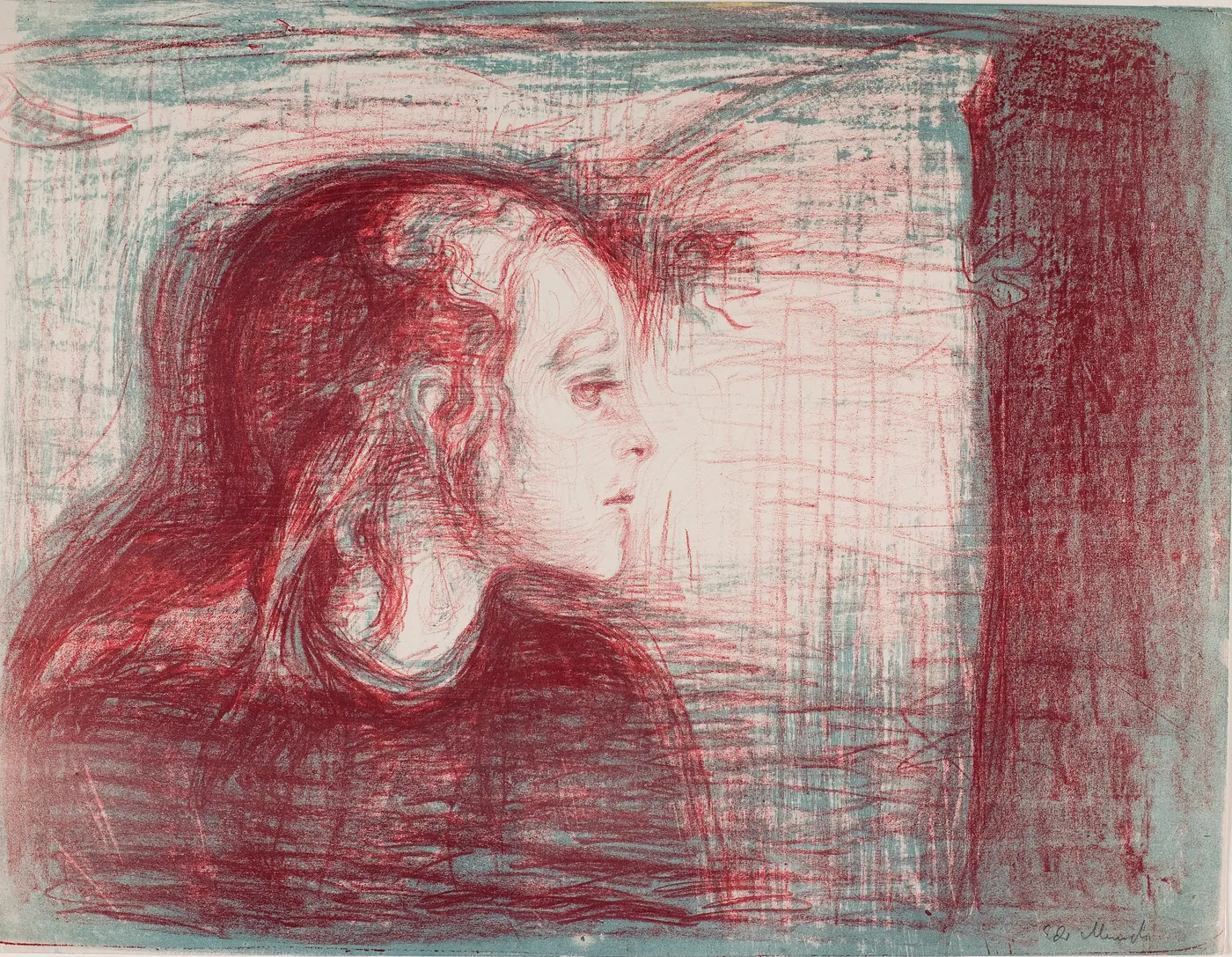
Edvard Munch, The Sick Child I, 1896, lithograph in colours. Another impression of this print sold for £190,500 in London in October 2025. Public domain, via Wikimedia Commons.
What the results show
The famous images lead. Almost every six-figure price was for one of the subjects Munch first painted in the 1890s, and most came in the October print sales in London and New York.
The same image can sell for very different sums. The Madonna that made $870,000 in 2021 was a signed impression printed from three stones in black, red and blue by the Berlin printer Walter Lassally. A year earlier an impression from the sixth of its seven states, with staining in the margins, had made $375,000, and in September a first-state Madonna, trimmed to the image by Munch, made £51,600. Vampire II made £705,600 in London in 2023 and $215,900 in New York two years later; the 2025 impression came from the sixth of its ten states and was probably printed in 1913. With Munch, the state, the printing and the colour decide the value as much as the title.
Fresh collections do best. Prints from long-held private collections drew the strongest results. At one London sale of a single collection in October 2025, Madonna (Woman Making Love) made £279,400, nearly three times its top estimate of £100,000, and The Kiss, an early impression of his 1895 etching, made £101,600 against an estimate of £50,000 to £70,000.
The market is selective. At a New York sale in October 2024, The Kiss IV made $214,200, but five other Munch prints offered alongside it did not sell, among them a Melancholy III estimated at $150,000 to $200,000. Buyers pay well for the best impressions and are quick to pass on the rest.
Below the top, the range is wide. Other lithographs, such as The Alley and The Sin, have sold for about £20,000 to £60,000, and his smaller etchings and drypoints for about £5,000.
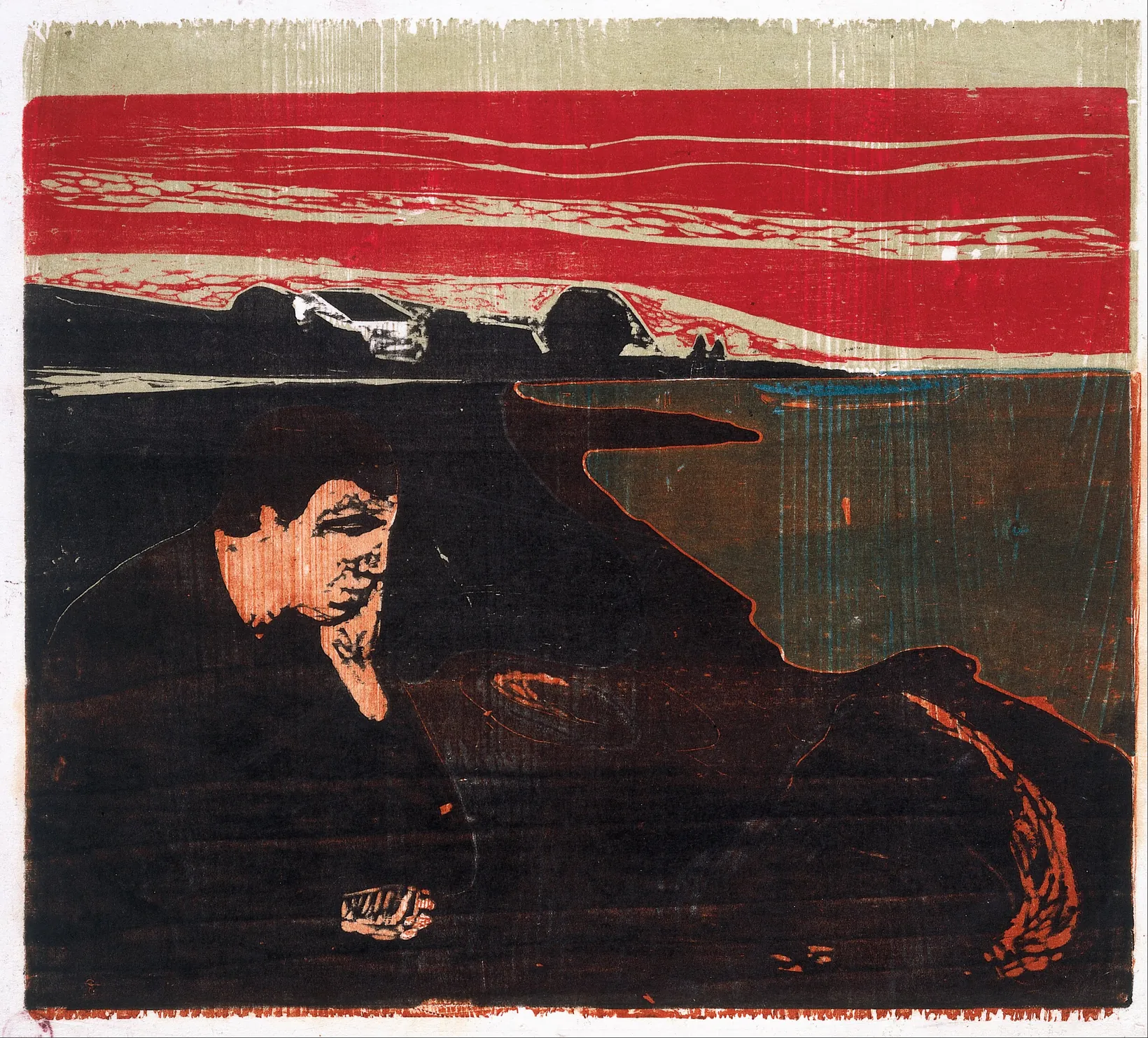
Edvard Munch, Evening. Melancholy I, 1896, woodcut. Public domain, via Wikimedia Commons.
How the provenance of a Munch print is traced
Provenance, the history of who has owned a work, matters more with Munch than with most printmakers, because buyers pay a premium for impressions they can trace. These are the checks a serious buyer, and every major auction house, will make.
- The catalogue raisonné. Every Munch print is identified by its number in the catalogues of his prints by Gustav Schiefler, a Hamburg judge who published the first in 1907 and a second in 1928, and by Gerd Woll, whose catalogue of the complete graphic works records each state, colour variant and printing. The number tells a buyer exactly which version of an image they are looking at.
- The impression itself. The paper, the state, the colours and the printer all date an impression. Munch's early lithographs were printed in Berlin by Lassally and by Alexander Liebmann, and many of his etchings by Otto Felsing, whose name sometimes appears in the plate. A pencil signature, a dedication or a note in Munch's hand adds value, and impressions printed after his death are worth far less.
- The chain of owners. The best provenance runs back to the artist. The 2021 Madonna was bought from Munch in February 1903 by Schiefler himself, who recorded the purchase in his diary, and it stayed in his family for more than a century. Dealers' labels, exhibition labels and collectors' stamps on the back can all be traced, and earlier sale catalogues fill the gaps; the 2025 Madonna (Woman Making Love) could be followed through sales in Switzerland in 1968 and 1993.
- The artist's estate. Munch left the works in his possession to the city of Oslo, and some impressions carry the stamp of the Munch Museum, which has sold prints from his estate. The 2025 Vampire II had its deaccession stamp on the back.
- The years 1933 to 1945. Munch had many collectors in Germany. In 1937 the Nazi regime removed his works from German museums as "degenerate", and some private collectors were forced to sell. Any print with German ownership in those years should be checked against the registers of looted and lost art before a sale.
- Reproductions. The Scream and Madonna have been reproduced many times. Under a magnifying glass a printed reproduction shows a regular dot pattern that a lithograph does not.
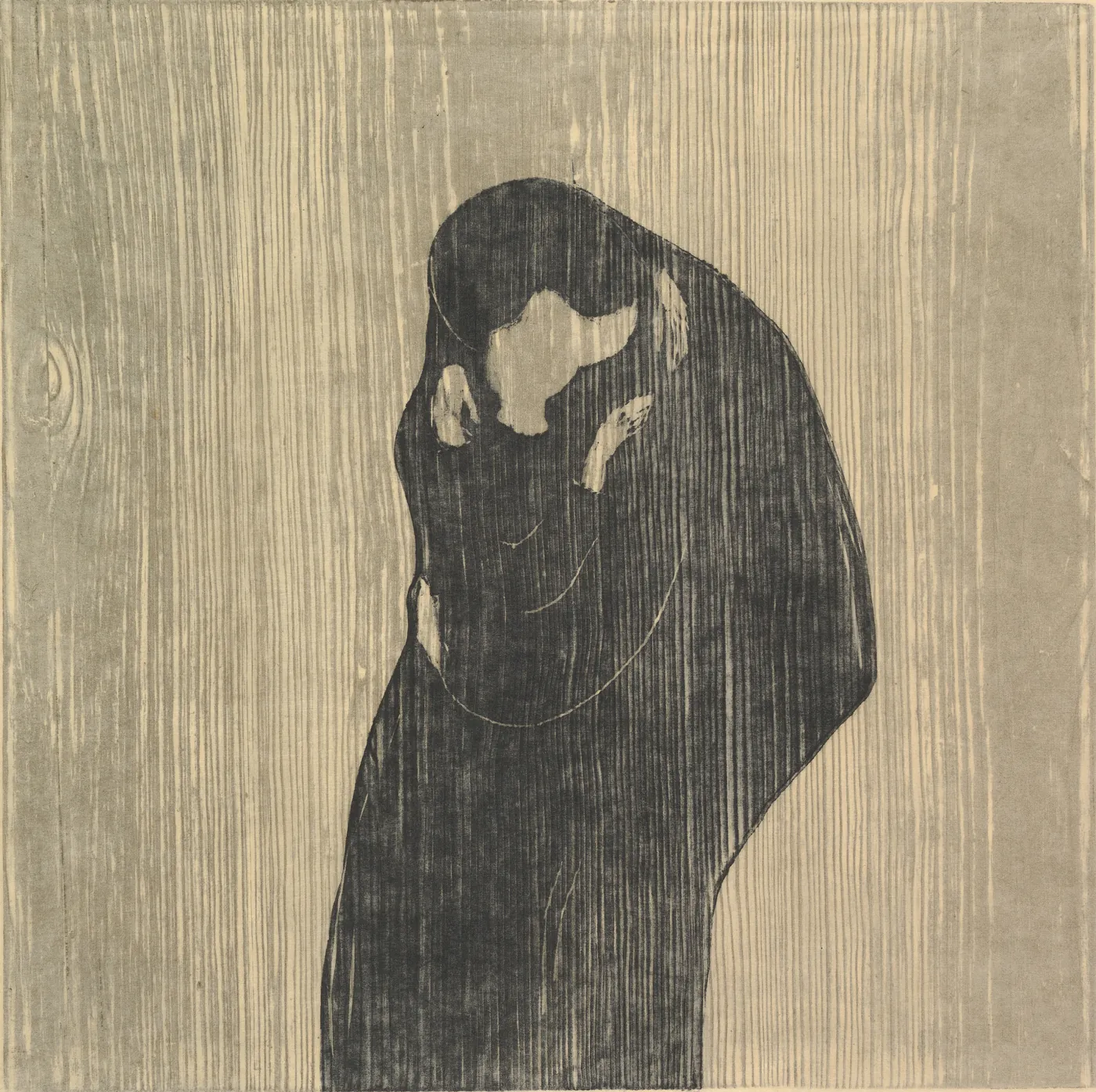
Edvard Munch, The Kiss IV, 1902, woodcut. The Metropolitan Museum of Art, New York. Another impression sold for $214,200 in New York in October 2024. Public domain, via Wikimedia Commons.
How we help you achieve the best price, and keep more of it
The difference between a good result and a disappointing one for a Munch print is often tens of thousands of pounds, and most of it is decided before the sale. We act for you rather than for the saleroom.
- We identify exactly what you have, with the catalogue raisonné number, the state and the printing, so the print is described and estimated correctly from the start.
- We research and document the provenance, including the years 1933 to 1945, so the questions buyers will ask are answered before they ask them.
- We choose the right sale. Munch's buyers are international, and the timing, the city and the sale a print appears in all affect the price. We compare the auction houses on your behalf, and a confidential private sale where that would serve you better.
- We negotiate your terms. Published commission rates are a starting point, and auction houses regularly reduce them for prints they want. We agree the estimate, the reserve and the fees with you before anything is signed.
- We look after the details, from advice on condition and framing to keeping the paperwork in your name until you are paid.
If you own a print by Munch and are thinking of selling, send us photographs of the front and the back, with any signature, inscription, stamp or label, for a free valuation. There is no obligation to sell. Our guide to prints by top artists in 2026 has more recent results.
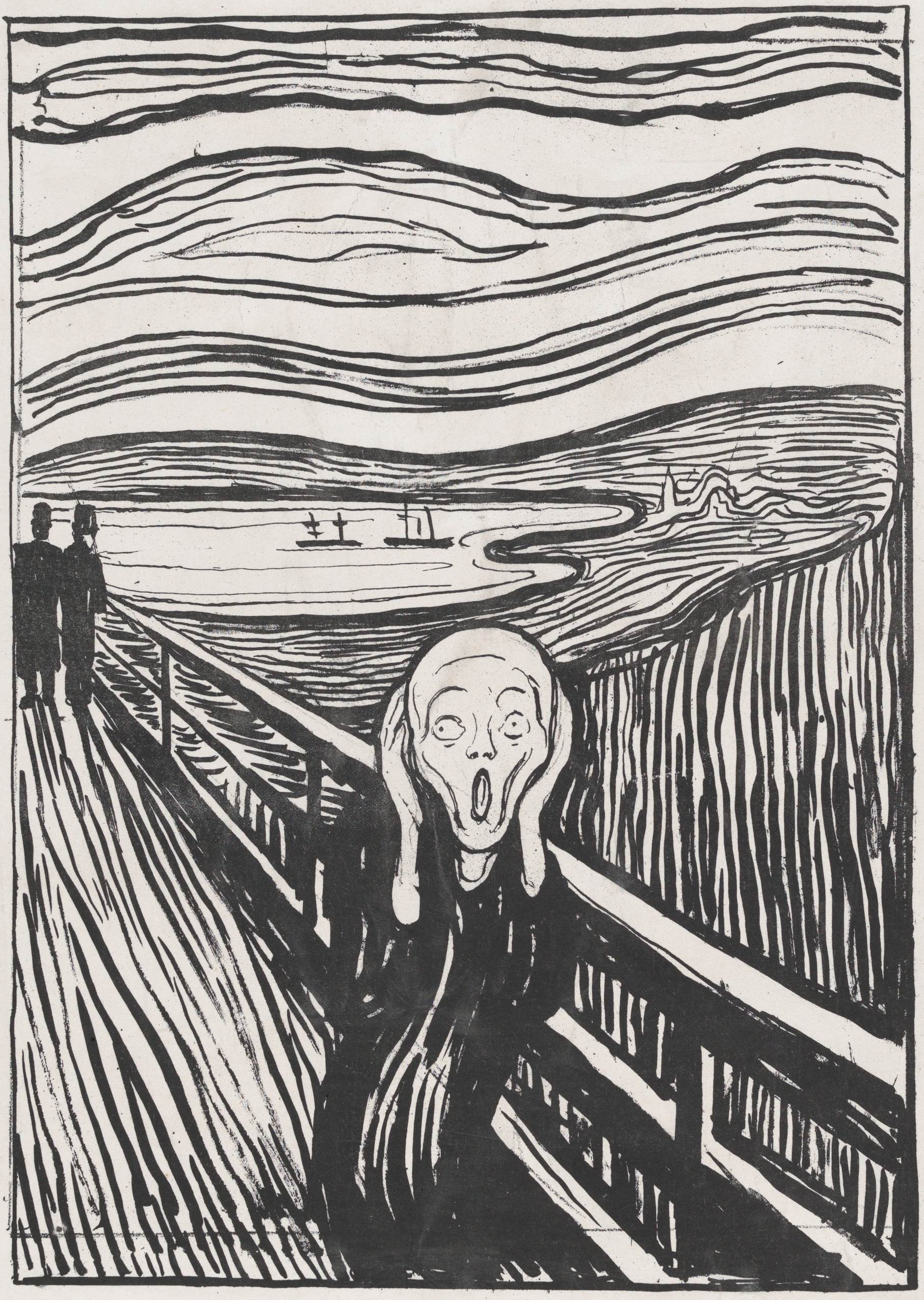
Cover: Edvard Munch, The Scream (Geschrei), 1895, lithograph. The Metropolitan Museum of Art, New York. Public domain, via Wikimedia Commons.
Auction market · Prints and editions