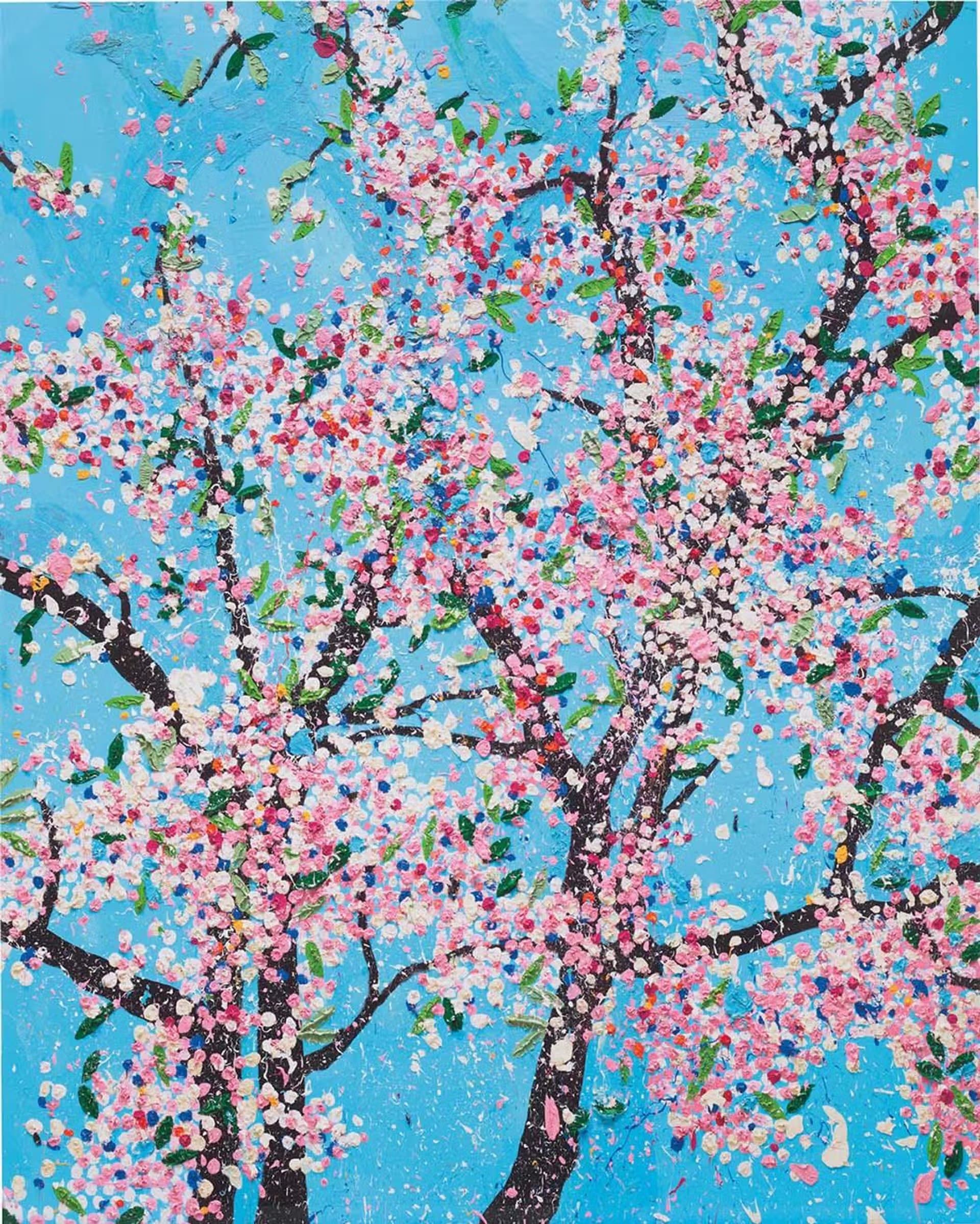
Damien Hirst
H9-4 Politeness, 2021
Giclee
Contemporary & Post-War


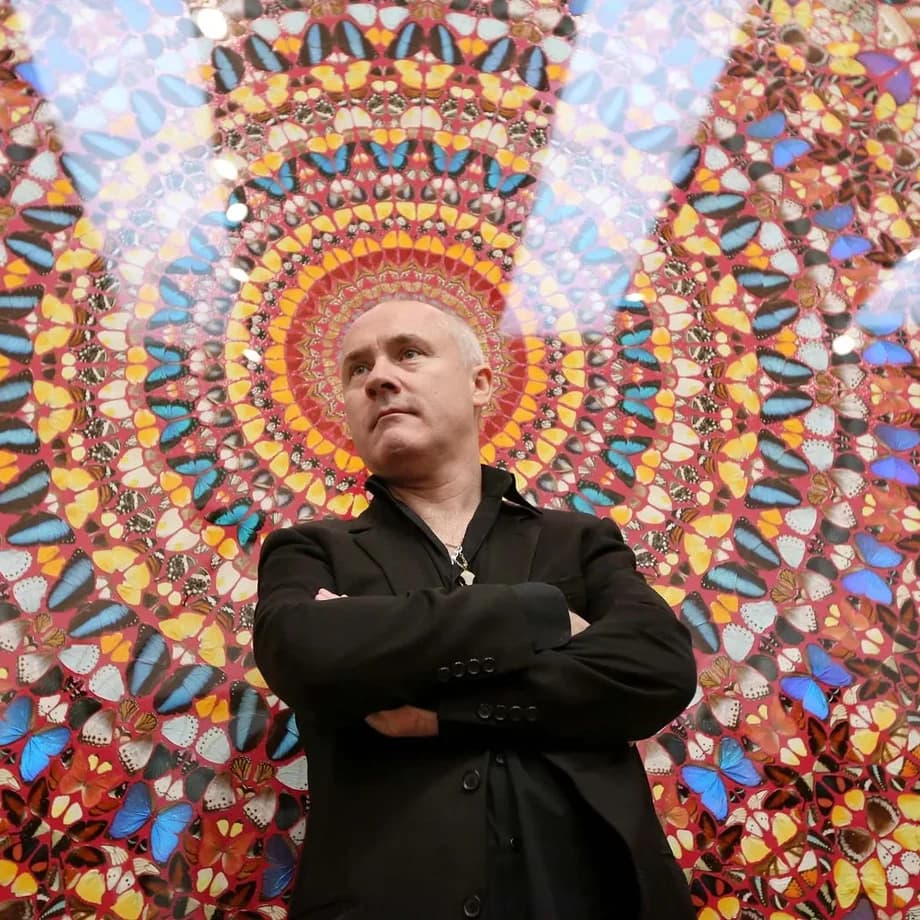
Made in series and in volume, which is exactly why the edition and its paperwork decide what a Hirst is worth.
Hirst works in series, and in numbers. Spot paintings, spins, butterfly works, medicine and diamond cabinets, the formaldehyde vitrines — each is a vocabulary rather than a one-off, executed by a studio to his specification, which he has never hidden and which the market long ago stopped treating as a scandal. Science Ltd catalogued 1,365 spot paintings for the 2013 catalogue raisonné, and the editions drawn from the same vocabulary run to many thousands of sheets. That volume is the defining fact of his market. There is almost always another impression somewhere, so the specific one in front of you has to earn its price rather than inherit it from the name.
Which is why the question owners actually arrive with is not what is it worth but which one is it, and where is the certificate. Publisher and paperwork carry unusual weight here: Other Criteria from 2005, HENI for the more recent prints and digital editions, Science Ltd for older material and for the database behind it. Signing and numbering conventions differ from series to series, so a sheet that looks wrong for one edition may be right for another. And the certificate is not a formality. In 2015 the owner of Bombay Mix, an early spot painting nobody disputed Hirst had made, could not sell it: Science Ltd held the original certificate, said it had been handed back years earlier, and would not issue another. Whatever the rights of that particular case, the lesson for an owner is plain enough — a work whose paperwork cannot be produced is a materially harder sell than the identical one with it.
At the top of the market the record is dominated by one week. In September 2008 Hirst sold new work straight into a Sotheby's saleroom in London, going around his own galleries — Beautiful Inside My Head Forever, 218 lots across 15 and 16 September, raising £111m. The first evening ran as Lehman Brothers filed for bankruptcy. The Golden Calf, a bull in formaldehyde with 18-carat gold horns and hooves, took £10.3m; The Kingdom, a tiger shark, £9.6m. The year before, Lullaby Spring — a steel cabinet of 6,136 hand-painted pills — had made £9.65m against a £3m to £4m estimate, then the highest auction price for a work by a living European artist.
The figure most people can still quote is the one that never happened. For the Love of God, the diamond skull, was announced in August 2007 as sold for £50m to an anonymous consortium; in January 2022 Hirst confirmed it had never left him, and that it remains owned by the artist, White Cube and undisclosed investors. A reported price is not a record, which is why everything below is a named work at a named house on a named date. What decides the value of an edition is duller and more specific: which series and which edition, who published it, whether the inscriptions match that edition, whether the certificate is present, and how the sheet has been kept. Condition is less forgiving here than with most printmakers, because foils and high-gloss surfaces show every handling mark and the colour in the spots and butterflies fades on a sunlit wall.
Results as reported at the time of sale, inclusive of buyer's premium. They are a record of what specific works achieved on specific days, not a guide to what any other work is worth.
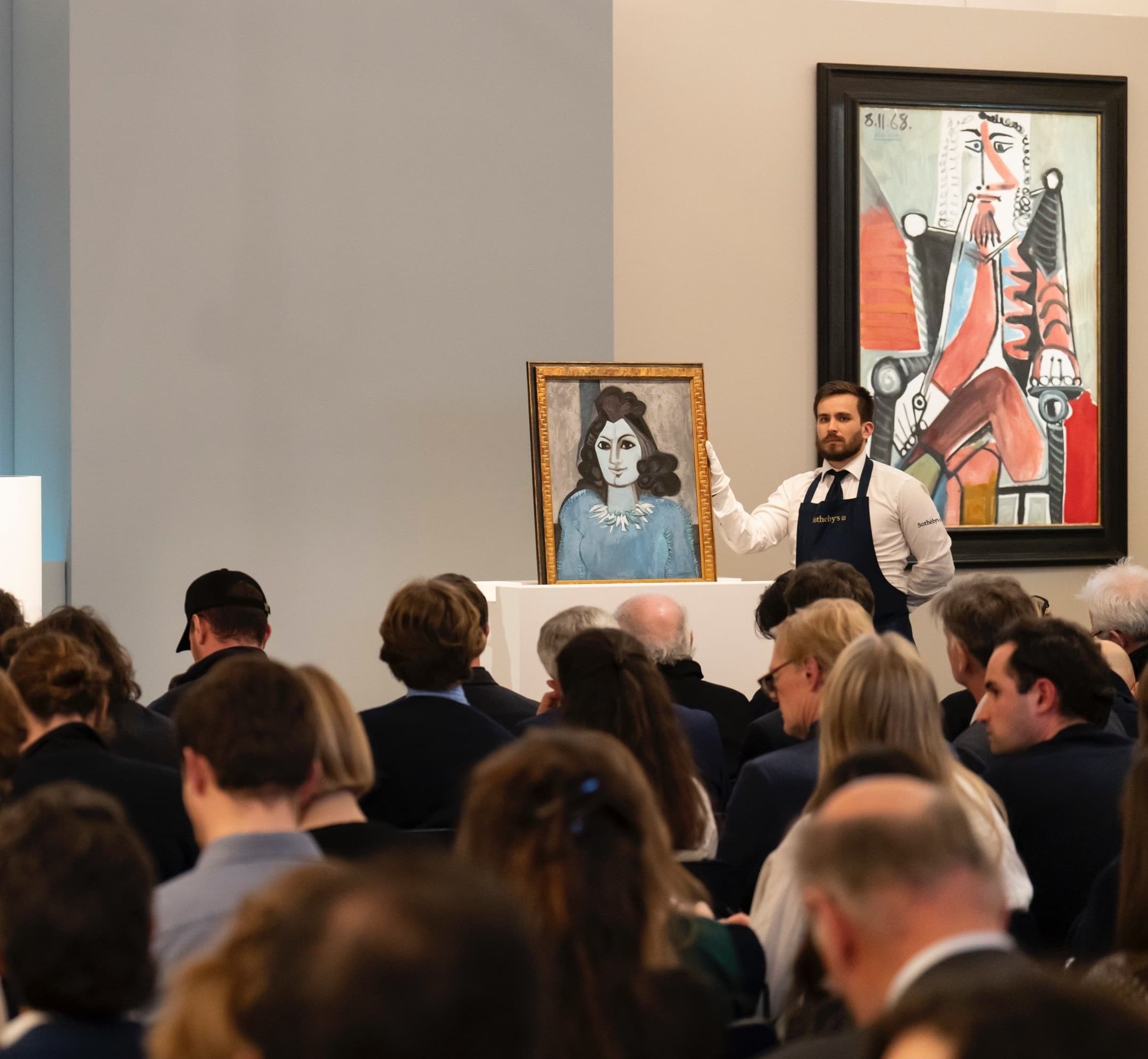
We represent the seller rather than the auction house: comparing houses and sale dates, negotiating the seller's terms, and keeping the paperwork and remittance in your name. What sets the value of a Damien Hirst sets out what we look at first. Selling a Damien Hirst print covers the routes, the fees and the timetable for this artist in particular.
Whitebank Fine Art is a London art advisory and gallery. A photograph and a few details are enough to begin — a valuation carries no obligation to proceed.