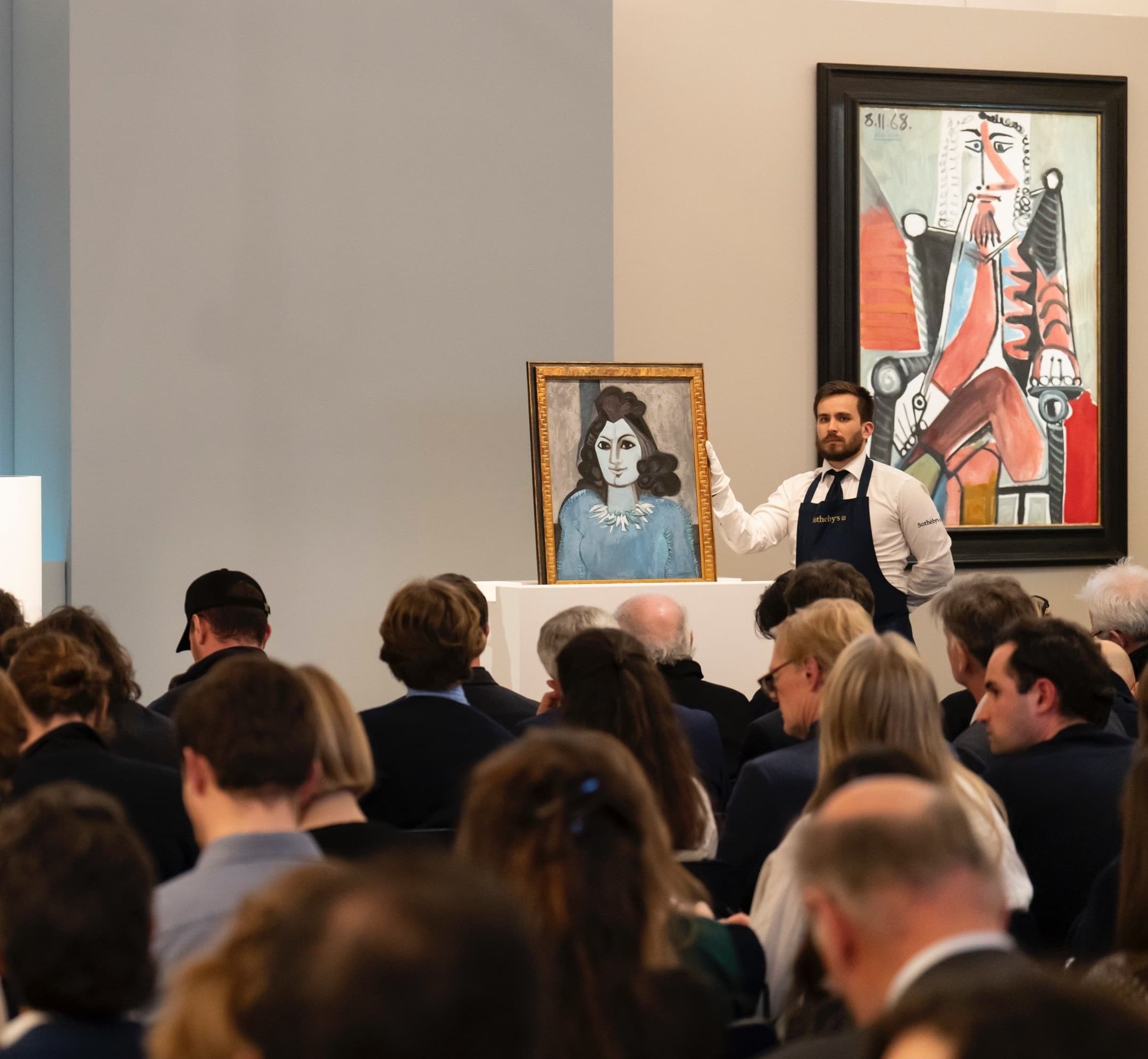

Selling a Hirst
What the routes to market actually cost, how long each takes, and what happens before any of it starts.
Almost every Hirst enquiry begins in the same place: establishing which edition the work belongs to and what documentation came with it. Which edition, and where is its certificate covers how that is settled, and what sets the value covers what follows from it. This page is about the sale itself.
Two routes, and they are different products
| Consideration | Public auction | Private sale |
|---|---|---|
| Time to funds | 1–3 months | 2–6 weeks |
| Seller's cost | Commission, plus photography, insurance and an unsold fee | Our fee, agreed in advance — typically none |
| Price ceiling | Highest, where the edition is scarce and the paperwork complete | Close to auction, without the downside |
| If it does not sell | A public unsold record follows the work | Nothing is published; you keep the work |
| Best when | Scarce editions in clean condition with their certificate to hand | Common editions, missing paperwork, or where discretion matters |
We broker private sales, so treat the second column as an interested party’s account of its own product. Check it against what an auction specialist tells you before you decide.
The unsold record matters more here, not less
A work that fails to sell at auction is recorded as such in the price databases every serious buyer consults, and that record follows it. On a thin market a single failed lot can be dismissed as bad luck. Hirst editions are not a thin market: they trade often enough that a buyer can see exactly what comparable impressions have done, which makes an unsold entry against your specific edition unusually legible. For a scarce image with complete paperwork the risk is worth taking. For a common edition in average condition it often is not, and a private sale leaves nothing behind if the answer turns out to be no. What selling at auction actually costs sets out every fee that comes off the hammer price.
How it works
01Photographs of the work and its reverse
Both sides, every time. On the recent HENI editions the signature and numbering live on a printed label on the back, and a photograph of the image alone cannot answer the question we are being asked.
02The paperwork, whatever there is of it
The certificate if you have one, the original invoice, and anything from the publisher or the gallery it came from. On a Hirst this carries more weight than on almost any comparable name, and it is better to establish what is missing now than during a consignment.
03Identification
We place the work against its publisher and edition — HENI, Other Criteria or Science Ltd depending on when it was issued — and establish which series and which edition it actually belongs to, and whether the inscriptions are consistent with it.
04A written valuation, and then the route
A realistic range with the comparable results behind it, so you can see the reasoning rather than take a figure on trust. Then auction or private sale, and if auction, which house and which sale. We negotiate the seller's terms rather than accept a published rate card. No charge, and no obligation to proceed.
05Completion
Paperwork and remittance stay in your name throughout, and you keep legal title until the funds are cleared.
Common questions
Where is the best place to sell a Damien Hirst?
It depends which edition you have. A scarce edition in clean condition with its certificate can justify a specialist print or contemporary sale at one of the international houses. A common edition, or one whose paperwork cannot be produced, often does better privately, where there is no unsold record if it does not find a buyer on the day. We compare both before recommending either.
Do I need to know which edition it is before I contact you?
No. Establishing that is most of the work, and it is what we do first. Photographs of the front and the reverse, plus any certificate or invoice, are enough to begin.
How long does it take?
A private sale usually completes within two to six weeks. Auction is bound to the sale calendar — normally one to three months from consignment to payment, and longer if the right specialist sale is further out.
What do you charge?
Our fees are typically 0%. On rare occasions we may need to charge a 2.5% to 10% commission where the sale is complex. Even then, because we negotiate reduced seller's rates on your behalf, the overall cost is usually the same or lower than consigning directly. Third-party costs such as specialist shipping or conservation are quoted in advance.
Can I sell one of The Currency paintings?
Yes, and a number have been resold at auction. Two things need settling first. The physical works were generally handed over without a paper certificate and the digital record ended at the exchange, so gather whatever you kept from the transaction — the tender number, the exchange confirmation, the original receipt. And the 2016 date on the works was publicly questioned in 2024, with Hirst's lawyers saying he dates by conception rather than completion. Neither is a bar to selling. Both are better addressed before a buyer's advisor raises them.
Whitebank Fine Art is an art advisory and gallery, not an auction house, and is not affiliated with any auction house or with the artist, his studio or his publishers. Nothing here is investment advice.