
Hockney valuation
Impartial advice on what your Hockney is and what it could achieve. We compare the major auction houses and their sale dates with a confidential private sale, set out the costs and timeline of each, and negotiate the terms on your behalf.
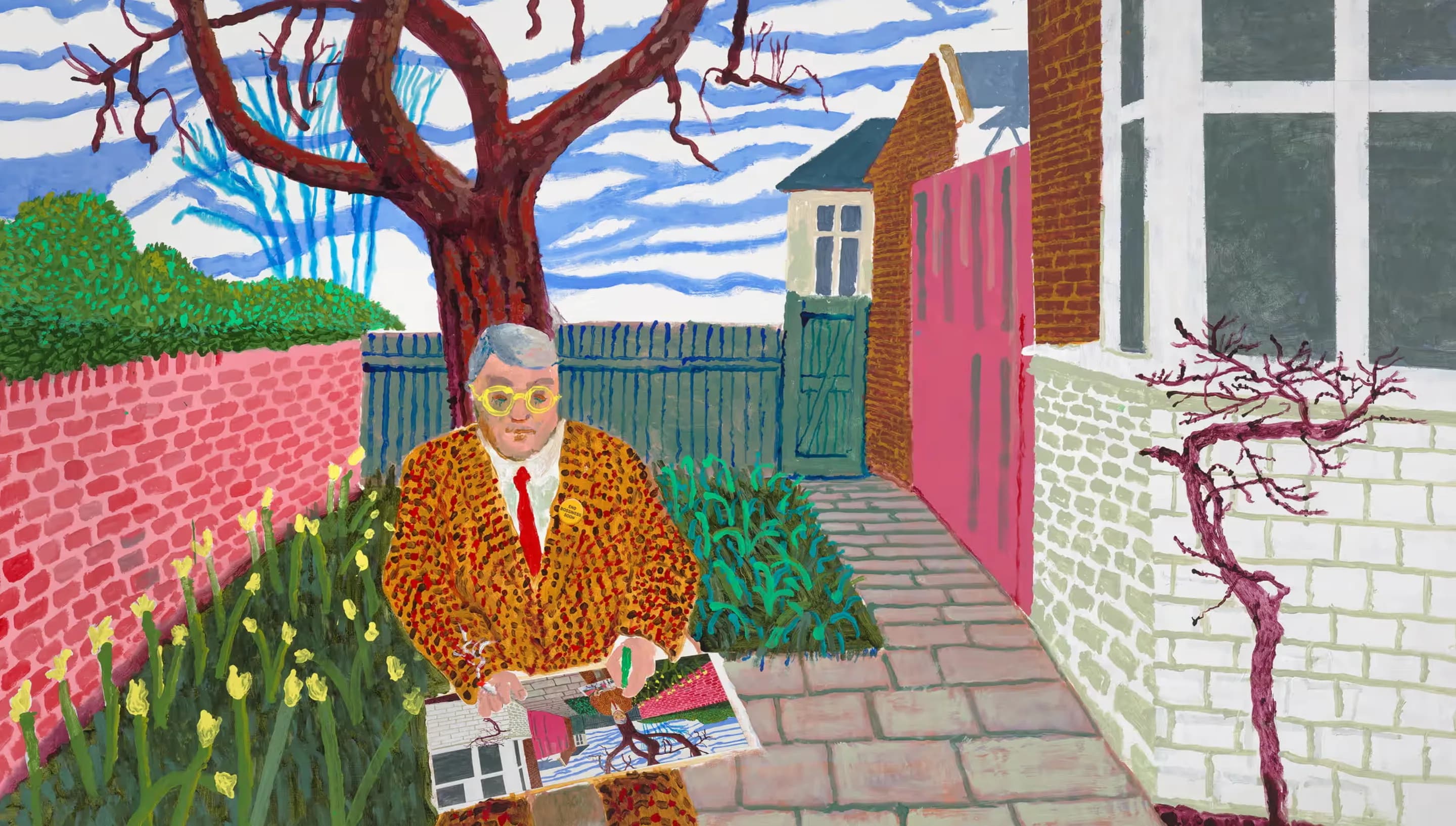
Hockney has been making printed editions for sixty years, across more media than almost any of his contemporaries, and the images have been reproduced so widely that a great many people own something with his name on it without knowing what it is. Working that out is most of the valuation. If you own a work and want to know what it is and what it would do at auction, that is a conversation worth having before you approach anyone.
What sets the value
- Edition print or exhibition poster
- The division that catches most owners out. Hockney's images have been reproduced as gallery and museum posters for sixty years, and a good poster in a good frame looks very like the edition it advertises. A signed, numbered impression from a published edition and an open-edition poster of the same image are not in the same market, and establishing which you hold is the first thing we do.
- Publisher and catalogue reference
- Hockney's prints were made with a small number of workshops and publishers — Gemini G.E.L., Petersburg Press and Waddington among them — and the printed editions are documented in the catalogue raisonné of his prints. A work that can be placed against its catalogue entry is a work a specialist can estimate quickly and a buyer can bid on with confidence.
- Signature, numbering and edition size
- Whether the sheet is signed, how it is numbered, and whether it is a numbered impression from the main run, an artist's proof or one of the other designations outside it. Each sits differently in the market, and on a Hockney the pencil inscriptions in the margin often carry more information than the image does.
- Medium
- The name covers etchings and lithographs from the sixties and seventies, screenprints, the photographic collages, and the later iPad drawings issued as inkjet editions. They are different markets with different buyers, and a valuation that treats them as one thing is not a valuation.
- Condition
- These are works on paper and they mark. Light fading is the one to watch on the colour lithographs, and it is the damage owners are least likely to notice, because it happens slowly on their own wall. Handling creases, tape and hinge damage from earlier framing, and trimmed margins all read through to the estimate. Condition is judged against what the edition normally looks like, not against perfection.
- Provenance
- Where the work has been since it left the publisher. A clean chain of ownership with paperwork behind it removes questions a specialist would otherwise raise, and questions raised late in a consignment cost time and estimate.
What we do with it
A valuation is only useful if it leads somewhere. We compare what the work is likely to achieve across the international and regional salerooms — the print market rewards picking the right sale more than most — weigh sale dates and settlement periods against each other, and negotiate the seller's terms rather than accept a published rate card. All paperwork and remittance stays in your name. What selling at auction actually costs sets out every fee that comes off the hammer price.
Common questions
How do I know if my Hockney is a print or a poster?
Look at the margins rather than the image. A published edition is usually signed in pencil and carries a numbering or proof marking, and the sheet itself will match the edition's recorded size. A poster generally carries printed text — an exhibition title, dates, a venue — even if that has been trimmed off or hidden by a mount. If it has been framed for decades nobody may ever have seen the margins. Photographs of the full sheet, unframed if that is possible, settle it.
Does a Hockney need authentication to sell?
There is no single authentication body for Hockney of the kind Pest Control provides for Banksy. What the salerooms want instead is the work placed against its catalogue entry, with the publisher identified and the inscriptions in the margin consistent with the edition. Where that is straightforward, no separate certificate is needed; where it is not, it is much better to establish before a work is consigned than after.
How do I get a Hockney valued?
Images of the work are enough to begin — the full sheet including the margins, the signature and numbering if there are any, the reverse, and any labels on the frame or backing board. Add approximate dimensions and any paperwork that came with it. There is no charge, and a valuation carries no obligation to proceed.
Are the iPad works worth having valued?
Yes, and they need the same care as the earlier prints. They were issued as editions with their own sizes, publishers and inscriptions, and the same poster-versus-edition question applies to them as to everything else — arguably more so, because the images have been reproduced very widely.
What does it cost to sell a Hockney at auction?
Seller's commission, insurance, cataloguing and — if the work does not sell — an unsold fee. We set out how each of those works on our selling at auction page, and we negotiate them on your behalf rather than accepting a published rate card.
Send images and any paperwork to info@whitebankfineart.co.uk, or get in touch below. A photograph of the full sheet and a few details are enough to begin.