Art News ·
Art News: Where to buy and sell art in the UK, from dealers to auction
By Whitebank Fine Art
The best place to sell art you own in the UK depends on what it is. A sought after work that more than one buyer will want usually belongs at auction, a work that needs discretion suits a private sale, and an art dealer is the quickest route if you want a price today. Buying works the same way in reverse. This guide is for owners and collectors, so it covers art that already exists and has a history, and it does not cover artists selling their own new work.
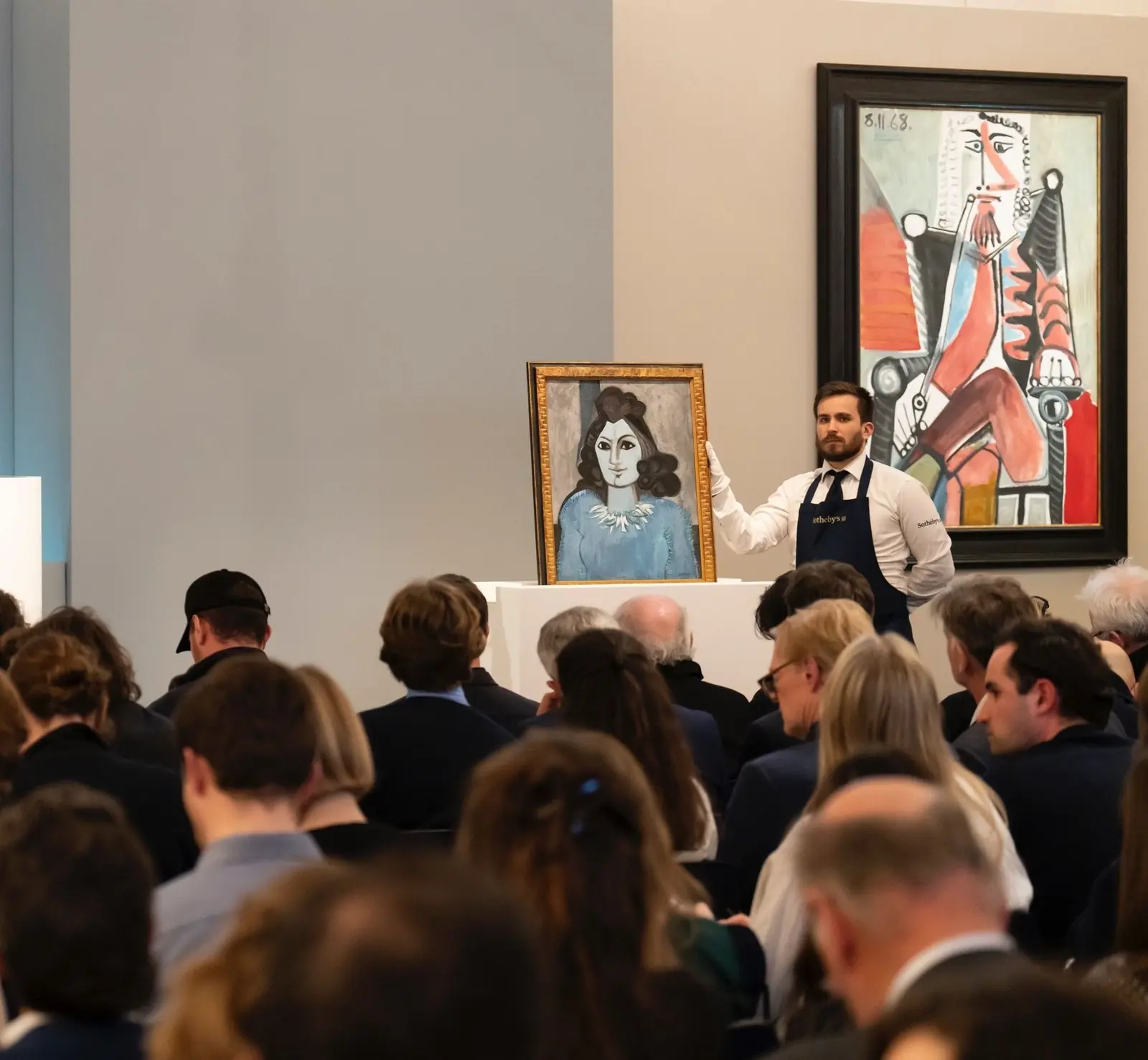
The autumn sales have just shown both sides of the market, with London in October and New York in November. Most art changes hands far from those rooms, through the routes below.
Where to sell art you own
| Route | Best for | What it costs | The drawback |
|---|---|---|---|
| Auction | Works several buyers will compete for | Seller's commission plus VAT, and sometimes photography, insurance and unsold fees | Tied to the sale calendar, and an unsold result is public |
| Private sale | Valuable works, or owners who want discretion | A commission agreed in advance | Depends on who is reached |
| Art dealer buying outright | Speed and certainty | The dealer's margin, built into the offer | Usually the lowest figure |
| Dealer or gallery on consignment | Works that suit that gallery's clients | A commission on the sale | Can take months, and the work is tied up meanwhile |
| Online marketplace | Lower value works | Listing or sale fees | You handle buyers, payment and shipping |
Before you choose, find out what the work is. A signature, an edition number, a label on the back or a certificate can change the answer completely. A free art valuation from photographs will tell you which of these routes is realistic, and our guide to where to sell paintings and artwork goes through each one.
Art dealers, and how to choose one
Many people who search for art dealers near them have something to sell and want someone to look at it. Distance matters less than it sounds, because most specialists can identify a work from good photographs of the front, the back and any signature.
What matters is whether a dealer deals in your kind of work, and which side they are on. A dealer buying from you wants to pay as little as possible, which is a fair position so long as you know it. Ask three questions:
- Are you offering to buy this yourself, or to sell it for me?
- If you sell it for me, what is your commission, and what do I receive after it?
- What else could I do with this work, and why would you not recommend it?
A good dealer will answer the third question plainly. Compare at least two offers before you accept one, and get an auction estimate as a check on both.
Selling at auction
Auction suits a work that buyers will compete for. The hammer price is not what you receive: the seller's commission and other charges come off it first, and those terms are often negotiable on better works. The process of selling at auction usually takes months from consignment to payment.
Choosing the saleroom matters as much as the estimate, because a work does best in front of the buyers who collect it. An independent advisor compares houses for you. Whitebank Fine Art, a London art advisory, does this for sellers and negotiates the terms, and its fee to sellers is typically 0% because it is paid out of the reduced seller's rates it agrees with the auction house. On rare occasions, where a sale is complex, it charges 2.5% to 10%, and sellers know which applies before they commit. Art advisor or auction house? sets out when going direct is the better choice.
Selling privately
A private sale places a work directly with a collector or gallery. The price is agreed before anything changes hands, and if the work does not sell, there is no public record. It suits valuable works, works that have been offered before, and owners who value discretion.
Where to buy art in the UK
Where to buy art depends on your budget and on how much certainty you want.
- Commercial galleries are the main source of new work by living artists. London's best art galleries are free to walk into, and asking a price commits you to nothing.
- Art fairs put many galleries under one roof, so they are the quickest way to compare prices and see what you like.
- Auction houses sell work that is already on the market, sometimes below gallery prices, but you pay a buyer's premium on top of the hammer price. Read how to buy art at auction safely first.
- Publishers and print dealers are the affordable way to own work by major names. Editions from publishers such as HENI can also be bought from other owners after a release has closed.
- Dealers and advisors can find a particular work privately, which is often the only way to buy something that is not for sale in public. Artworks we have available are listed on this site.
Checks to make before you buy
Whether you pay a few hundred pounds or a few hundred thousand, the checks are the same:
- Ask for the full price, including any premium, VAT, framing and delivery.
- See the condition report, or the work itself, before paying.
- Ask where the work has been and who has owned it, and get that in writing.
- For prints, confirm the edition size and how it was signed.
- Check the certificate. A Banksy, for example, needs one from Pest Control, and nobody else's counts.
Is art a good investment?
Art can hold or gain value, but it pays no income, costs money to insure and store, and costs money to sell. Once those charges are counted, many works do not sell for more than they cost. Buy what you want to live with, and treat any rise in value as a bonus. Nothing here is investment advice.
Thinking of selling?
Send photographs of the front, the back and any paperwork to Whitebank Fine Art for a free estimate, with no obligation to proceed.
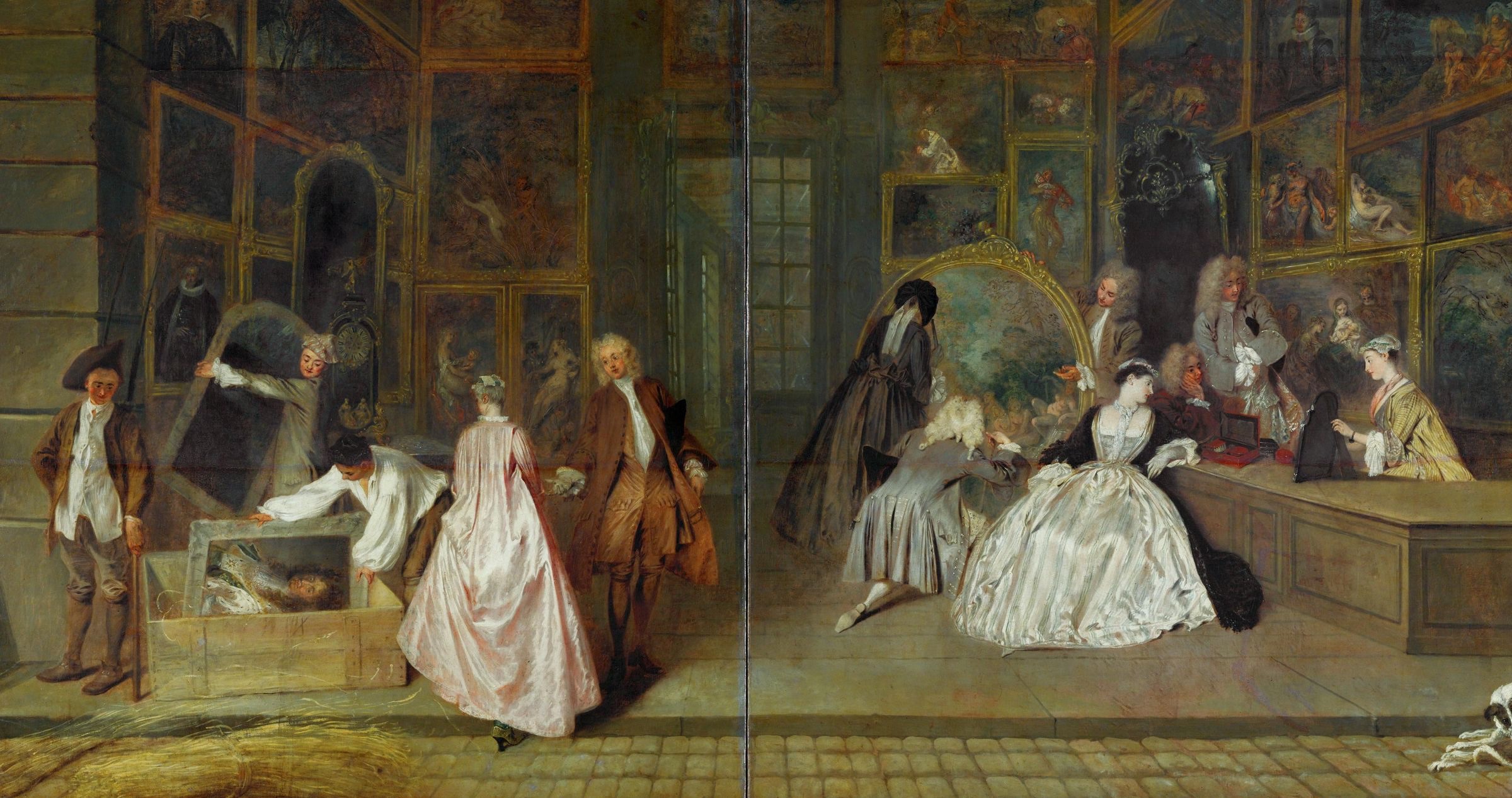
Cover: Antoine Watteau, L'Enseigne de Gersaint, 1720 to 1721, Charlottenburg Palace, Berlin. Public domain, via Wikimedia Commons.
Market