
Keith Haring valuation
Among the most counterfeited artists of the century, and there is no longer anybody issuing opinions.
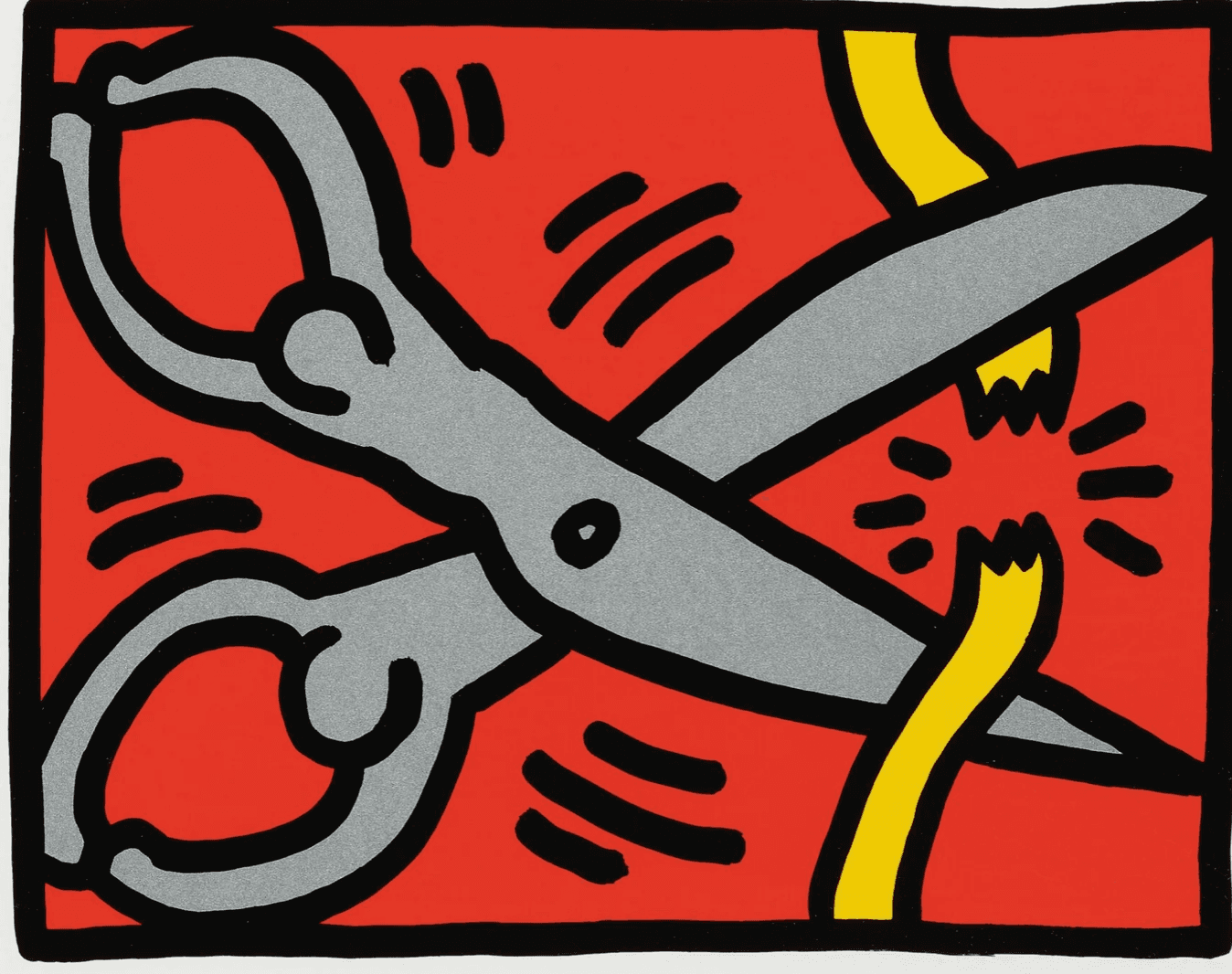
Haring drew in a line he never varied — the radiant baby, the barking dog, the dancing figures — first in white chalk on the black paper covering unsold advertising panels in the New York subway, thousands of times between 1980 and 1985. He was in the Whitney by 1982, opened the Pop Shop in 1986 so the work would stay affordable, was open about his AIDS diagnosis, and established a foundation before his death in 1990 at thirty-one. The career is ten years long, and the market has to work with what that produced.
Authentication is the dominant fact. The Keith Haring Foundation dissolved its authentication committee in 2012, so no body now issues opinions on attribution, and that has thrown everything onto provenance. Where has the work been, which gallery handled it, is there documentation from the period. The subway drawings on paper are the single most faked category in the market — they were made in enormous numbers, in cheap chalk on cheap paper, frequently removed by passers-by, and the resulting supply of undocumented sheets is exactly the environment forgery thrives in.
The prints are the most tradeable part of the output and the most straightforward to identify: documented editions, published dates, recorded sheet sizes, pencil signature and numbering. Those are the works most owners hold and the ones where a valuation can be arrived at with confidence. Selling prices for Keith Haring prints turn on which edition a sheet belongs to, whether it is signed and numbered, and what condition it is in — a single figure quoted for the name covers none of that. Against them sit Pop Shop merchandise, posters and licensed product in vast quantity, all of it legitimate and almost none of it a limited edition, whatever the listing says.
Condition is the last variable and a real one. Chalk on newsprint-grade paper is about as fragile as works on paper get. The Pop Shop and subway material was never made to last, the papers acidify and the media abrade, and a sheet that has hung on a wall since the eighties has usually paid for it.
At auction
- Untitled$6.5m
- Acrylic on vinyl tarpaulin, 1982 · Sotheby's, New York · May 2017
- Sotheby's, as widely reported
- One of the large tarpaulin works of the early 1980s, and the artist's auction record.
Results as reported at the time of sale, inclusive of buyer's premium. They are a record of what specific works achieved on specific days, not a guide to what any other work is worth.
Selling a work
We represent the seller rather than the auction house: comparing houses and sale dates, negotiating the seller's terms, and keeping the paperwork and remittance in your name. What sets the value of a Keith Haring sets out what we look at first.