
Art News ·
Art News: Robert Ryman at the Barbican, Tickets and What to See
By Whitebank Fine Art
Robert Ryman: The Real Thing, at the Barbican Art Gallery in London until 28 February 2027, is the first major exhibition in Britain for more than thirty years of Robert Ryman (1930–2019), the American painter who worked almost entirely in white. It has more than 60 works, from the mid-1950s to the early 2010s, and since it opened on 9 October it has had strong reviews in The Times, the Guardian and the Observer.
What is on show
Ryman came to New York from Nashville in 1953 to be a jazz saxophonist. He took a job as a guard at the Museum of Modern Art, where he worked until 1960 alongside the artists Sol LeWitt and Dan Flavin, and in the galleries, looking at Rothko, Pollock and de Kooning, he began to paint. By the early 1960s he had settled on the two things that would last the rest of his life: white paint, and the square.
The white is not the subject so much as the means of seeing everything else. Ryman wanted viewers to notice the paint itself, how thick or thin it is, the direction of each stroke, what it is painted on and how the painting is fixed to the wall. He worked on canvas, linen, paper, steel, aluminium, fibreglass and vinyl, and the tape, bolts and brackets that hold a picture up are often part of the work. He preferred to be called a realist rather than a Minimalist, because his paintings are real things rather than pictures of something else, and he insisted they had to be seen in person, which is where the exhibition takes its title.
It is a show to take slowly. The Barbican suggests allowing 90 minutes, and the differences between one white square and the next, in texture, edge and light, only appear when you stand close.
Robert Ryman exhibition tickets and prices
- Dates: until 28 February 2027, in the Art Gallery on Level 3 of the Barbican Centre, Silk Street.
- Tickets: £20.50, including a £1.50 booking fee. Barbican members go free.
- Concessions: £15.50 for students, £11.50 for visitors on Universal Credit or Pension Credit, £11 for Art Fund members, and free for under-16s. Young Barbican members, aged 16 to 29, pay £6, and joining is free.
- Pay what you can: every Thursday from 5pm to 8pm and every Friday from 10am to noon.
- Opening times: 10am to 6pm on Tuesday, Wednesday, Saturday and Sunday, and 10am to 8pm on Thursday and Friday. Closed on Mondays and from 24 to 26 December, and open from noon to 8pm on 1 January.
- Bags: backpacks are not allowed in the gallery, and bags larger than 32 × 18 × 22 cm go in the free cloakroom. Flash photography is not allowed.
Talks and tours
The curator, Wells Fray-Smith, leads an evening tour on Friday 4 December, and the curatorial assistant Amber Li on Friday 6 November, both at 6.30pm. In Ryman in Rhythm, from 18 November, the musicians Sarathy Korwar, tyroneisaacstuart and Soweto Kinch respond to the paintings, a nod to Ryman's years as a jazz musician. There are also British Sign Language, audio-described and relaxed views of the exhibition.
Elsewhere in London, Painting the French Riviera is at the Royal Academy until 31 January, Renoir and Love at the National Gallery until 31 January, and Hokusai at Dulwich Picture Gallery until 17 January.
What Robert Ryman's paintings sell for
Ryman made relatively few paintings, many of them are in museums, and when a major one comes to market it is among the most expensive abstract paintings of its generation. Bridge, of 1980, sold for $20.6 million in New York in 2015, still his auction record. He also made works on paper and prints, many of them aquatints in shades of white, which are the more accessible end of his market.
Condition decides more with Ryman than with almost any other painter. White surfaces show every mark, from dirt and handling to yellowing and the faintest retouching, so a painting needs to be kept clean and out of direct light, and never varnished or retouched except by a specialist conservator. The original fixings matter too: because the way a work hangs is part of it, the brackets, tape or bolts Ryman chose should stay with the painting, and their absence can affect the value. A clear history of ownership and exhibition, and the works' documentation from the artist's studio or gallery, are what buyers look for first.
If you own a work by Robert Ryman, or by one of the painters of his generation associated with Minimalism, send us photographs of the front, the back and the fixings for a free valuation. There is no obligation to sell, and we act for you rather than for the saleroom.
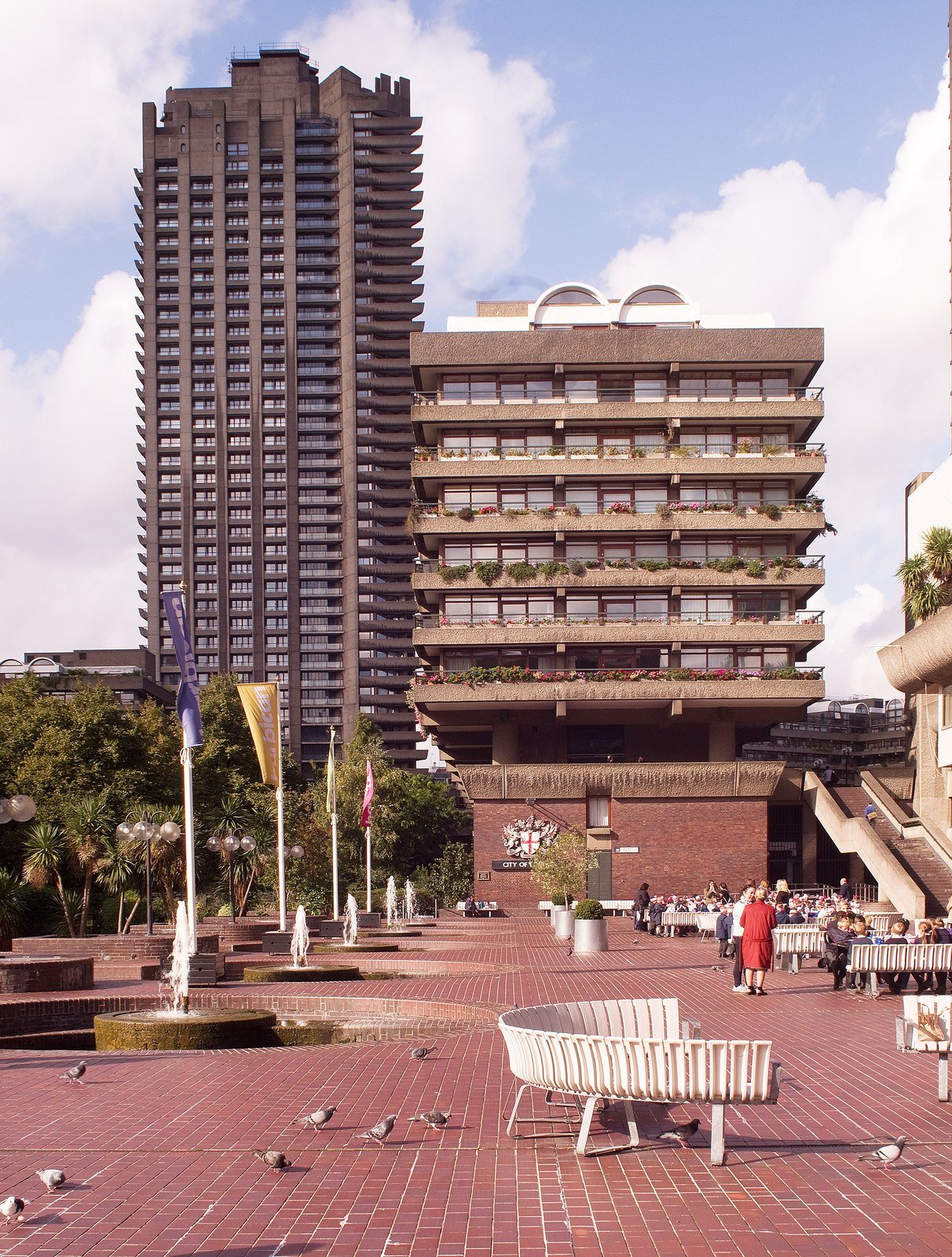
Cover: the Lakeside Terrace at the Barbican Centre. Photograph by Jim Osley, CC BY-SA 2.0, via Wikimedia Commons.
Exhibitions