
Art News ·
Art News: Painting the French Riviera at the Royal Academy, Tickets and What to See
By Whitebank Fine Art
Painting the French Riviera, in the Main Galleries of the Royal Academy in London until 31 January 2027, tells the story of how the Mediterranean coast of France drew the great painters of modern art, from the 1870s to the 1960s. It has more than 160 works, paintings and sculpture alongside travel posters and film, and it was organised by the Royal Academy with the Cleveland Museum of Art. Since it opened on 2 October it has had five stars from The Independent and four from the Evening Standard and the Mail on Sunday.
What is on show
From the 1870s the railway brought painters south, looking for a light and colour that the cities of the north did not have. Claude Monet made two trips, to Bordighera, just over the Italian border, in 1884 and to Antibes in 1888, and pictures from both are here. Henri-Edmond Cross, a close friend of Paul Signac, settled on the coast near Le Lavandou and painted the sea in dots of pure colour; his Les Îles d'Or, of about 1891–92, lent by the Musée d'Orsay, is almost abstract, and the curator, Ann Dumas, calls it his greatest work. In 1905 and 1906 the Fauves went further: André Derain painted with Henri Matisse at Collioure and Georges Braque painted at L'Estaque, near Marseille. Among the sculpture is Aristide Maillol's La Méditerranée, of 1902–05.
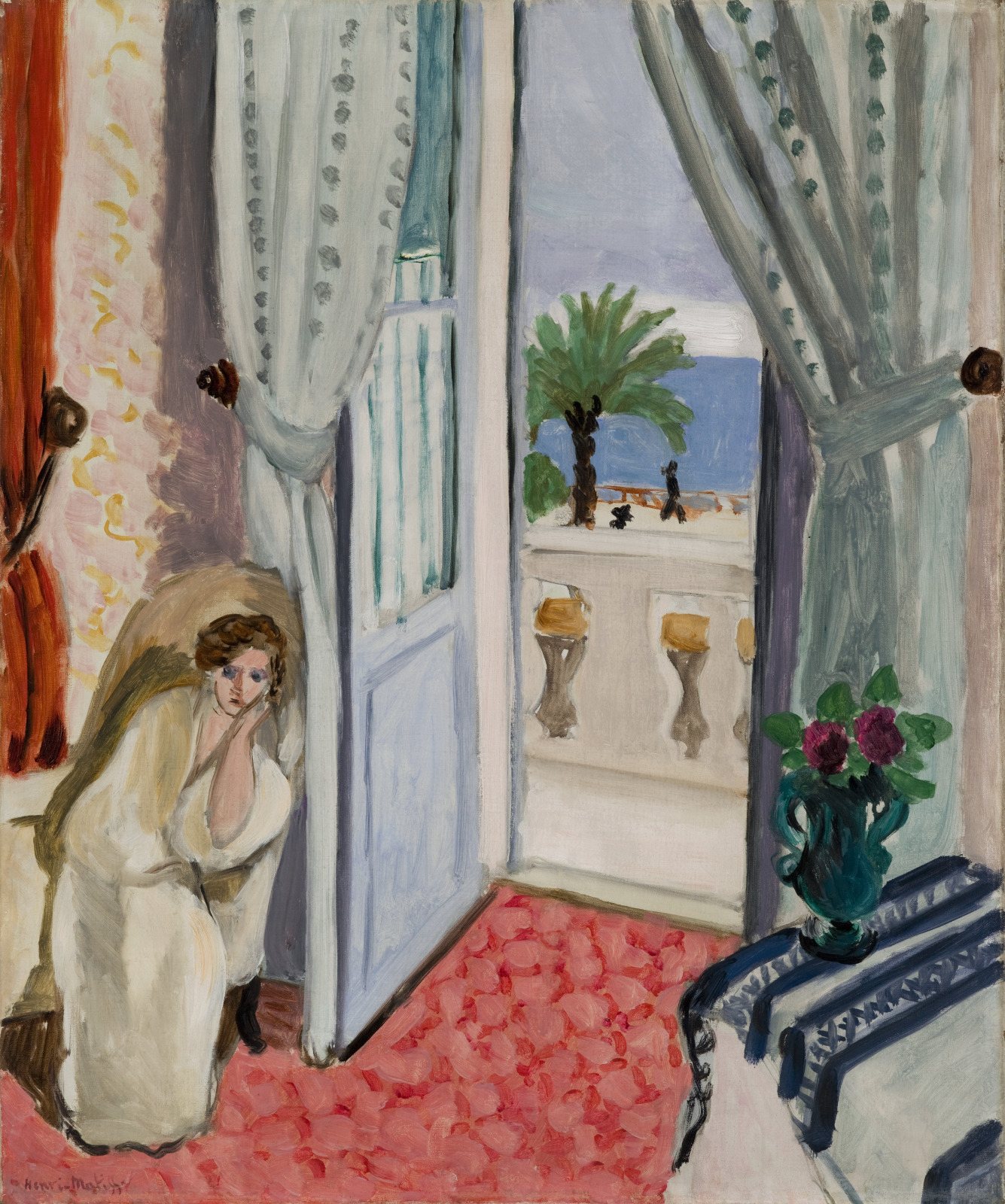
Henri Matisse moved to Nice in 1917 and stayed for the rest of his life, painting the hotel rooms, balconies and shuttered windows of his Interior at Nice pictures. Pierre-Auguste Renoir spent his last years at Cagnes-sur-Mer. Pierre Bonnard painted at Le Cannet, and his Bord de mer, sous les pins, of 1921, a picnic under the pines, is one of the curator's favourites in the show. Raoul Dufy made the regattas and promenades of the coast his own. The show ends in the years when the Riviera became a resort and a film location, with Pablo Picasso, who worked at Antibes and Vallauris after the war, and Yves Klein, born in Nice, whose Anthropometries of 1960 were made by models covered in his blue paint pressing their bodies onto paper.
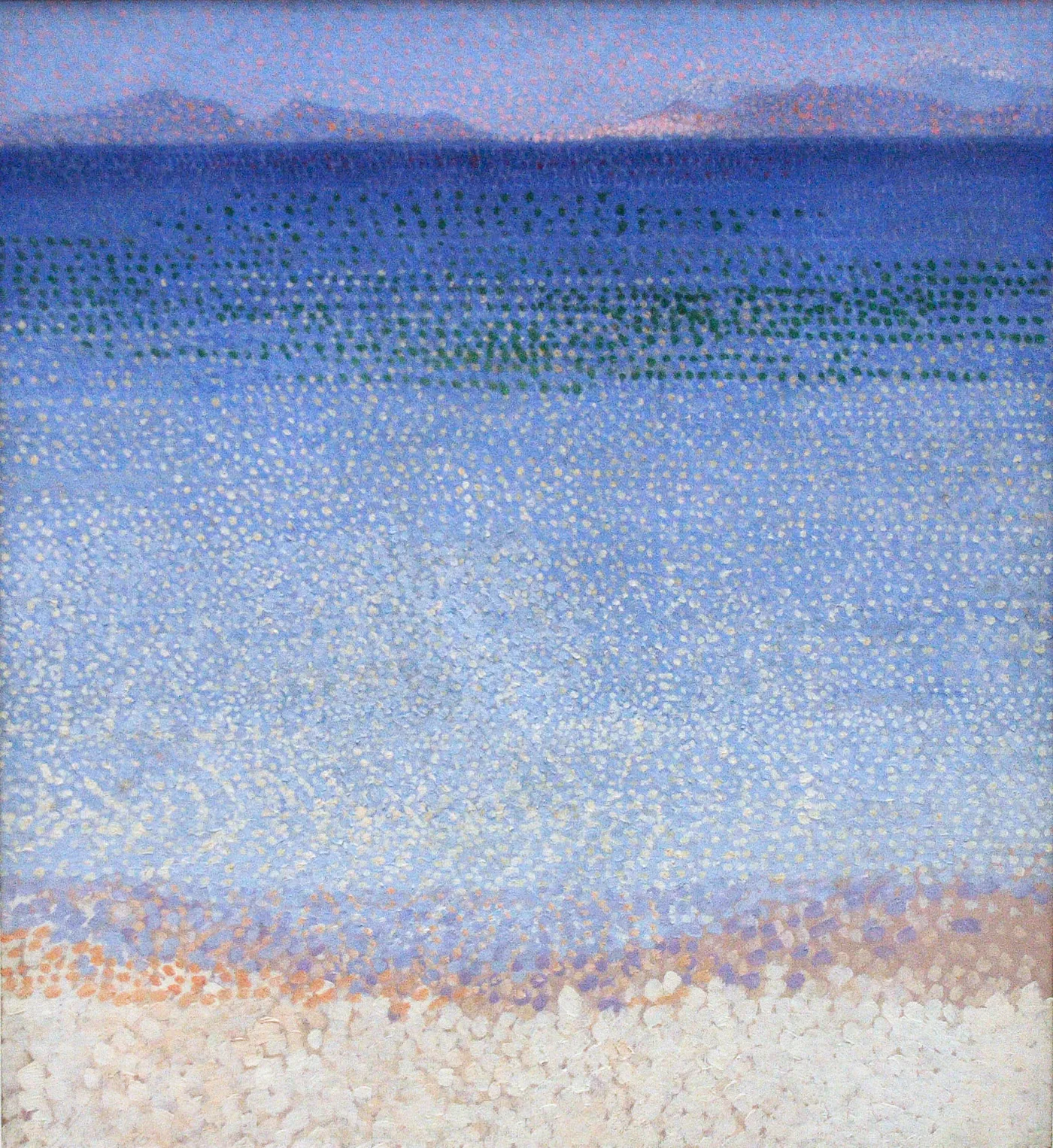
Henri-Edmond Cross, Les Îles d'Or, about 1891–92. Musée d'Orsay, Paris, and now in Painting the French Riviera. Public domain, via Wikimedia Commons.
Painting the French Riviera tickets and prices
- Dates: until 31 January 2027, in the Main Galleries at Burlington House, Piccadilly.
- Tickets: £24 to £26, or £26.50 to £28.60 with a donation. Friends of the RA go free, and check the RA's booking page for concessions.
- Opening times: 10am to 6pm on Tuesday, Wednesday, Thursday and Sunday, and 10am to 9pm on Friday and Saturday. The RA is closed on Mondays.
- Late openings: the galleries stay open until 9pm on Fridays and Saturdays for the run of the show, and on those days exhibition visitors can buy a glass of Provence rosé or Champagne for £12, or coffee and a madeleine for £8.
- Getting in: use the Piccadilly entrance at Burlington House. The nearest Underground stations are Piccadilly Circus and Green Park.
- Bags: backpacks, suitcases and large bags cannot be taken into the galleries or stored, and the RA is cashless.
Also at the Royal Academy
Peggy Guggenheim in London: The Making of a Collector opens on 21 November and runs until 14 March, with tickets at £17. It revisits Guggenheim Jeune, the gallery she opened on Cork Street in 1938, with works by Kandinsky, Mondrian, Henry Moore, Barbara Hepworth, Eileen Agar and Salvador Dalí. The John Madejski Fine Rooms, with works from the RA's own collection, are free.
Elsewhere in London, Renoir and Love is at the National Gallery until 31 January, Hokusai is at Dulwich Picture Gallery until 17 January, and Frida Kahlo is at Tate Modern until 3 January.
Owning a picture of the Riviera
The painters in this exhibition span every level of the market. Major paintings by Monet, Matisse and Picasso from their years in the south are rare, and when one comes to auction it is a headline sale. Below them is a wide and active market: Dufy's oils and watercolours of Nice, Cannes and the regattas, Signac's watercolours of the ports, Chagall's lithographs from his years at Vence and Saint-Paul-de-Vence, and the ceramics Picasso made in editions at the Madoura pottery in Vallauris from 1947.
What a work is worth depends on the usual things: the date and subject, its condition, and whether it is recognised by the artist's catalogue raisonné or committee, which for most of these painters is the first question any buyer asks. For Picasso's ceramics, the stamps on the base and the size of the edition decide the value, and for prints and posters, whether the impression is from the original edition.
If you own a work by one of these artists and are thinking of selling, send us photographs of the front and the back for a free valuation. There is no obligation to sell, and we act for you rather than for the saleroom.
Cover: Henri Matisse, Interior at Nice, about 1919. Saint Louis Art Museum. Public domain, via Wikimedia Commons.
Exhibitions