Elliott Erwitt valuation
Magnum photographer of dogs, lovers and everyday absurdity, caught with a deadpan eye and perfect timing.
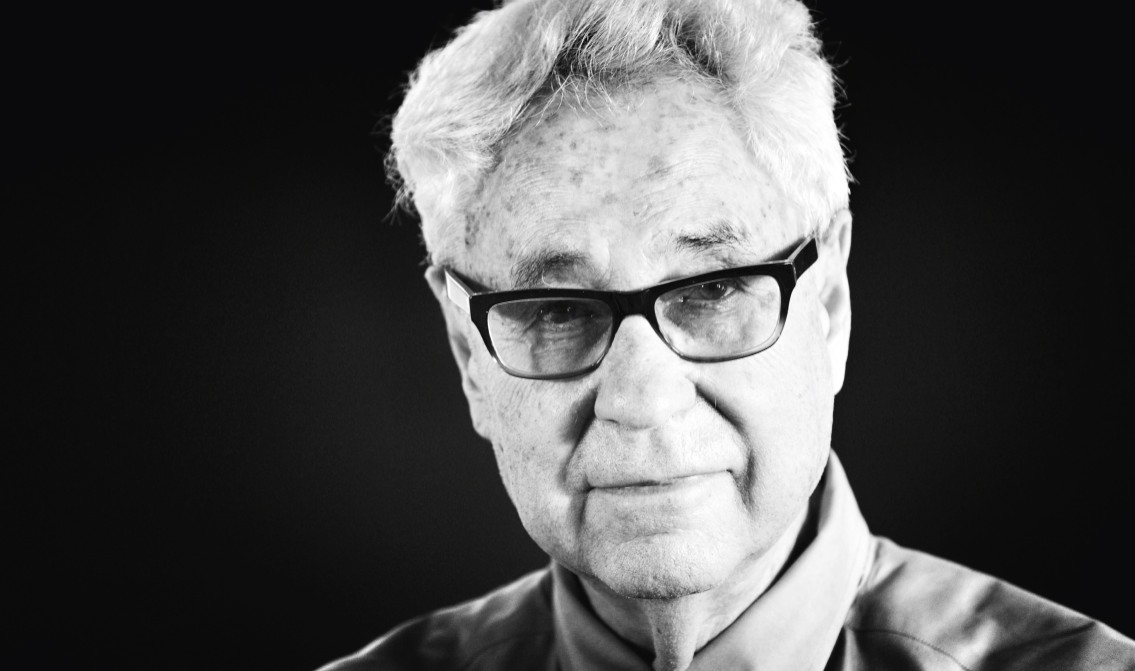
Elliott Erwitt (1928–2023) was born in Paris to Russian émigré parents, spent his early childhood in Milan, and came to the United States in 1939, growing up in New York and Los Angeles, where he worked in a commercial darkroom as a teenager.
What a work by Elliott Erwitt is worth
Send photographs and whatever paperwork came with it. The first question is what the work actually is — edition or unique, when, and in what condition — because everything else follows from the answer. A valuation is free, made online from the photographs you send, and it commits you to nothing. We act for sellers across the United Kingdom, Europe and the United States.
Write to info@whitebankfineart.co.uk, or start below.
Bio
Elliott Erwitt (1928–2023) was born in Paris to Russian émigré parents, spent his early childhood in Milan, and came to the United States in 1939, growing up in New York and Los Angeles, where he worked in a commercial darkroom as a teenager. He studied photography at Los Angeles City College and film at the New School in New York, and after army service as a photographer in France and Germany he joined Magnum Photos in 1953, on Robert Capa's invitation; he later served as its president. Alongside a long career in advertising, magazine work and film he made the personal pictures that keep his name: dogs seen from the level of their owners' ankles, California Kiss of 1955, a couple reflected in a car's wing mirror above the sea, Richard Nixon jabbing a finger at Nikita Khrushchev at the Moscow kitchen debate of 1959, and a lifetime of visual jokes found rather than staged.
Most of what comes to market is gelatin silver prints, and the same image exists in prints made at very different dates: a few made close to the time, and many more printed later, from the 1980s onwards, and signed in ink in the margin. The date of printing, the size, the signature and any stamps on the reverse matter more than the date of the negative, and the best-known images were printed in some number. Portfolios and signed books come up as well.
Paris, Magnum and the dogs
His photographs of dogs filled several books, the first of them Son of Bitch in 1974.
He also made documentary films, among them Beauty Knows No Pain of 1971, about a college drill team in Texas.
Standard Oil, André S. Solidor and the films
He was born Elio Romano Erwitz. After moving to New York in 1948 he met Edward Steichen, Robert Capa and Roy Stryker, and Stryker, who had run the Farm Security Administration's photography, hired him for a project for the Standard Oil Company; freelance work followed for Collier's, Look, Life and Holiday. Besides the kitchen debate he photographed John F. Kennedy's funeral in 1963 and Barack Obama's inauguration in 2009, and Segregated Water Fountains, North Carolina, of 1950, is among his best-known pictures.
He invented an alter ego, the beret-wearing André S. Solidor, whose initials spell ASS, to send up the excesses of contemporary photography; The Art of André S. Solidor appeared as a book in 2009 and was shown at the Paul Smith Gallery in London in 2011. As a film-maker he was a camera operator on Gimme Shelter in 1970 and made the prize-winning Glassmakers of Herat, Afghanistan, in 1977. The Royal Photographic Society made him an Honorary Fellow in 1994 and gave him its Centenary Medal in 2002, and the International Center of Photography gave him its Infinity Award for lifetime achievement in 2011.
Whitebank Fine Art is an art advisory and gallery, not an auction house, and is not affiliated with any auction house or with the artist, their estate or their representatives. This page describes the range we advise on. Nothing here is investment advice.