
Max Ernst valuation
Dada in Cologne, Surrealism in Paris, and the inventor of frottage, grattage and decalcomania.
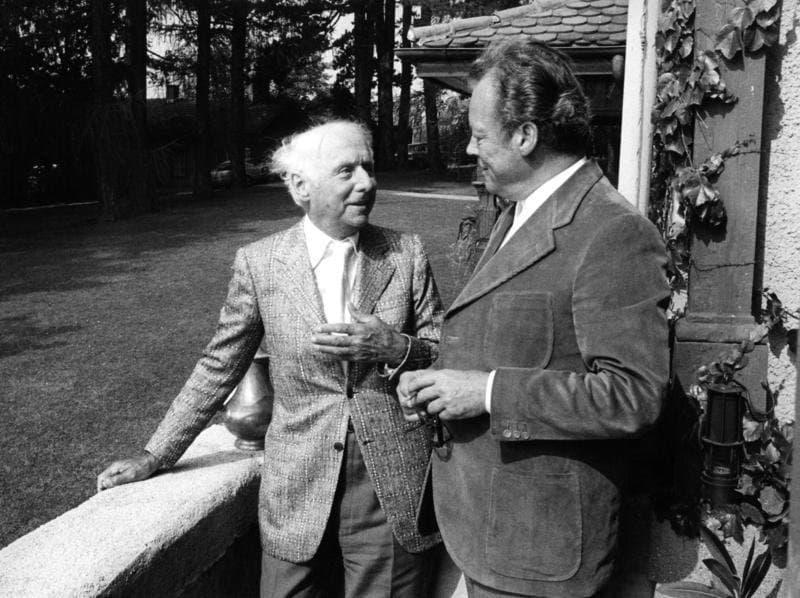
Max Ernst was born near Cologne in 1891, served four years in the German artillery, and described himself as having died in 1914 and been resurrected in 1918.
What a work by Max Ernst is worth
Send photographs and whatever paperwork came with it. The first question is what the work actually is — edition or unique, when, and in what condition — because everything else follows from the answer. A valuation is free, made online from the photographs you send, and it commits you to nothing. We act for sellers across the United Kingdom, Europe and the United States.
Write to info@whitebankfineart.co.uk, or start below.
Bio
Max Ernst was born near Cologne in 1891, served four years in the German artillery, and described himself as having died in 1914 and been resurrected in 1918. He founded Cologne Dada, moved to Paris in 1922 and became central to Surrealism, and invented more techniques than anyone else in the movement: frottage, rubbing paper over grained wood; grattage, scraping paint over a textured surface; decalcomania, pressing pigment between surfaces to generate forests and jungles. He was interned in France, escaped to America with Peggy Guggenheim's help, married Dorothea Tanning, and returned to France, dying in Paris in 1976.
Ernst's collage novels — La Femme 100 Tetes, Une Semaine de Bonte — are among the most important printed works of the century and appear both as bound volumes and as individual plates. The Spies and Metken catalogue raisonne is the necessary reference across the whole output. Sculpture exists in bronze editions, many cast posthumously, so cast date and foundry matter. Provenance across the 1930s and 1940s should be examined, given the confiscations and the artist's own flight. Later lithographic and etched editions are numerous and are a modest, separate market.
At a glance
- Born
- 2 April 1891, Brühl
- Died
- 1 April 1976, Paris
- Movements
- Dada, Surrealism
More on Wikipedia.
Histoire naturelle and the frottages
In 1925 Ernst began making frottages: he laid paper over floorboards, leaves, string, crusts of bread and other textures and rubbed it with pencil, then worked the results into forests, creatures and landscapes. The original drawings are unique works. In 1926 the Galerie Jeanne Bucher in Paris published thirty-four of them as Histoire naturelle, a portfolio of collotypes with a preface by Jean Arp, signed by Ernst at the colophon.
The collotypes are fine photomechanical reproductions of the drawings rather than original prints, and single plates taken from the portfolio are unsigned. They are collected and have a real market, but a plate described as a signed Ernst frottage is something else, and later reproductions of the same images are common. A complete portfolio with its colophon, and the drawings themselves, sit far above single sheets.
Brühl, Cologne Dada and Loplop
Ernst was born at Brühl, south of Cologne, the third of nine children of a teacher of the deaf who painted as an amateur. At the University of Bonn from 1909 he read philosophy, art history and psychiatry, and visits to asylums left him fascinated by the art of patients. He joined August Macke's Rheinische Expressionisten in 1911, and the Sonderbund exhibition in Cologne the next year showed him Picasso, Van Gogh and Gauguin. In 1919, after seeing paintings by de Chirico, he made his first collages, the lithographs of Fiat modes, and founded Cologne Dada with Johannes Theodor Baargeld.
Paul Éluard, whom he met in 1921, bought Celebes and Oedipus Rex and used six of his collages to illustrate the poems of Répétitions. A bird, Loplop, became Ernst's alter ego in the work. In the late 1930s he lived with Leonora Carrington at Saint-Martin-d'Ardèche, and in 1939 he was interned at the Camp des Milles with Hans Bellmer. In 1946 he married Dorothea Tanning in a double wedding with Man Ray and Juliet Browner in Beverly Hills. The Max Ernst Museum opened in Brühl in 2005; its collection, begun with works he gave the town in 1969, includes more than 70 bronzes and nearly all his lithographs.
Whitebank Fine Art is an art advisory and gallery, not an auction house, and is not affiliated with any auction house or with the artist, their estate or their representatives. This page describes the range we advise on. Nothing here is investment advice.