
John Lennon valuation
Trained at art school before the band, and drew in a fast, spare line all his life.
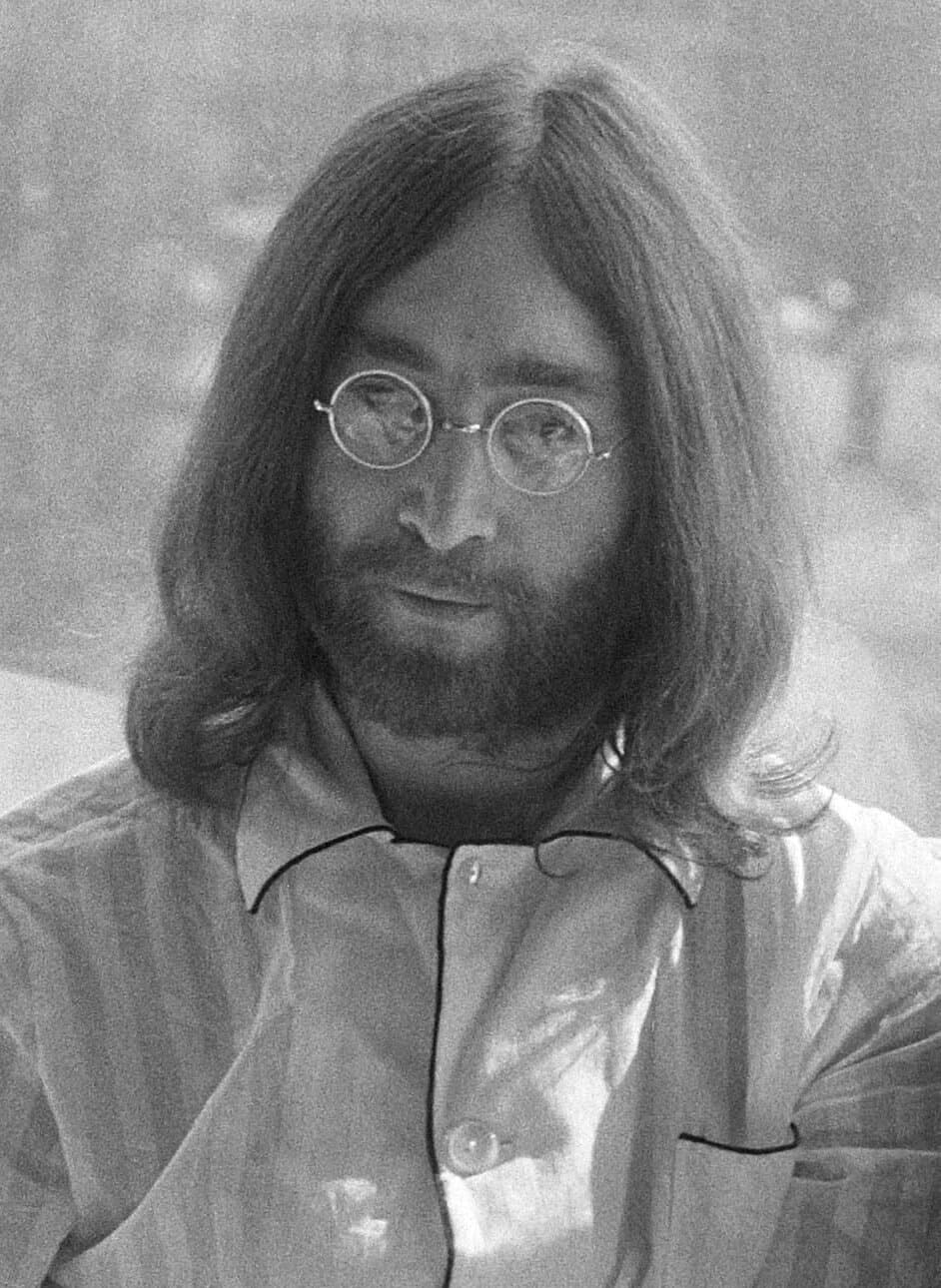
John Lennon was born in Liverpool in 1940 and attended Liverpool College of Art before the Beatles; drawing preceded music and continued alongside it.
What a work by John Lennon is worth
Send photographs and whatever paperwork came with it. The first question is what the work actually is — edition or unique, when, and in what condition — because everything else follows from the answer. A valuation is free, made online from the photographs you send, and it commits you to nothing. We act for sellers across the United Kingdom, Europe and the United States.
Write to info@whitebankfineart.co.uk, or start below.
Bio
John Lennon was born in Liverpool in 1940 and attended Liverpool College of Art before the Beatles; drawing preceded music and continued alongside it. He published two illustrated books of drawings and nonsense writing, In His Own Write and A Spaniard in the Works, in 1964 and 1965, and drew constantly in a rapid, spare line derived from Thurber and from newspaper cartooning. The Bag One portfolio of fourteen lithographs, made in 1969 as a wedding present for Yoko Ono, was seized by Scotland Yard from a London gallery on obscenity grounds. Real Love, the series of drawings for his son Sean, dates from the late 1970s. He was killed in 1980.
Bag One is the significant original graphic work and exists in a documented lithographic edition; complete portfolios in the original white case are far ahead of loose sheets. Everything else on the market is essentially posthumous: estate-authorised limited editions produced from his drawings, published in numbered runs, which are not the same thing as lifetime work and are valued accordingly. Certificates from the estate are expected. Original drawings and manuscripts trade in the music-memorabilia market rather than the art market, and value differently there.
Bag One, and the eight that were seized
The portfolio was published in 1970 and shown first at the London Arts Gallery on New Bond Street, opening on 15 January. The following day officers from Scotland Yard's obscene publications squad entered the gallery and removed eight of the lithographs, and a prosecution followed. It was dismissed on 27 April 1970, when the magistrate found that a commercial gallery was not a public thoroughfare within the meaning of the Metropolitan Police Act 1839.
The episode matters to a seller for an unromantic reason: it is why the portfolio's history is unusually well documented, and why provenance claims attached to individual sheets are worth checking rather than accepting. The things that decide value here are whether a set is complete and still in its original case, whether the sheets are lifetime impressions rather than one of the later editions, and the condition of the signatures, which are in pencil and vulnerable to light and handling.
Half-A-Room and You Are Here
Before Bag One there was conceptual work. In 1967 he paid for, and anonymously took part in, Yoko Ono's exhibition Half-A-Room at the Lisson Gallery, and on 1 July 1968 he opened his own show, You Are Here, at the Robert Fraser Gallery in London, dedicated to her. Its centrepiece was a round white canvas six feet across, blank except for the words you are here, written small.
Around it were sixty charity collection boxes, a pair of his shoes labelled I take my shoes off to you, a black bicycle in homage to Duchamp and a jar of free badges. At the opening he released 365 white balloons, each carrying a card to be posted back to the gallery with the finder's comments.
Whitebank Fine Art is an art advisory and gallery, not an auction house, and is not affiliated with any auction house or with the artist, their estate or their representatives. This page describes the range we advise on. Nothing here is investment advice.