
Max Liebermann valuation
Brought Impressionism to Germany, led the Berlin Secession, and was driven out of his own academy.
Max Liebermann was born in Berlin in 1847 into a wealthy Jewish industrial family and trained in Weimar and Paris, where the Barbizon painters and Manet shaped him.
What a work by Max Liebermann is worth
Send photographs and whatever paperwork came with it. The first question is what the work actually is — edition or unique, when, and in what condition — because everything else follows from the answer. A valuation is free, made online from the photographs you send, and it commits you to nothing. We act for sellers across the United Kingdom, Europe and the United States.
Write to info@whitebankfineart.co.uk, or start below.
Bio
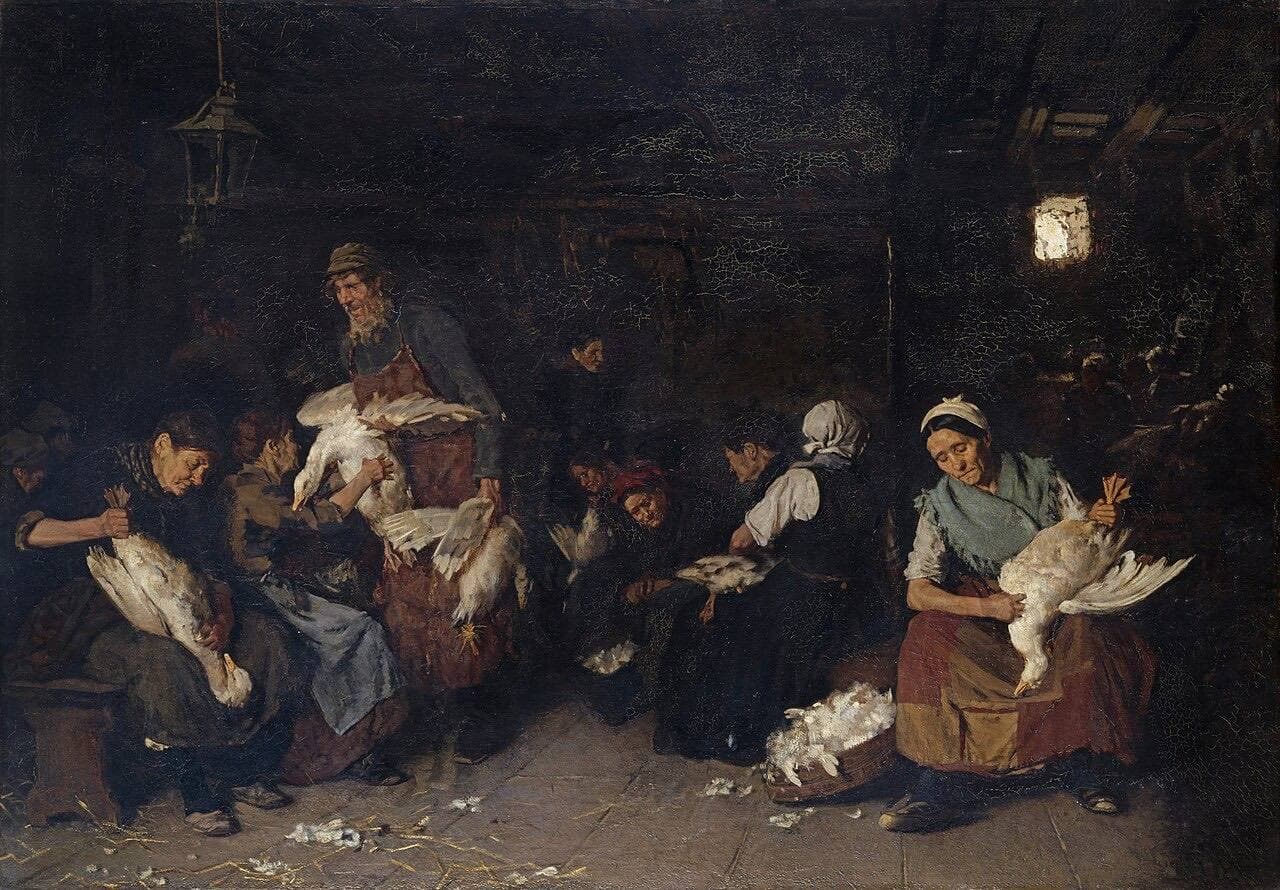
Max Liebermann was born in Berlin in 1847 into a wealthy Jewish industrial family and trained in Weimar and Paris, where the Barbizon painters and Manet shaped him. His early work is of labour — women plucking geese, a Dutch orphanage, net menders — painted with a plainness that was called ugly at the time. He led the Berlin Secession from 1899 and became president of the Prussian Academy of Arts. The late garden paintings at his villa on the Wannsee are the best-loved part of the work. Forced to resign in 1933, he died in 1935; his widow took her own life in 1943 to avoid deportation.
Provenance between 1933 and 1945 is unavoidable with Liebermann, both because of the family's persecution and because so many works were in Jewish collections that were looted; restitution claims remain active and this is the first question in any sale. The Wannsee garden paintings and the beach scenes lead the market. He was a very fine etcher and lithographer with a large graphic output, catalogued by Schiefler. Pastels and drawings are numerous. The market is principally German.
At a glance
- Born
- 20 July 1847, Berlin
- Died
- 8 February 1935, Berlin
- Movement
- Impressionism
More on Wikipedia.
The Goose Pluckers, Holland and Pariser Platz
His first large painting, The Goose Pluckers, was finished in 1872, and summers in Holland from 1875 lightened his palette: he copied Frans Hals at Haarlem and met Jozef Israëls and the painters of the Hague School. The Twelve-Year-Old Jesus in the Temple caused an outcry when it was shown in Munich in 1879. In 1884 he married Martha Marckwald and settled in Berlin for good.
The family house at Pariser Platz 7, beside the Brandenburg Gate, was his home and studio. The Prussian Academy gave him a solo exhibition for his fiftieth birthday in 1897 and a large one for his eightieth in 1927, and the Liebermann Villa on the Wannsee is now a museum. He painted more than 200 commissioned portraits, which are identified by their sitters.
Whitebank Fine Art is an art advisory and gallery, not an auction house, and is not affiliated with any auction house or with the artist, their estate or their representatives. This page describes the range we advise on. Nothing here is investment advice.