

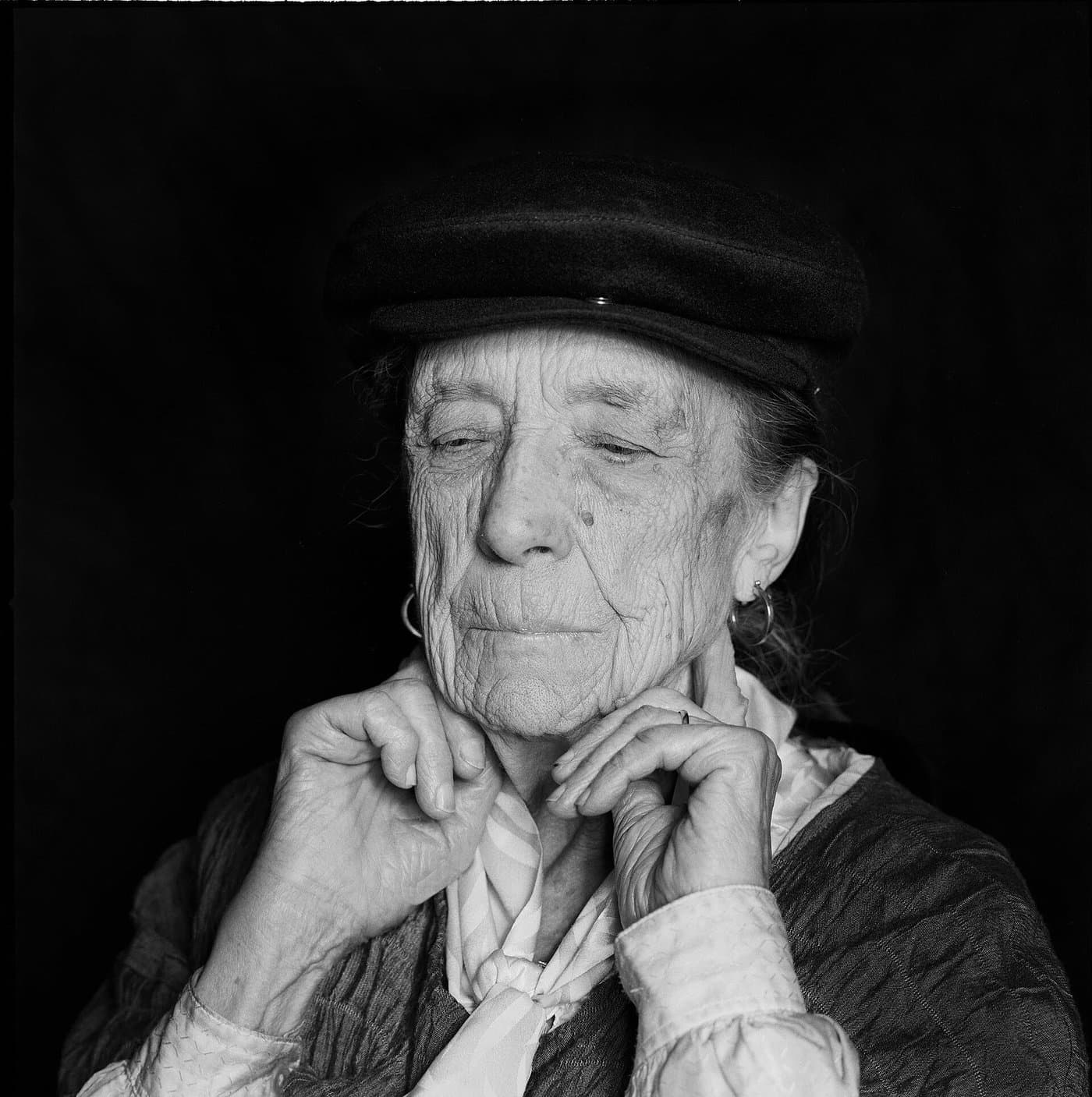
Louise Bourgeois valuation
Spiders, cells and fabric figures, from an artist who was seventy before the world caught up.
Louise Bourgeois was born in Paris in 1911 into a family of tapestry restorers, studied mathematics before art, and moved to New York in 1938.
What a work by Louise Bourgeois is worth
Send photographs and whatever paperwork came with it. The first question is what the work actually is — edition or unique, when, and in what condition — because everything else follows from the answer. A valuation is free, made online from the photographs you send, and it commits you to nothing. We act for sellers across the United Kingdom, Europe and the United States.
Write to info@whitebankfineart.co.uk, or start below.
Bio
Louise Bourgeois was born in Paris in 1911 into a family of tapestry restorers, studied mathematics before art, and moved to New York in 1938. She worked for four decades in comparative obscurity and was seventy-one when the Museum of Modern Art gave her the retrospective that changed everything. The work returns constantly to her own childhood — her father's affair with the family's live-in English tutor, her mother's illness, the repair of tapestries — through the Cells, room-sized enclosures of found furniture and objects; through fabric figures sewn from her own clothes; and through Maman, the thirty-foot bronze spider that stands for the mother as weaver and protector. She worked until her death in 2010, at ninety-eight.
Maman and the other spiders exist in editions at several scales, and identifying scale, cast number and foundry is where a valuation begins. The fabric works of the last two decades are unique and are the most fragile part of the output — textile condition, light exposure and any prior conservation are decisive. She was also an exceptionally prolific printmaker, particularly in her final years, working with Wingate Studio and others; the Easton Foundation maintains the catalogue of that graphic work.
At a glance
- Born
- 25 December 1911, 6th arrondissement of Paris
- Died
- 31 May 2010, New York City
- Movements
- Abstract Expressionism, Feminist art, Modernism
More on Wikipedia.
Checking a print online
Bourgeois's prints are unusually easy to check. The Museum of Modern Art's online catalogue, Louise Bourgeois: The Complete Prints & Books, completed after eight years of research, records her entire printed output, some 5,400 sheets, with editions, states and variants. In 1990 she gave MoMA the printed work then in her possession and promised examples of everything that followed, so the museum's collection is an unusually complete reference.
Many of the late prints exist in several variants, with additions by hand, different colours or different papers, and the catalogue distinguishes them; a sheet that matches none of the recorded versions needs explaining. Prints on fabric, which she made in her last years, share the fabric sculpture's vulnerability to light and handling.
Choisy-le-Roi, Femme Maison and the Sunday salons
Her parents dealt in antique tapestries and set up a restoration workshop below their flat at Choisy-le-Roi, where as a girl she filled in the designs where they had worn away. She entered the Sorbonne in 1930 to study mathematics and geometry, which she valued as rules nobody could change, and in 1932 she left them for art. In New York in the 1940s she carved upright figures from junkyard scraps and driftwood, painting over the wood and making holes and scratches with nails, and in the paintings of Femme Maison, of 1946 and 1947, women's heads are replaced with houses. Her early prints were made at home on a small press or at Atelier 17.
Destruction of the Father, of 1974, was the first work in which she used soft materials on a large scale: a flesh-coloured room of plaster, latex, wood, fabric and red light. From 1973 she taught at the Pratt Institute, Cooper Union, Brooklyn College and the New York Studio School, and in the early 1970s her Sunday salons at home in Chelsea, known as Sunday, bloody Sundays, critiqued the work of young artists. Maman first appeared in her commission for the Turbine Hall at Tate Modern in 2000, and six bronzes were cast from it. She won the Golden Lion at Venice and the Praemium Imperiale in 1999, and began working with Hauser & Wirth in 1997.
Best auction results
- Spider $28.2m
- Bronze · New York · November 2015
- Publicly reported
- The artist's auction record.
- Spider $10.7m
- Bronze, the same work · New York · November 2011
- Publicly reported
- At the time, the highest price at auction for a work by a woman.
Results as reported at the time of sale, inclusive of buyer's premium. They are a record of what specific works achieved on specific days, not a guide to what any other work is worth.
Whitebank Fine Art is an art advisory and gallery, not an auction house, and is not affiliated with any auction house or with the artist, their estate or their representatives. This page describes the range we advise on. Nothing here is investment advice.
