Lucie Rie valuation
Vienna-born British studio potter of refined bowls and bottles, known for her experimental glazes.
Lucie Rie (1902–1995) was born Lucie Gomperz in Vienna, the daughter of a doctor who was a consultant to Sigmund Freud.
What a work by Lucie Rie is worth
Send photographs and whatever paperwork came with it. The first question is what the work actually is — edition or unique, when, and in what condition — because everything else follows from the answer. A valuation is free, made online from the photographs you send, and it commits you to nothing. We act for sellers across the United Kingdom, Europe and the United States.
Write to info@whitebankfineart.co.uk, or start below.
Bio
Lucie Rie (1902–1995) was born Lucie Gomperz in Vienna, the daughter of a doctor who was a consultant to Sigmund Freud. She studied pottery under Michael Powolny at the Vienna Kunstgewerbeschule from 1922, set up her first studio in Vienna in 1925 and won a silver medal at the Paris International Exhibition of 1937. In 1938 she fled Nazi Austria for London, settling in a small mews house that was her home and studio for the rest of her life. In 1946 she took on Hans Coper, a fellow émigré, to help in the studio, and the two exhibited together in 1948. She is known for her extensive technical knowledge, her meticulous experiments with glazes and firing, and her unusual decorative techniques, on bowls and bottles thrown on the wheel.
Her pots are marked on the base, and the mark should be checked. Chips, cracks and restoration to rims are the main condition issues and should be declared, and provenance from an exhibition or a known collection helps.
At a glance
- Born
- 16 March 1902, Vienna
- Died
- 1 April 1995, London
Lucie Rie pottery: bowls, bottles and glazes
Dame Lucie Rie's best-known pots are her vases, bottles and bowls, above all the slender footed bowls with flaring rims, thrown on the wheel. Her glazes run from smooth to deeply pitted, and she took the same care over colour, decorating some pieces with fine inlaid lines and bands of pink, turquoise, blue and manganese. Her brightly coloured, delicate, modernist pots stand apart from the subdued, rustic work of her friend Bernard Leach.
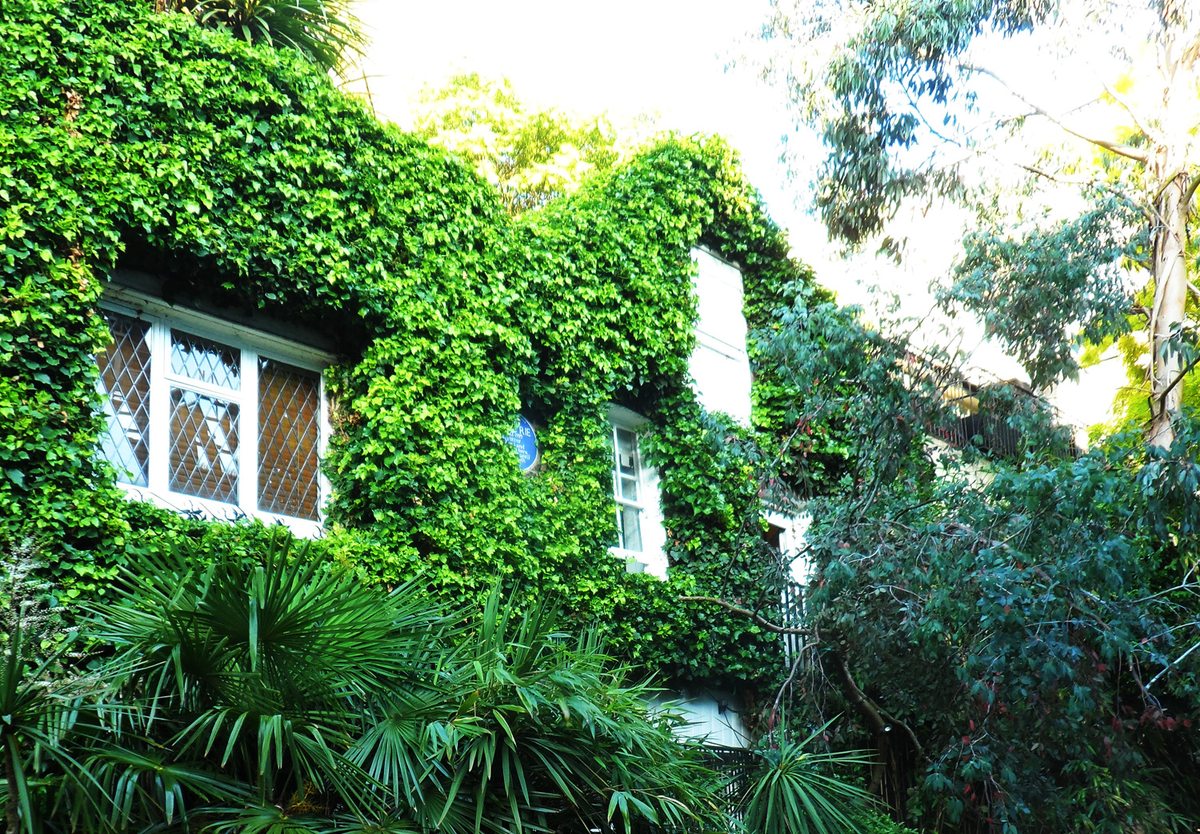
Her studio at 18 Albion Mews, near Hyde Park, stayed almost unchanged for the fifty years she worked there, and it has been reconstructed in the ceramics gallery at the Victoria and Albert Museum. She taught at Camberwell School of Art from 1960 and was interviewed in the studio by David Attenborough in 1982. The Holburne Museum in Bath showed more than 100 of her works in 2023, covering sixty years, from early pieces made in Vienna to a raspberry-coloured bowl she made at 88.
Lucie Rie buttons
During and after the Second World War, to make ends meet, Rie made ceramic buttons and jewellery for couture fashion houses. Matching a button exactly to the colour of a garment sharpened her accuracy with glazes, which fed into her later pots. Examples are in the Victoria and Albert Museum and the Lisa Sainsbury Collection at the Sainsbury Centre in Norwich, and she left buttons to her friend, the Japanese designer Issey Miyake. Buttons are small and easy to overlook in a house clearance, so they are worth showing to someone who knows them.
Lucie Rie and Hans Coper
In 1946 Rie hired Hans Coper (1920–1981), a fellow émigré with no experience of ceramics, to help her fire the buttons. She sent him to the potter Heber Mathews to learn to throw on the wheel, and by 1948 the two were exhibiting together. He became a partner in the studio, where they made tea sets and cups and saucers, until he left in 1958 to set up on his own at Digswell House in Hertfordshire. Tableware from those years may carry both of their seals.
Their work is often coupled, though it differs greatly. Coper threw his pots and then altered and assembled them into sculptural forms he called Spade, Bud, Cup, Egg, Flower and Arrow, with rough surfaces coloured by oxides, and his best-known commission is the set of six seven-foot candlesticks for the high altar of Coventry Cathedral, of 1962.
Lucie Rie marks
A Rie pot normally carries an impressed LR seal on the underside or within the footring. The seal is the first thing to check, but its form varies between pieces, and it should be read alongside the glaze, the weight and the way the foot is turned. A pitted glaze alone does not identify her work. Tony Birks's book Lucie Rie is the reference that cataloguers cite, and chips, cracks and any restoration to the rim should be declared.
Best auction results
- Footed bowl €406,800
- Inlaid with pink radiating lines and turquoise and manganese bands, about 1980 · Paris · December 2023
- Publicly reported
- Against an estimate of €40,000 to €60,000. The auction record for the artist when reported in December 2024.
- Footed bowl, white porcelain $422,910
- Late 1970s · New York · 11 December 2024
- Publicly reported
- One of 71 lots by Rie in a single sale that totalled $3.2 million.
Results as reported at the time of sale, inclusive of buyer's premium. They are a record of what specific works achieved on specific days, not a guide to what any other work is worth.
Whitebank Fine Art is an art advisory and gallery, not an auction house, and is not affiliated with any auction house or with the artist, their estate or their representatives. This page describes the range we advise on. Nothing here is investment advice.