
Thomas Struth valuation
Photographs museum visitors, empty streets, families and jungles with the same patient, frontal gaze.
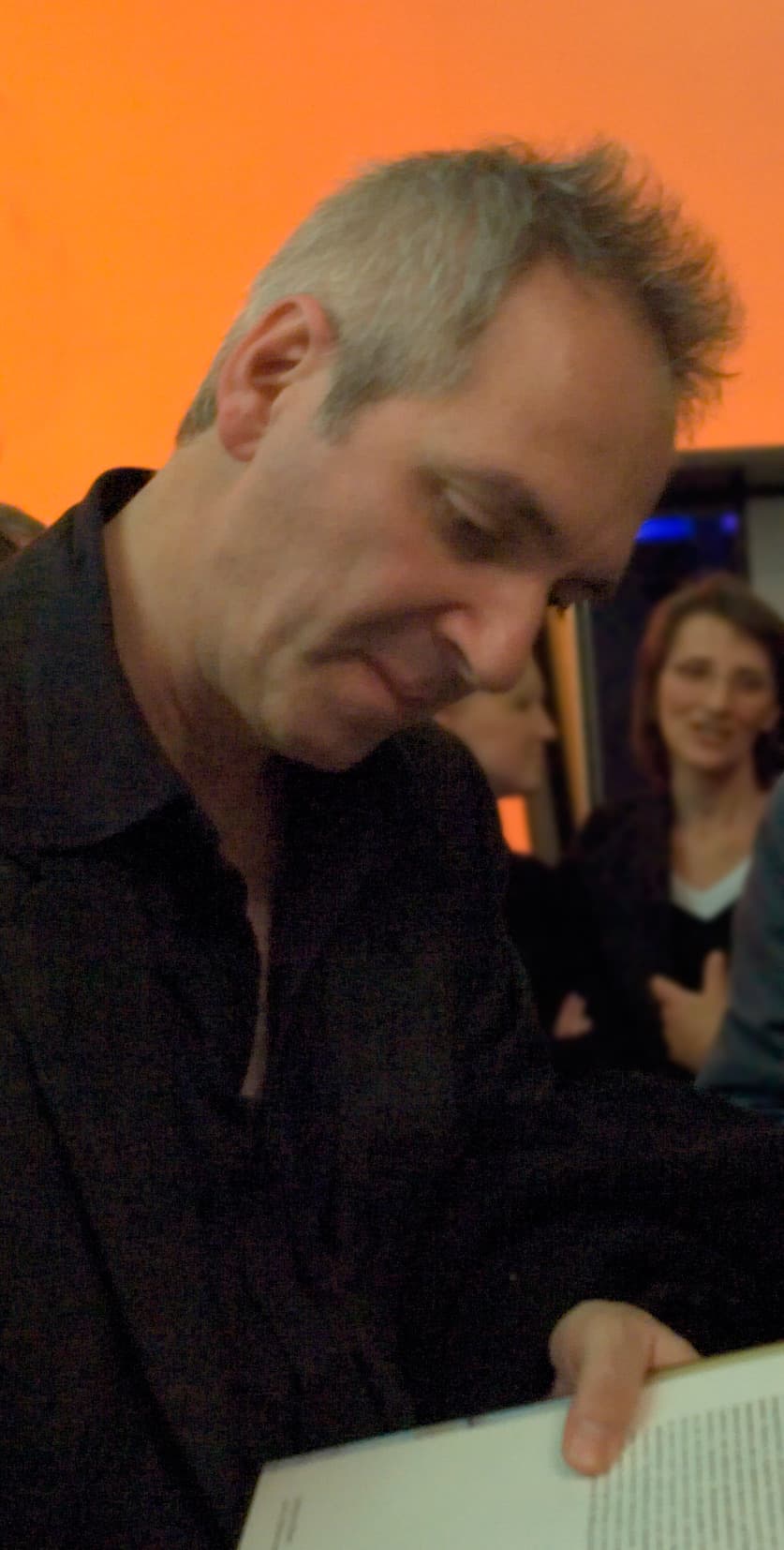
Thomas Struth was born at Geldern in Germany in 1954 and studied at the Kunstakademie Dusseldorf, first painting under Gerhard Richter and then photography in Bernd Becher's first class.
What a work by Thomas Struth is worth
Send photographs and whatever paperwork came with it. The first question is what the work actually is — edition or unique, when, and in what condition — because everything else follows from the answer. A valuation is free, made online from the photographs you send, and it commits you to nothing. We act for sellers across the United Kingdom, Europe and the United States.
Write to info@whitebankfineart.co.uk, or start below.
Bio
Thomas Struth was born at Geldern in Germany in 1954 and studied at the Kunstakademie Dusseldorf, first painting under Gerhard Richter and then photography in Bernd Becher's first class. The early Unconscious Places were black-and-white street views, taken from the middle of the road with a large-format camera, of cities with nobody in them. From the mid-1980s he made formally posed family portraits, and from 1989 the Museum Photographs, in which visitors stand before paintings in the Louvre, the Art Institute of Chicago or the Accademia in Venice and become part of the picture. Later series photographed dense jungle and forest, crowds looking at Michelangelo's David, and the machinery of laboratories, shipyards and space programmes. In 2011 he photographed Queen Elizabeth II and Prince Philip at Windsor.
The large colour prints are chromogenic, made in small editions and very often face-mounted to acrylic and framed to his specification, and that mounting is part of the work: it cannot be reversed, it scratches, and it does not tolerate heat or strong light. Several images exist in more than one size as separate editions, so title, dimensions and edition number identify the work. The black-and-white street photographs are gelatin silver prints, generally smaller, and a separate category. Signature, title, date and edition are normally on a label on the reverse, and the studio and his galleries hold the edition records.
Richter, P.S. 1 and Karlsruhe
Struth studied at the Düsseldorf academy from 1973 to 1980, painting first under Peter Kleemann and from 1974 under Gerhard Richter. In 1977 he and Axel Hütte spent two months photographing housing in East London, and in 1978 he was the first artist in residence at P.S. 1 in Long Island City. His first solo show outside Germany was at the Fruitmarket Gallery in Edinburgh in 1987.
He showed at the Venice Biennale in 1990 and Documenta IX in 1992, and from 1993 to 1996 was the first professor of photography at the Hochschule für Gestaltung in Karlsruhe. The first Pictures from Paradise were made in the Daintree rainforest in 1998, and Photographs 1978–2010 opened at the Kunsthaus Zürich in 2010 before travelling to Düsseldorf, the Whitechapel and Porto.
The Pergamon, the Prado and Nature & Politics
The Museum Photographs grew to take in churches and, between 1996 and 2001, the Pergamon Museum in Berlin, where after several attempts at candid pictures he chose to position the visitors himself. In 2005 he photographed the crowds around Velázquez's Las Meninas in the Prado over a single week, and in 2007 he became the first contemporary artist to show at the Prado. In 2002 Gerhard Richter asked him to photograph the Richter family for the New York Times Magazine.
From 2008 he photographed places the public rarely sees, among them fusion reactors, a space shuttle, shipyards and research laboratories, in colour prints up to four metres long, and this work toured as Nature & Politics from the Museum Folkwang in Essen in 2016 to Berlin, Atlanta, St Louis and Houston. He was made an honorary fellow of the Royal Photographic Society in 2016 and a member of the Akademie der Künste in Berlin in 2024.
Whitebank Fine Art is an art advisory and gallery, not an auction house, and is not affiliated with any auction house or with the artist, their estate or their representatives. This page describes the range we advise on. Nothing here is investment advice.