
Gothic Art
Gothic art is the art of medieval Europe from about 1140 to 1500, which began with the cathedrals of northern France and spread through stained glass, sculpture, illuminated manuscripts and painting, from Giotto and Duccio in Italy to the International Gothic courts.
Gothic began as architecture. In the 1140s Abbot Suger rebuilt the choir of Saint-Denis, north of Paris, with pointed arches and walls opened up to coloured glass, and cathedrals at Chartres, Reims and Amiens followed. Sculpture came with them, as carved figures on the doorways began to turn, smile and look at one another. The name came later and was meant as an insult: Renaissance writers, Giorgio Vasari among them, blamed the style on the Goths who had destroyed Rome.
In painting the decisive changes came in Italy around 1300. In Florence, Cimabue and then Giotto gave saints bodies and space, and in Siena Duccio and Simone Martini made panels of gold and flowing line. Books of hours and other illuminated manuscripts carried the style through France, England and the Low Countries. By about 1400 a refined court manner known as International Gothic was shared from Prague to Paris, seen in the Wilton Diptych and in the Limbourg brothers' Très Riches Heures. In the north it lasted into the time of Jan van Eyck and overlapped with the Renaissance.
At a glance
- When
- About 1140 to 1500
- Where
- France, then across Europe
- Leading artists
- Cimabue, Duccio, Giotto, Simone Martini
Characteristics of Gothic art
- Light and colour
- Walls opened up to stained glass, and painted panels set against burnished gold.
- Religious purpose
- Altarpieces, manuscripts and carvings made to teach the faith and to aid prayer.
- Line and elegance
- Flowing drapery and slender, swaying figures, especially in the courtly art around 1400.
- New human feeling
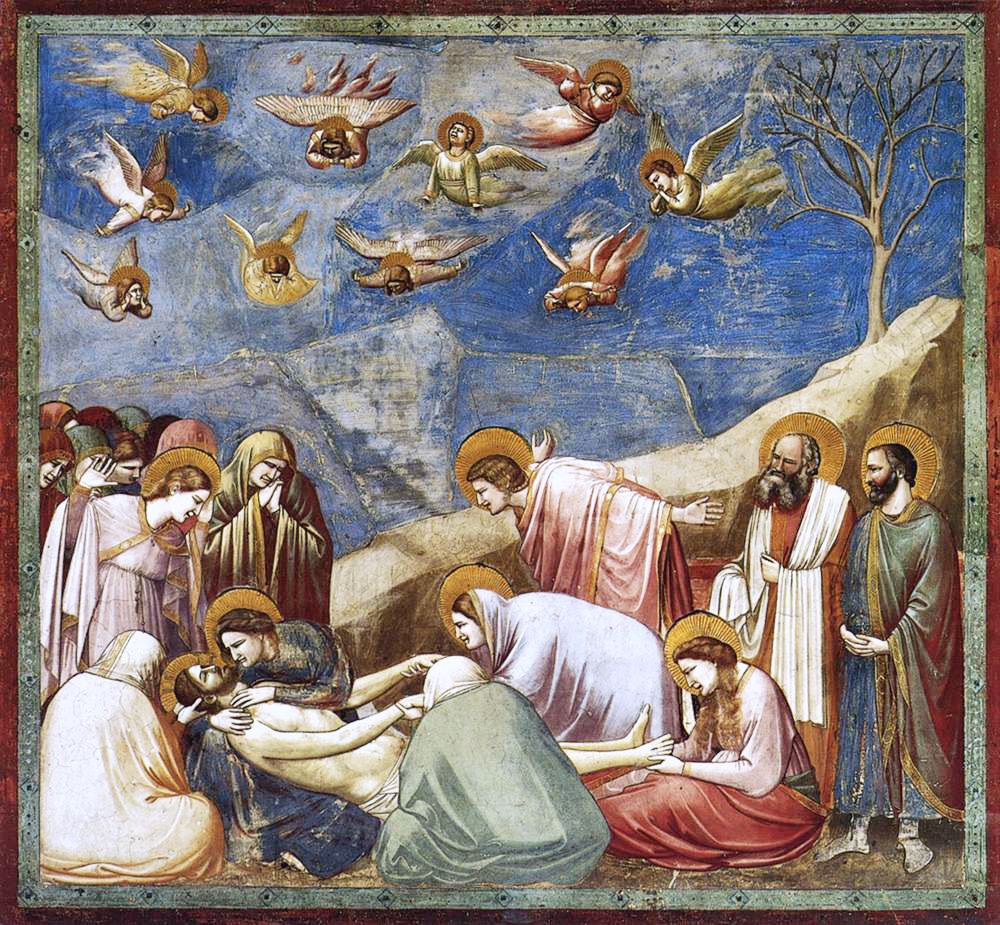
- Figures that grieve, turn and speak to one another, from the carved doorways to Giotto's frescoes.
- Pointed arches
- The arch and the pinnacle, which carried over from buildings into the frames of altarpieces.
Gothic artists
Every artist below has a page on this site, with a short biography and what a valuation of their work turns on.
The Italian painters
- CimabueFlorentine painter of the thirteenth century who began to give Byzantine figures weight and feeling.
- DuccioSienese painter of the great Maestà for Siena Cathedral, and a founder of Sienese painting.
- GiottoFlorentine painter whose solid, feeling figures opened the way to the Renaissance.
- Simone MartiniSienese painter of elegant, gold-ground Gothic pictures, who ended his career at the papal court in Avignon.
Famous Gothic works
- Rucellai MadonnaDuccio, 1285, Uffizi, Florence
- Scrovegni Chapel frescoesGiotto, about 1305, Padua
- MaestàDuccio, 1308–11, Museo dell'Opera del Duomo, Siena
- AnnunciationSimone Martini and Lippo Memmi, 1333, Uffizi, Florence
- The Wilton DiptychUnknown artist, about 1395–99, National Gallery, London
- Très Riches HeuresThe Limbourg brothers, about 1412–16, Musée Condé, Chantilly
What a valuation turns on
Paintings by the named masters are almost entirely in churches and museums. What the market sees is the work of their workshops and followers, often as fragments of altarpieces that were sawn apart in the eighteenth and nineteenth centuries, along with single leaves from manuscripts, carved wooden saints, stained glass panels and alabasters. The attribution, whether to a known hand, a workshop or a regional school, makes the largest difference to value.
Condition has to be weighed with care. Panels may have been thinned, cradled or heavily restored, and gold grounds regilded. A history of ownership matters, particularly for objects that may have left churches in recent times, and ivory carvings are subject to the UK's Ivory Act, which restricts their sale.
Common questions
What is Gothic art?
Gothic art is the art of medieval Europe from about 1140 to 1500. It includes cathedrals, stained glass, sculpture, illuminated manuscripts and painting on panels and walls.
What are the characteristics of Gothic art?
Pointed arches, large areas of stained glass, gold grounds, flowing line and increasingly natural, expressive figures, nearly all made for religious purposes.
Who are the most famous Gothic artists?
In painting, Giotto, Duccio, Cimabue and Simone Martini in Italy, and the Limbourg brothers in France.
Why is it called Gothic?
Renaissance writers used the word as an insult, linking the style with the Goths who sacked Rome. They considered it barbaric compared with the art of antiquity.
How do I sell a medieval painting or carving?
Send photographs of the front, any signature or marks, and the back for a free, confidential valuation, with any labels or documents. We check the work against the published record, look at condition, and compare a confidential private sale with auction.