

Nigerian modernism
Nigerian modernism is the modern art made in Nigeria from the 1940s to the 1970s, around independence in 1960, by artists who joined Nigerian traditions of form, myth and pattern to modern painting, sculpture and printmaking; its leading figures are Ben Enwonwu and the members of the Zaria Art Society.
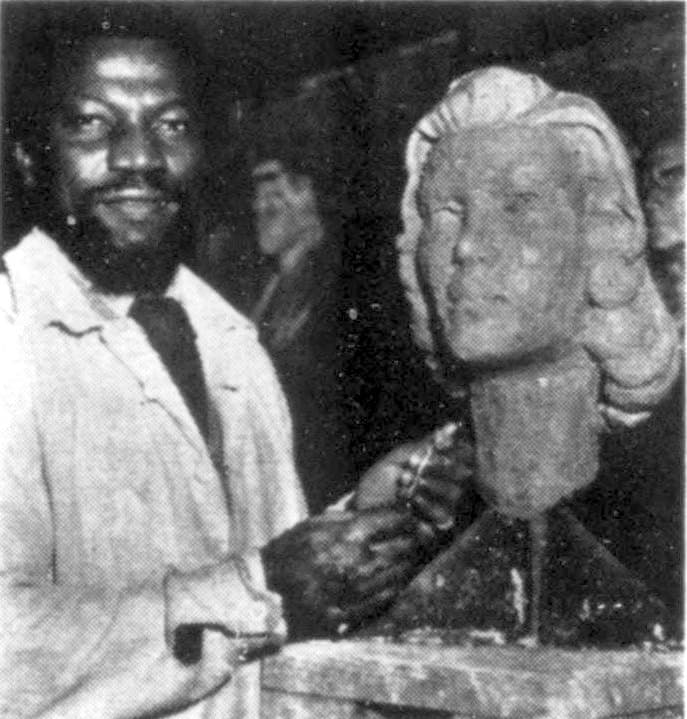
Its pioneers worked under colonial rule. Aina Onabolu, a self-taught painter of portraits in oil, pressed the colonial government to teach art in Nigerian schools, and the British art teacher Kenneth Murray, who arrived in 1927, trained the first generation. The best known of them, Ben Enwonwu, studied at the Slade in London in the 1940s, became the Nigerian government's art adviser, and made the bronze Anyanwu, which has stood outside the National Museum in Lagos since it opened in 1956; a cast was presented to the United Nations in New York in 1966. In 1957 he sculpted Queen Elizabeth II from life, and his paintings of dancers and masquerades made him the first Nigerian artist with an international name.
The next generation arrived with independence. In October 1958 students at the Nigerian College of Arts, Science and Technology in Zaria, among them Uche Okeke, Demas Nwoko, Bruce Onobrakpeya, Yusuf Grillo, Simon Okeke and Jimoh Akolo, formed the Zaria Art Society. They rejected the European curriculum they were being taught for what Okeke called natural synthesis: the forms, myths and patterns of Nigeria's own peoples, joined to whatever was useful from the West. After 1960 the ideas spread through new institutions: the Mbari Club in Ibadan, founded in 1961 by writers and artists with the German-born editor Ulli Beier; the Oshogbo workshops, which made painters and printmakers of Twins Seven-Seven, Jimoh Buraimoh and others; and from the early 1970s the art school of the University of Nigeria at Nsukka, where Uche Okeke revived uli, the Igbo tradition of drawing on the body and on walls, and where El Anatsui taught from 1975. Tate Modern surveyed the whole story in Nigerian Modernism, from October 2025 to May 2026.
At a glance
- When
- 1940s to 1970s
- Where
- Lagos, Zaria, Ibadan, Oshogbo and Nsukka
- Leading artists
- Ben Enwonwu, Bruce Onobrakpeya, Yusuf Grillo
Characteristics of Nigerian modernism
- Natural synthesis
- Nigerian traditions of form and meaning joined to modern techniques, rather than either one alone.
- Myth and masquerade
- Yoruba, Igbo, Urhobo and Benin myth, festival, dance and spirit as subjects.
- Uli and line
- The spare, curving line of Igbo uli drawing, revived at Nsukka.
- New printmaking
- Onobrakpeya's deep etchings, bronzed lino reliefs and plastographs, techniques of his own.
- Elongated figures
- Tall, stylised figures, in Grillo's paintings and Enwonwu's sculpture.
- Art for a new nation
- Monuments, murals and commissions for the public buildings of independent Nigeria.
Nigerian modernist artists
Every artist below has a page on this site, with a short biography and what a valuation of their work turns on.
The Nigerian modernists
- Ben EnwonwuNigeria's pioneering modernist, who sculpted the Queen from life and painted the lost Tutu portraits.
- Bruce OnobrakpeyaNigerian printmaker who invented new ways of printing, from bronzed lino reliefs to plastographs, rooted in Urhobo myth.
- Yusuf GrilloNigerian modernist of elongated figures in luminous blues, and a builder of Nigeria's art institutions.
Famous Nigerian modernist works
- AnyanwuBen Enwonwu, 1954–55, National Museum, Lagos; a cast of 1966 at the United Nations, New York
- SangoBen Enwonwu, 1964, the Marina, Lagos
- TutuBen Enwonwu, 1974
What a valuation turns on
Nigerian modernist art is one of the most active parts of the market for African art, and much of it meets in London and Lagos. Enwonwu leads it: paintings of dancers and masquerades, portraits, sculpture in wood and bronze, and works on paper. One of his three portraits of the princess Adetutu Ademiluyi, Tutu, missing since the 1970s, was found in a London flat in 2017. Much of the best work of the period left Nigeria with diplomats, teachers and expatriate collectors between the 1950s and the 1970s, and comes back to market decades later with little paperwork.
Enwonwu is also the most imitated, and the Ben Enwonwu Foundation in Lagos, run by his family, is the reference for his work. Onobrakpeya's prints were made in editions, many by techniques of his own, so the edition, the technique and the condition need establishing. For every artist on this page, letters, exhibition labels, an old photograph of the work in a room or a receipt from a Lagos gallery can settle what a work is.
Common questions
What is Nigerian modernism?
Nigerian modernism is the modern art made in Nigeria from the 1940s to the 1970s, around independence in 1960, by artists who combined Nigerian traditions of form, myth and pattern with modern painting, sculpture and printmaking. Ben Enwonwu and the Zaria Art Society are its best-known figures.
Who are the Nigerian modernist artists?
Aina Onabolu and Ben Enwonwu; the members of the Zaria Art Society, among them Uche Okeke, Demas Nwoko, Bruce Onobrakpeya, Yusuf Grillo, Simon Okeke and Jimoh Akolo; the potter Ladi Kwali; the Oshogbo artists Twins Seven-Seven and Jimoh Buraimoh; and at Nsukka Obiora Udechukwu and El Anatsui. Uzo Egonu worked in London.
What was the Zaria Art Society?
A group of art students at the Nigerian College of Arts, Science and Technology in Zaria, formed in October 1958, who rejected the European art curriculum they were taught for what Uche Okeke called natural synthesis, joining Nigerian traditions to modern technique. It lasted until about 1962, and its members became the leading Nigerian artists of their generation.
Who was Ben Enwonwu?
Ben Enwonwu (1917–1994) was the best-known Nigerian modernist: a painter and sculptor who trained at the Slade in London, became the Nigerian government's art adviser, sculpted Queen Elizabeth II from life in 1957, and made the bronze Anyanwu for the National Museum in Lagos.
How do I sell a Nigerian modernist painting or print?
Send photographs of the front, the signature and the back, with any letters, labels or receipts, for a free, confidential valuation. Provenance is usually the whole story with this work, and we research it, then compare a confidential private sale with the London salerooms that hold dedicated sales.
