
Romanticism
Romanticism is the movement in European art, literature and music from about 1790 to 1850 that valued emotion, imagination and the power of nature above classical order and reason; its painters include J. M. W. Turner, John Constable and William Blake in Britain, Caspar David Friedrich in Germany, Théodore Géricault and Eugène Delacroix in France, and Francisco de Goya in Spain.
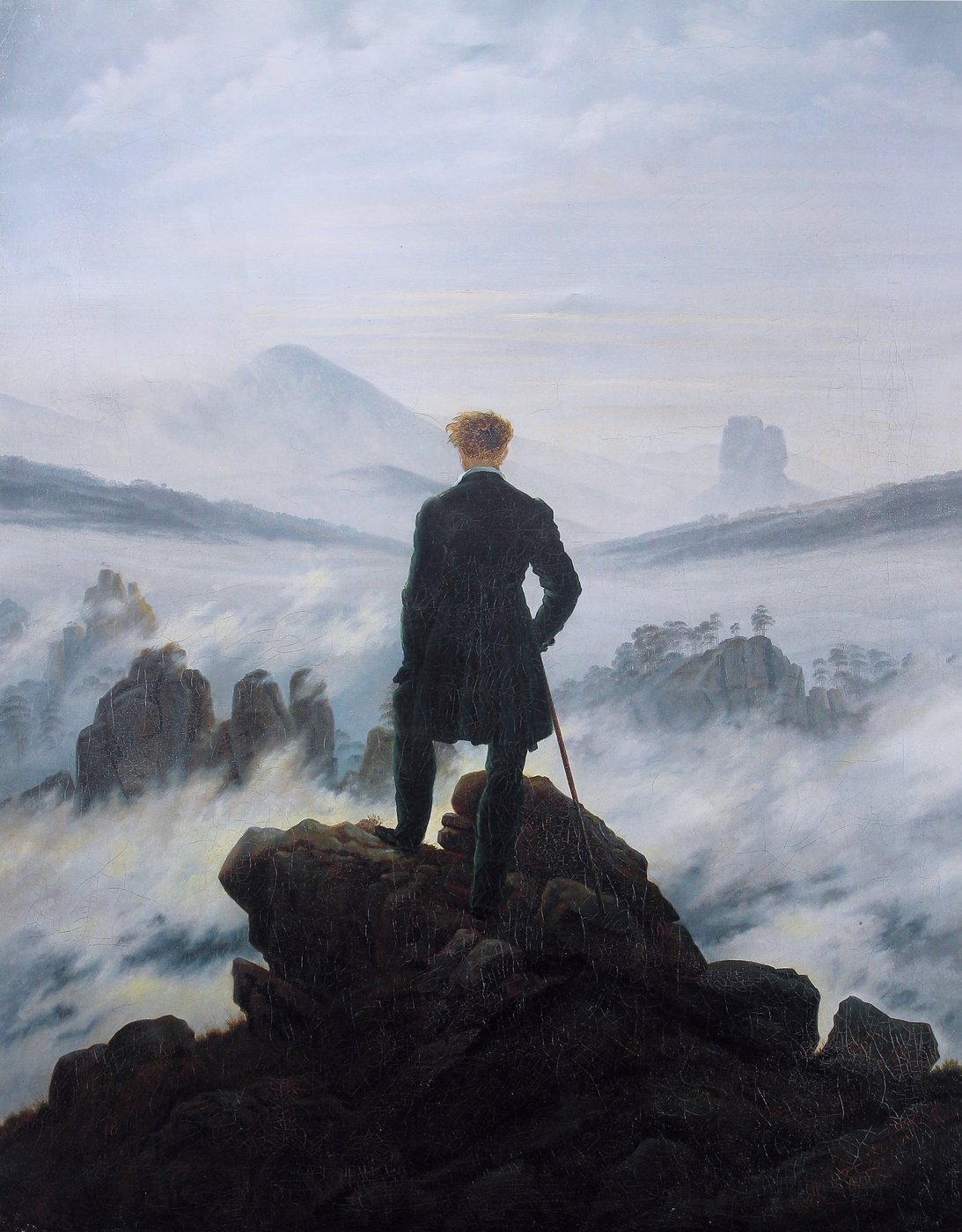
Romanticism grew out of an age of revolution, war and industry, as a reaction against the reason of the Enlightenment and the cool, sculptural Neoclassicism of painters such as Jacques-Louis David. Where the Academy ranked history painting first and landscape near the bottom, the Romantics made nature the vehicle for their deepest feelings, and the idea of the sublime, the awe and terror of storms, mountains and the sea that Edmund Burke had described in 1757, ran through their work. In Britain J. M. W. Turner dissolved ships, storms and sunlight into colour, John Constable painted the fields and skies of Suffolk with a freshness that astonished the French when The Hay Wain was shown at the Paris Salon in 1824, and William Blake built a private mythology of prophetic books printed and coloured by hand. In Germany Caspar David Friedrich painted lone figures before vast landscapes as images of the soul's encounter with God and nature. Writers such as Wordsworth, Byron and Goethe were part of the same movement.
In France Romanticism was a battle with the Academy. Théodore Géricault's The Raft of the Medusa, shown at the Salon of 1819, painted the survivors of a recent and scandalous shipwreck at the scale reserved for history, and Eugène Delacroix, the leader of the Romantic school against the classicism of Ingres, answered with drama, movement and colour, from Liberty Leading the People in 1830 to the scenes he painted after a journey to Morocco in 1832. In Spain Francisco de Goya, court painter to Charles IV, turned in his prints and his late Black Paintings to war, cruelty and the irrational. By the middle of the century Romanticism gave way to the Realism of Courbet, but its belief in the artist's individual vision, and Turner's and Constable's light and brushwork, prepared the way for Impressionism.
At a glance
- When
- About 1790 to 1850
- Where
- Britain, Germany, France and Spain
- Leading artists
- J. M. W. Turner, John Constable, William Blake
Characteristics of Romanticism
- Emotion and imagination
- Feeling, intuition and inner vision placed above reason and rules.
- Nature and the sublime
- Storms, mountains, seas and skies painted to inspire awe as well as beauty.
- The individual
- The lone figure in a landscape, and the artist as an original genius.
- Colour and brushwork
- Expressive handling and strong colour instead of a smooth academic finish.
- Drama and the faraway
- Shipwrecks, revolutions, the Middle Ages and North Africa as subjects.
Romantic artists
Every artist below has a page on this site, with a short biography and what a valuation of their work turns on.
In Britain
- J. M. W. TurnerThe painter of light, storms and steam, whose bequest to the nation fills the Clore Gallery at Tate Britain.
- John ConstableThe Hay Wain, Flatford Mill and the skies over Hampstead, by the painter who made the Suffolk countryside a national landscape.
- William BlakePoet, painter and printmaker, whose hand-coloured illuminated books are among the most original works of English art.
In France
Famous Romantic works
- The Third of May 1808Francisco de Goya, 1814, Museo del Prado, Madrid
- Wanderer above the Sea of FogCaspar David Friedrich, about 1818, Hamburger Kunsthalle
- The Raft of the MedusaThéodore Géricault, 1818–19, Louvre, Paris
- The Hay WainJohn Constable, 1821, National Gallery, London
- Liberty Leading the PeopleEugène Delacroix, 1830, Louvre, Paris
- The Fighting TemeraireJ. M. W. Turner, 1839, National Gallery, London
What a valuation turns on
The great Romantic paintings are in museums, and most of what comes to market is works on paper: Turner's watercolours and drawings, Constable's oil sketches and drawings, Delacroix's studies and Géricault's drawings and lithographs. Prints are the most accessible of all, from Goya's etchings and Delacroix's lithographs to Turner's Liber Studiorum and the many engravings made after his watercolours, and with prints the edition decides the value: Goya's plates, for example, were printed again and again long after his lifetime. Attribution is the other question, since all of these artists had followers, copyists and imitators, and paintings by Constable's son Lionel were long sold as his.
Condition matters as much as the name. Watercolours fade in daylight, and a Turner that has hung in the sun for a century may have lost its blues; some Romantic oils darkened and cracked badly where painters mixed bitumen into their paint. Provenance, the stamps of studio sales and exhibition labels help to settle attribution, and important British works that have been in the country for many years may need an export licence to leave it.
Common questions
What is Romanticism in art?
Romanticism is the movement in European art from about 1790 to 1850 that put emotion, imagination and the power of nature above the classical rules of the Academy. It is known for dramatic landscapes, stormy skies and seas, scenes of contemporary events and expressive colour and brushwork.
What are the characteristics of Romantic art?
Strong emotion and imagination; nature shown as sublime, wild and overwhelming; the lone individual in the landscape; expressive colour and loose brushwork; and dramatic subjects, from shipwrecks and revolutions to the Middle Ages and North Africa.
Who are the most famous Romantic artists?
J. M. W. Turner, John Constable and William Blake in Britain; Caspar David Friedrich in Germany; Théodore Géricault and Eugène Delacroix in France; and Francisco de Goya in Spain.
When was the Romantic period in art?
From about 1790 to about 1850. It followed Neoclassicism, overlapped with it for several decades, and gave way in the middle of the nineteenth century to Realism.
What is the difference between Romanticism and Neoclassicism?
Neoclassicism looked to ancient Greece and Rome for clarity, order and moral seriousness, with precise drawing and a smooth finish. Romanticism valued feeling over reason, nature over the antique and colour over line, with looser brushwork and more dramatic subjects.
How do I sell a Romantic painting, watercolour or print?
Send photographs of the front and the back, with any labels, inscriptions or collectors' marks, for a free, confidential valuation. Attribution, condition and provenance decide the most; we look at all three, compare a confidential private sale with auction, and keep the paperwork in your name until you are paid.