

St Ives School
The St Ives School is the name for the modern and abstract artists who lived and worked in and around St Ives, Cornwall, from the late 1930s to the 1960s, led first by Ben Nicholson and Barbara Hepworth and then by Peter Lanyon, Patrick Heron, Terry Frost and Roger Hilton.
St Ives had been an artists' colony since the 1880s, but its modern story begins in the summer of 1928, when Ben Nicholson and Christopher Wood, on a day trip from Feock, where they were staying with Winifred Nicholson, passed the house of a retired fisherman, Alfred Wallis, and found his paintings of ships and harbours on scraps of card. Wallis's directness confirmed both of them in a simpler, more instinctive kind of painting.
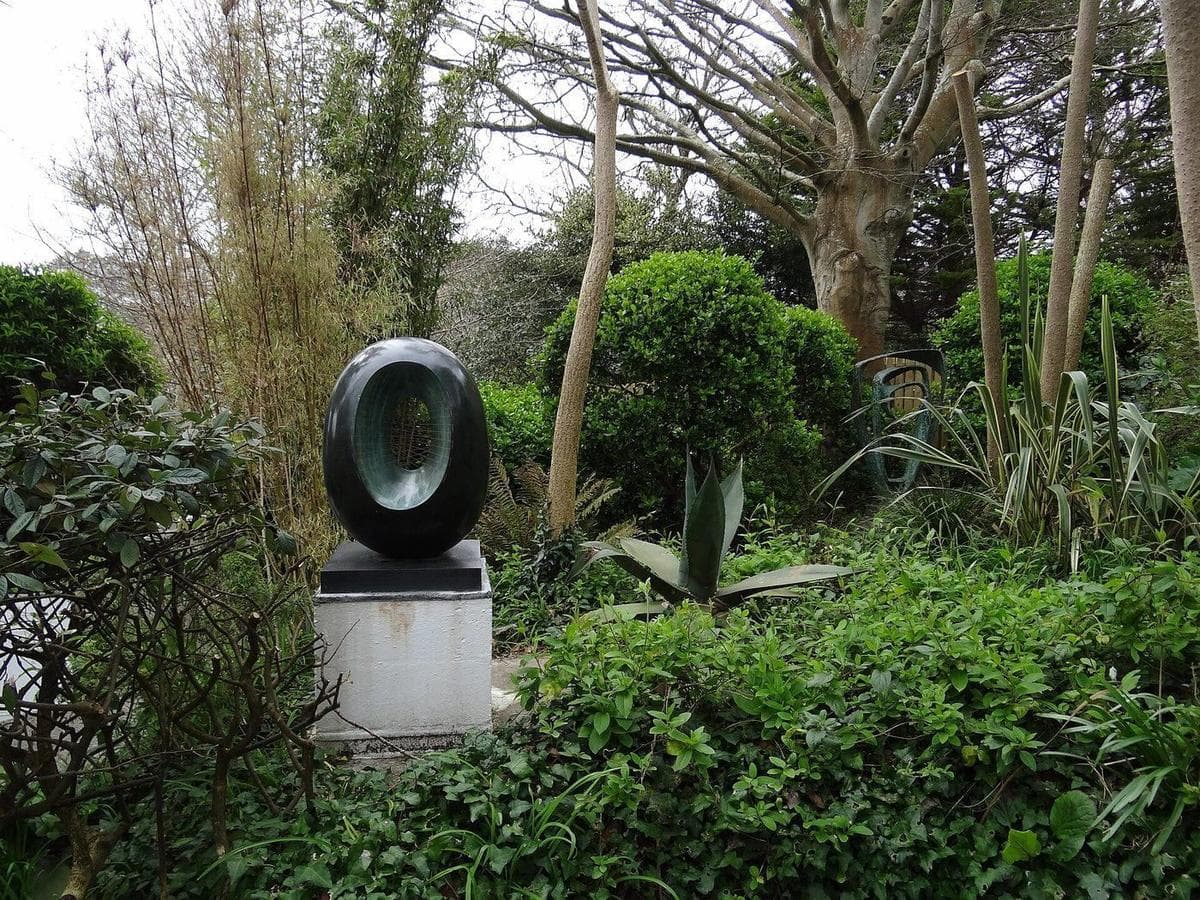
Ben Nicholson and Barbara Hepworth came to live at Carbis Bay, just outside the town, at the outbreak of war in 1939, and the Russian Constructivist Naum Gabo followed. Together they made St Ives a centre of international abstract art. Hepworth bought Trewyn Studio in 1949 and worked there from then on; its garden is now a museum. The Penwith Society of Arts was founded the same year. A younger generation, Peter Lanyon, who was born in St Ives, Patrick Heron, Terry Frost, Roger Hilton, Bryan Wynter and Wilhelmina Barns-Graham, joined abstraction to the Cornish landscape and became the British painters closest to the Abstract Expressionists, several of whom came to visit. Tate St Ives opened in 1993.
At a glance
- When
- 1928 to the 1960s
- Where
- St Ives, Cornwall
- Leading artists
- Ben Nicholson, Barbara Hepworth, Christopher Wood, Winifred Nicholson
Characteristics of the St Ives School
- Landscape into abstraction
- The Cornish coast, cliffs, fields and weather as the source of abstract form.
- Light and colour
- The clear Atlantic light of the far west, and Heron's colour as a subject in itself.
- Carving and open form
- Hepworth's pierced stone and wood, and Gabo's Constructivism.
- Directness
- Alfred Wallis's untaught painting, and its hold on the first generation.
- Gesture
- Post-war painting in conversation with the New York School.
St Ives artists
Every artist below has a page on this site, with a short biography and what a valuation of their work turns on.
Before the war
- Ben NicholsonCarved white reliefs in the 1930s and spent fifty years arranging jugs, hills and rectangles.
- Barbara HepworthPut the hole through the middle of the sculpture, and made St Ives a centre of European modernism.
- Christopher WoodPainted Brittany and Cornwall with a deliberate naivety, and was dead under a train at twenty-nine.
- Winifred NicholsonPainted flowers on windowsills against landscape and light, and colour itself, from Cumberland to Paris.
After the war
- Peter LanyonPainted the Cornish landscape from inside a glider, and died doing it.
- Patrick HeronSt Ives colourist who made the whole picture out of soft-edged shapes of pure hue.
- Terry FrostLearned to paint in a prisoner-of-war camp, and spent the rest of his life on boats, harbours and half-circles.
- Roger HiltonCornish abstraction with a figure fighting its way back in, and gouaches made from a sickbed.
- William ScottPans, eggs and a table top, abstracted until only the shapes and the intervals are left.
Famous St Ives works
- 1935 (white relief)Ben Nicholson, 1935, Tate, London
- PorthlevenPeter Lanyon, 1951, Tate, London
- Green, Black and White MovementTerry Frost, 1951, Tate, London
- Horizontal Stripe Painting: November 1957 – January 1958Patrick Heron, 1957–58, Tate, London
- Single FormBarbara Hepworth, 1961–64, United Nations, New York
What a valuation turns on
St Ives is an active market, concentrated in Britain, which makes London the natural place to sell. Most of these artists made prints, and Frost, Heron and Hilton made many screenprints and lithographs in later years, so the bulk of what comes up is on paper; paintings from the 1950s are the scarce part, and a work's date can matter as much as its size.
For Hepworth and Ben Nicholson, documentation matters most. Hepworth's bronzes were cast in numbered editions, so the foundry and the cast number need checking against the catalogue; Nicholson's reliefs and paintings are catalogued and widely exhibited. The catalogues raisonnés for Lanyon and others, and the artists' estates, are the other references. Wallis is the most copied, because his manner looks easy to imitate.
Common questions
What is the St Ives School?
The St Ives School is the group of modern and abstract artists who worked in St Ives, Cornwall, from the late 1930s to the 1960s, around Ben Nicholson and Barbara Hepworth and then Peter Lanyon, Patrick Heron, Terry Frost and Roger Hilton. It was a community rather than a formal movement.
Who were the St Ives artists?
Ben Nicholson, Barbara Hepworth, Naum Gabo, Alfred Wallis, Christopher Wood and Winifred Nicholson in the first generation; Peter Lanyon, Patrick Heron, Terry Frost, Roger Hilton, Bryan Wynter, Wilhelmina Barns-Graham, John Wells and Denis Mitchell after the war, with William Scott a close associate.
Why did artists go to St Ives?
For the light, the landscape and the cheap studios in former fish lofts. Painters had worked there since the 1880s, and the arrival of Ben Nicholson, Barbara Hepworth and Naum Gabo in 1939 made it a centre of modern art.
Who was Alfred Wallis?
A retired fisherman who began painting in his seventies, on card and board, ships and harbours from memory. Ben Nicholson and Christopher Wood came across his work in 1928, and his directness influenced them and the St Ives artists who followed.
How do I sell a St Ives painting or print?
Send photographs of the front, the signature and the back, with any gallery labels or receipts, for a free, confidential valuation. We check the work against the catalogue for the artist, and compare a confidential private sale with auction.
