
Henri Matisse valuation
Trained for the law, discovered painting in a sickbed, and ended cutting colour with scissors.
Henri Matisse was born at Le Cateau-Cambresis in 1869 and was working as a legal clerk when his mother gave him a paintbox during a long convalescence.
What a work by Henri Matisse is worth
Send photographs and whatever paperwork came with it. The first question is what the work actually is — edition or unique, when, and in what condition — because everything else follows from the answer. A valuation is free, made online from the photographs you send, and it commits you to nothing. We act for sellers across the United Kingdom, Europe and the United States.
Write to info@whitebankfineart.co.uk, or start below.
Bio
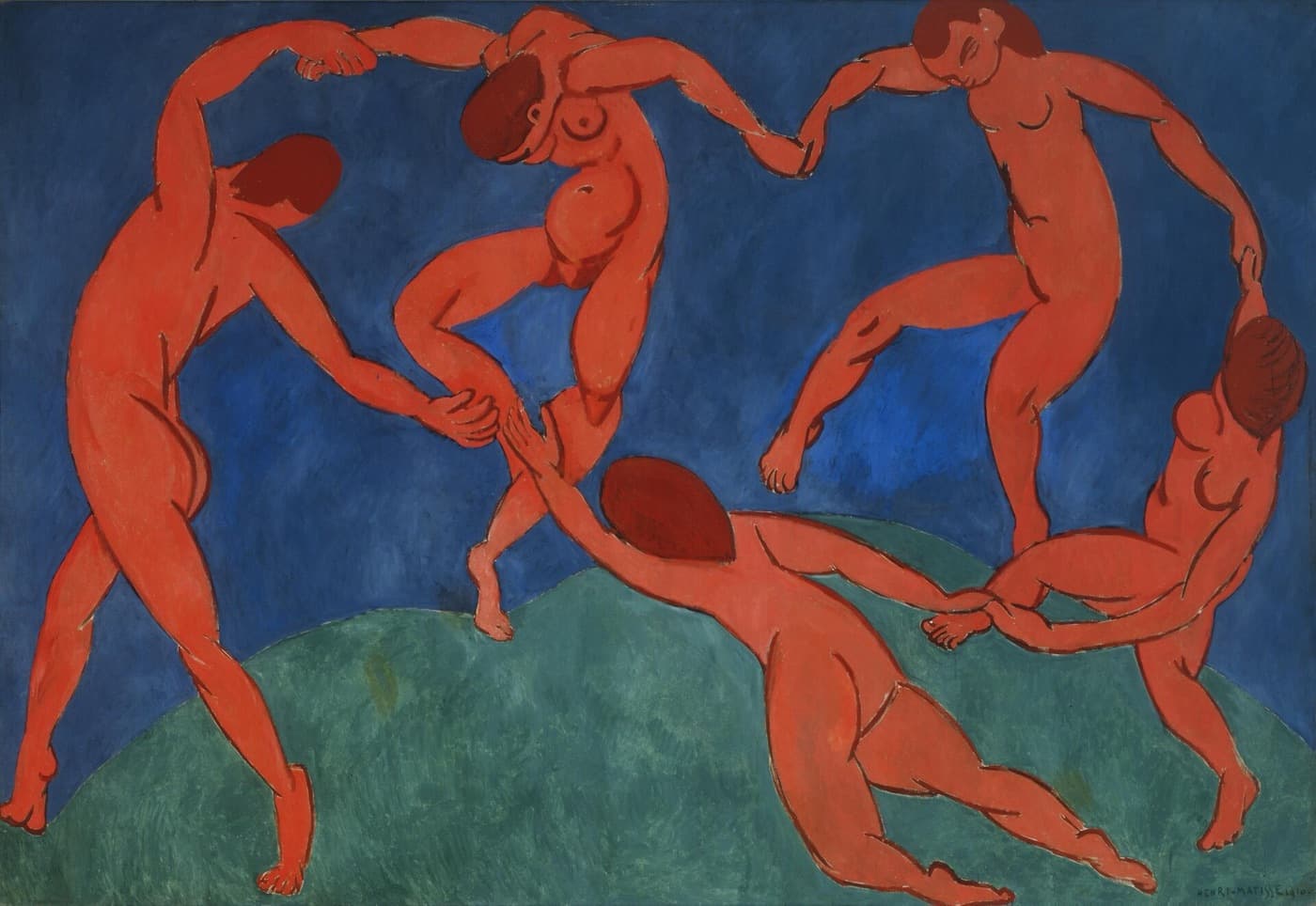
Henri Matisse was born at Le Cateau-Cambresis in 1869 and was working as a legal clerk when his mother gave him a paintbox during a long convalescence. He was thirty before he committed to it. Fauvism made him notorious in 1905; Dance and Music for the Moscow collector Shchukin made him important; and the decades that followed produced the Nice odalisques, the Barnes mural, the Vence chapel he designed entire, and finally, when illness confined him to bed and a wheelchair, the cut-outs — sheets painted in gouache and cut directly with scissors, which he called drawing with colour. He died in 1954.
Matisse is one of the most systematically forged artists of the century, particularly in drawing, and the Wildenstein Plattner Institute and the artist's heirs hold the archives and the catalogue work that attribution depends on. The printed output — etchings, lithographs, linocuts, aquatints, and the pochoir Jazz — is very large and is catalogued by Duthuit; edition, state, paper and whether an impression is a lifetime one are what set the value. Jazz plates removed from the book, and later reproductions of the cut-outs, are frequently offered as original prints.
At a glance
- Born
- 31 December 1869, Le Cateau-Cambrésis
- Died
- 3 November 1954, Nice
- Movements
- Impressionism, Divisionism, Fauvism
More on Wikipedia.
Lifetime prints, the 1958 lithographs, and posters
More is offered under this name than the name can support, and almost all of it turns on one distinction. There are lifetime prints — etchings, drypoints, linocuts and lithographs, signed in pencil and catalogued by Duthuit. There are the colour lithographs made after the cut-outs and published in 1958, after the artist's death, which are handsome, legitimately published and not lifetime work. And there is an enormous volume of photomechanical posters and reproductions, some of them old enough and well enough printed to look convincing in a frame.
The three are frequently confused, including by people selling them in good faith. What separates them is the paper, the printing method visible under magnification, the presence and position of a pencil signature, the publisher's details, and the sheet size before trimming. Photograph the whole sheet square on including its margins, then the signature area close up, then the reverse; and if the work is framed and the margins are hidden, say so rather than guessing at what is behind the mount.
Best auction results
- Odalisque couchée aux magnolias $80.75m
- Oil on canvas, 1923 · New York · 8 May 2018
- Publicly reported
- From the Rockefeller collection, and the artist's auction record. The previous high had stood at $48.8m.
Results as reported at the time of sale, inclusive of buyer's premium. They are a record of what specific works achieved on specific days, not a guide to what any other work is worth.
Whitebank Fine Art is an art advisory and gallery, not an auction house, and is not affiliated with any auction house or with the artist, their estate or their representatives. This page describes the range we advise on. Nothing here is investment advice.