
Ai Weiwei valuation
Dropped a Han dynasty urn, filled the Turbine Hall with sunflower seeds, and was detained for 81 days.
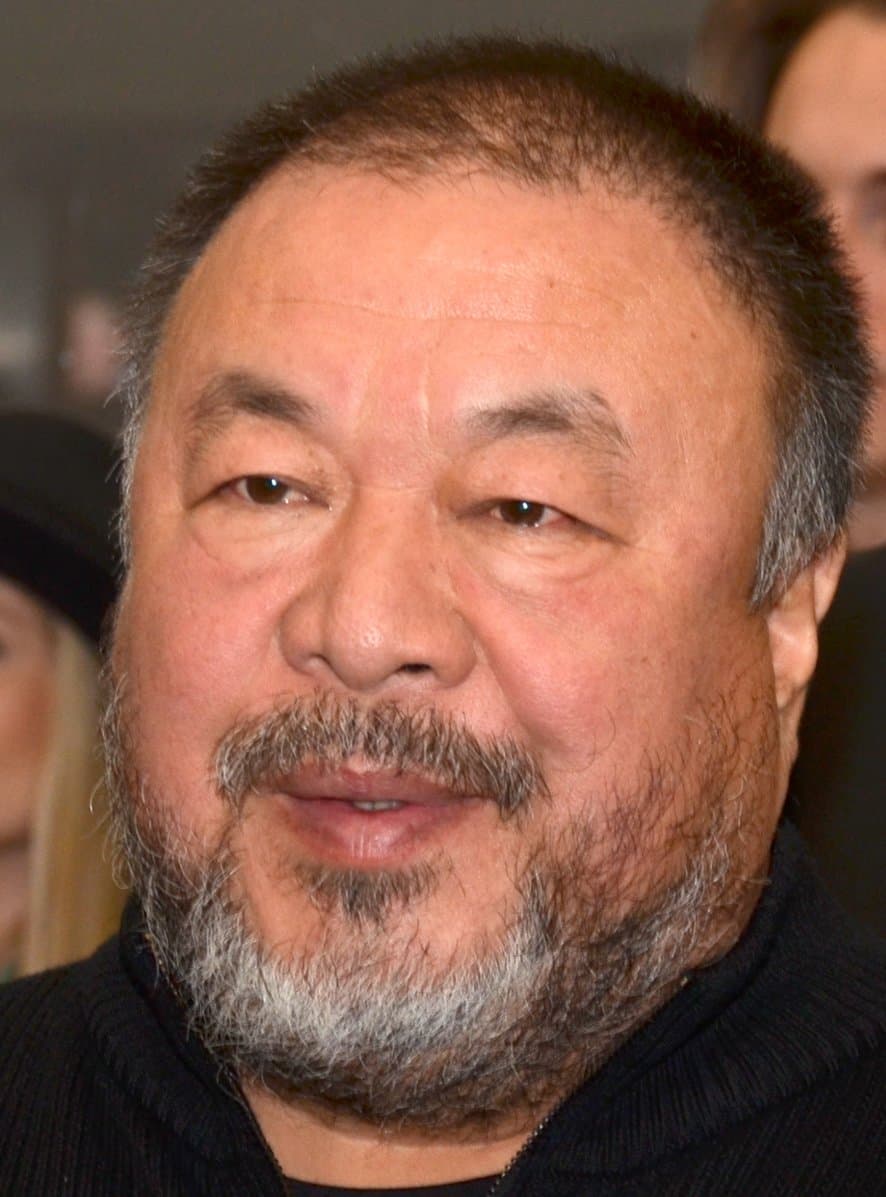
Ai Weiwei was born in Beijing in 1957; his father, the poet Ai Qing, was denounced and exiled to a labour camp, and Ai spent his childhood in Xinjiang.
What a work by Ai Weiwei is worth
Send photographs and whatever paperwork came with it. The first question is what the work actually is — edition or unique, when, and in what condition — because everything else follows from the answer. A valuation is free, made online from the photographs you send, and it commits you to nothing. We act for sellers across the United Kingdom, Europe and the United States.
Write to info@whitebankfineart.co.uk, or start below.
Bio
Ai Weiwei was born in Beijing in 1957; his father, the poet Ai Qing, was denounced and exiled to a labour camp, and Ai spent his childhood in Xinjiang. He lived in New York through the 1980s, returned to China, and helped design the Bird's Nest stadium before publicly disowning it. Dropping a Han Dynasty Urn, Sunflower Seeds in the Turbine Hall, and the investigation into the children killed by school buildings in the Sichuan earthquake are the best-known works. He was detained for eighty-one days in 2011, had his passport withheld for four years, and now lives in Europe.
Editions are the central practical fact. Much of the work exists in defined editions — the porcelain seeds, the zodiac heads, the marble and wood pieces, the wallpapers and prints — at several scales, and identifying edition, size and fabrication is the whole task. Loose sunflower seeds circulate widely and are not works. Pieces incorporating genuine antique material, including Neolithic and Han pottery and salvaged temple timber, raise export and cultural-property questions that should be settled before any sale. The studio issues certificates.
Sunflower Seeds, and the editions made from it
Sunflower Seeds filled the Turbine Hall at Tate Modern from October 2010 to May 2011: more than a hundred million porcelain seeds, each moulded, painted by hand and fired in Jingdezhen, the old imperial porcelain town, by some sixteen hundred craftspeople over two years. It remains the work most people associate with him, and the one most often represented in private hands.
What is collected are the editioned versions: single seeds or small groups mounted and framed in numbered editions with a certificate, including an edition of a hundred made for Tate in 2024. The certificate, the edition number and the publisher's details are what distinguish these from souvenirs, and they should never be separated from the object.
The Stars, Fairytale and Straight
Ai studied animation at the Beijing Film Academy from 1978 and was a founder of the Stars, an early avant-garde group. In New York he studied at the Art Students League from 1983 to 1986, drew street portraits for a living, and began altering readymade objects after Duchamp, Warhol and Jasper Johns. Back in Beijing in 1993 he helped set up the Beijing East Village artists' community and co-published the Black, White and Gray Cover Books with the curator Feng Boyi. The Coca-Cola Vases, Han dynasty pots with the logo brushed on, began in 1994.
For Fairytale, at Documenta 12 in 2007, he brought 1,001 Chinese citizens to Kassel. Map of China, of 2008, is cut from timber salvaged from Qing dynasty temples, and Straight laid out 150 tons of steel reinforcing bar recovered from buildings that collapsed in the Sichuan earthquake, straightened by hand. With Herzog & de Meuron he designed the 2012 Serpentine Pavilion in London. Trace, 176 portraits of prisoners of conscience made in Lego, was first shown on Alcatraz in 2014, and in 2025 the Seattle Art Museum held the largest American exhibition of his work.
Whitebank Fine Art is an art advisory and gallery, not an auction house, and is not affiliated with any auction house or with the artist, their estate or their representatives. This page describes the range we advise on. Nothing here is investment advice.