Augustus John valuation
The most celebrated draughtsman in Edwardian Britain, and the portraitist everyone sat for.
Augustus John was born at Tenby in 1878 and was the outstanding student of his generation at the Slade, where his facility as a draughtsman was regarded as exceptional even by people who disliked him.
What a work by Augustus John is worth
Send photographs and whatever paperwork came with it. The first question is what the work actually is — edition or unique, when, and in what condition — because everything else follows from the answer. A valuation is free, made online from the photographs you send, and it commits you to nothing. We act for sellers across the United Kingdom, Europe and the United States.
Write to info@whitebankfineart.co.uk, or start below.
Bio
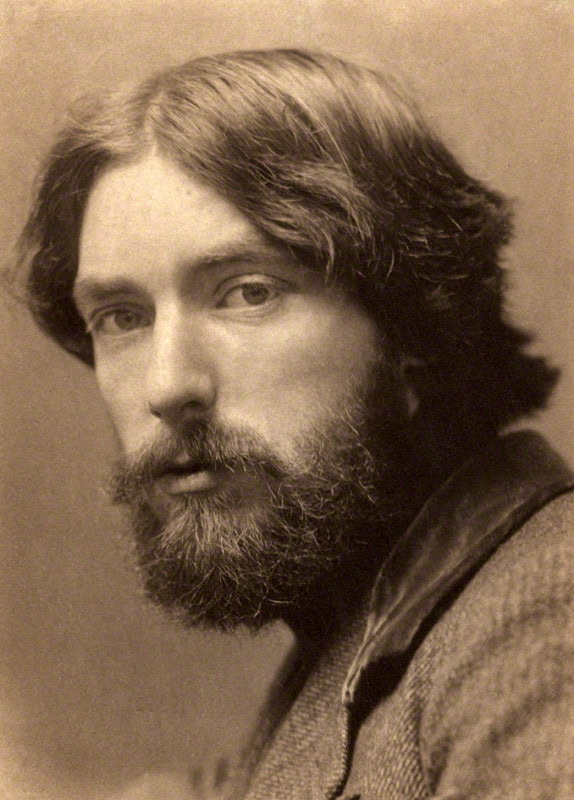
Augustus John was born at Tenby in 1878 and was the outstanding student of his generation at the Slade, where his facility as a draughtsman was regarded as exceptional even by people who disliked him. He travelled with Romany families, painted in Wales, Provence and Dorset, and became the portrait painter of the age, with Shaw, Hardy, Yeats, Lawrence of Arabia, Dylan Thomas and Tallulah Bankhead among the sitters. His sister Gwen John, long overshadowed, is now the more critically admired of the two. He was made a member of the Order of Merit and died in 1961.
The drawings are the largest part of what comes to market and are the part where quality varies most, since he drew constantly and sold readily; a rapid study and a fully realised portrait drawing carry very different weight. Oils are unique, and the portraits of identifiable sitters behave differently from the unnamed ones. Attribution against his sister and against contemporaries is a live question in the drawings, several of which are unsigned. The signature is normally a plain John. Works on paper have usually been mounted at some point and often show it.
At a glance
- Born
- 4 January 1878, Tenby
- Died
- 31 October 1961, Fordingbridge
- Movement
- Post-Impressionism
The etchings, and the Welsh collections
John made most of his etchings between 1901 and 1914, and they are catalogued by Campbell Dodgson, whose catalogue of 1920 records 133 plates. A John etching should be matched to its Dodgson number, and the entry gives the edition size and dimensions to check it against.
Tenby Museum and Art Gallery, in the town where Augustus and Gwen John grew up, shows both artists, with etchings, drawings and paintings. Of his two portraits of Dylan Thomas, painted in 1937 and 1938, one is at the National Museum in Cardiff and the other at the National Portrait Gallery in London.
The Slade Prize, Alderney Manor and the Canadian mural
John was Henry Tonks's star pupil at the Slade and won the Slade Prize in 1898 with Moses and the Brazen Serpent, and after his marriage in 1901 he taught art at the University of Liverpool for a time. Around 1910 to 1912 he painted in the Arenig valley in North Wales with James Dickson Innes and Derwent Lees, and from 1911 to 1927 his family, friends and long-staying guests made Alderney Manor in Dorset an informal artists' colony. He kept a house at Martigues in Provence from 1910 until 1928, and was president of the Gypsy Lore Society from 1937.
Attached to the Canadian forces as a war artist in December 1917, he began a vast mural for Lord Beaverbrook that was never finished; The Canadians Opposite Lens, some twelve metres long, was unveiled at the Canadian War Museum in Ottawa in 2011. Not every sitter was pleased: Lord Leverhulme cut the head out of his portrait, and Montgomery rejected his in 1944, after which it went to the Hunterian in Glasgow. The Royal Academy gave him a large exhibition in 1954, and his autobiography Chiaroscuro was published in 1952.
Whitebank Fine Art is an art advisory and gallery, not an auction house, and is not affiliated with any auction house or with the artist, their estate or their representatives. This page describes the range we advise on. Nothing here is investment advice.