
Eric Ravilious valuation
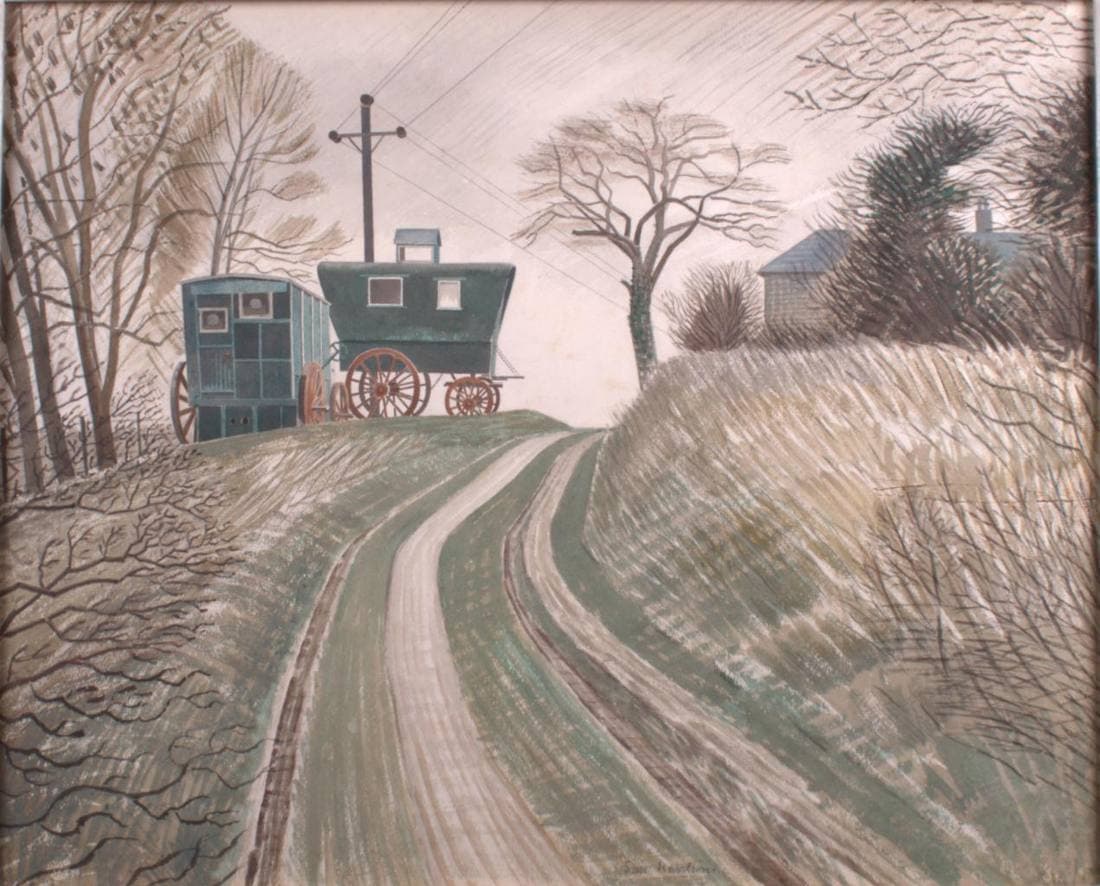
Watercolourist, wood engraver and designer of English downland, chalk figures and the Second World War.
Eric Ravilious was born in Acton in 1903 and grew up in Eastbourne, where his parents kept an antiques shop.
What a work by Eric Ravilious is worth
Send photographs and whatever paperwork came with it. The first question is what the work actually is — edition or unique, when, and in what condition — because everything else follows from the answer. A valuation is free, made online from the photographs you send, and it commits you to nothing. We act for sellers across the United Kingdom, Europe and the United States.
Write to info@whitebankfineart.co.uk, or start below.
Bio
Eric Ravilious was born in Acton in 1903 and grew up in Eastbourne, where his parents kept an antiques shop. He won scholarships to Eastbourne School of Art and, in 1922, to the Design School of the Royal College of Art, where he became close friends with Edward Bawden and was taught by Paul Nash, who encouraged his wood engraving. He married the artist Tirzah Garwood in 1930. His watercolours of the South Downs, Essex and the chalk hill figures, crisp, patterned and pale, were first shown at the Zwemmer Gallery in 1933, and he designed ceramics for Wedgwood and illustrated books. As an official war artist he painted ships, aircraft and coastal defences, and in 1942 he became the first British war artist to die on active service, when the aircraft he was in was lost off Iceland.
His watercolours are the works most collectors want; wood engravings, lithographs, including the Submarine series of 1941, designs and Wedgwood ceramics appear more often. Many of the war pictures are at the Imperial War Museum, and the largest collection is at the Towner in Eastbourne. Condition matters in watercolour, especially fading, and so does a history back to the artist's family or his own exhibitions.
Great Bardfield, Wedgwood and the chalk figures
With Bawden and Charles Mahoney he painted murals at Morley College in south London in 1928 and 1929, and in the early 1930s he and Tirzah shared Bawden's house at Great Bardfield in Essex.
The chalk hill figures he painted in 1939 included the Long Man of Wilmington, and three of the series were bought by the Tate, the V&A and Aberdeen Art Gallery.
Whitebank Fine Art is an art advisory and gallery, not an auction house, and is not affiliated with any auction house or with the artist, their estate or their representatives. This page describes the range we advise on. Nothing here is investment advice.