
Man Ray valuation
Dada and Surrealist photographer who made pictures without a camera and called them rayographs.
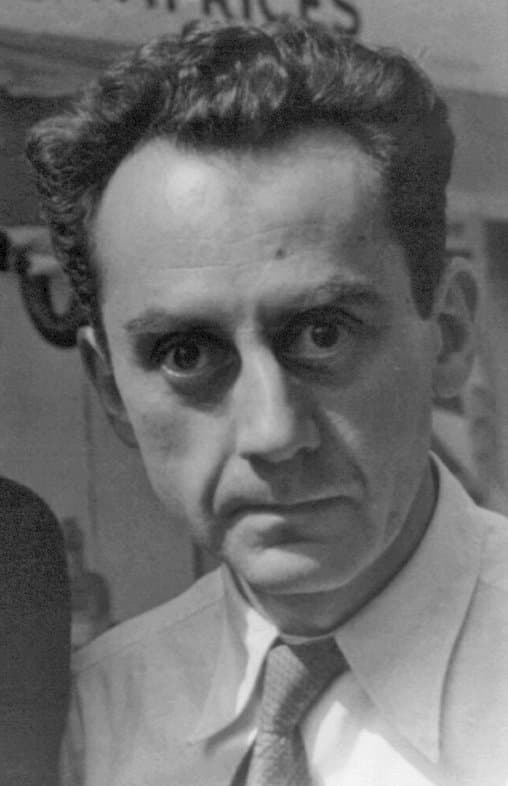
Man Ray was born Emmanuel Radnitzky in Philadelphia in 1890, worked with Duchamp in New York Dada, and moved to Paris in 1921, where he supported himself as a fashion and portrait photographer for Vogue and Harper's Bazaar while making the work he cared about.
What a work by Man Ray is worth
Send photographs and whatever paperwork came with it. The first question is what the work actually is — edition or unique, when, and in what condition — because everything else follows from the answer. A valuation is free, made online from the photographs you send, and it commits you to nothing. We act for sellers across the United Kingdom, Europe and the United States.
Write to info@whitebankfineart.co.uk, or start below.
Bio
Man Ray was born Emmanuel Radnitzky in Philadelphia in 1890, worked with Duchamp in New York Dada, and moved to Paris in 1921, where he supported himself as a fashion and portrait photographer for Vogue and Harper's Bazaar while making the work he cared about. He produced rayographs — camera-less images made by placing objects on photographic paper — pioneered solarisation with Lee Miller, and made objects that have entered the general vocabulary: the flat iron with tacks, the metronome with an eye. He returned to America during the war, went back to Paris, and died there in 1976.
Photography is the market, and vintage is the word that governs it: a print made close to the negative's date, by the artist, is worth many times a later print of the same image, and Man Ray printed and reprinted extensively over fifty years. Stamps, inscriptions, paper and toning are what establish this, and expert assessment is normal. Rayographs are unique. His objects exist both as originals and as authorised later editions, and the difference is fundamental. The Man Ray Trust controls the estate and reproduction rights.
At a glance
- Born
- 27 August 1890, Philadelphia
- Died
- 18 November 1976, Paris
- Movements
- Surrealism, Dada
More on Wikipedia.
Le Violon d'Ingres and Noire et Blanche
Le Violon d'Ingres, from 1924, shows Kiki de Montparnasse from behind, posed after Ingres's Valpinçon Bather. Man Ray painted the f-holes of a violin onto a print and rephotographed it, so the image is a photograph of a retouched photograph; it first appeared in the magazine Littérature in June 1924, and there are prints at the Centre Pompidou and the Getty.
Noire et Blanche, from 1926, sets Kiki's head beside an African mask. Both results below are for vintage prints made close to the date of the negative, the Noire et Blanche from the collection of the couturier Jacques Doucet. Later prints of the same images are far more common, and the date of printing is what an owner most needs to establish.
Brooklyn, Hollywood and the replicas
Man Ray grew up in Brooklyn, the son of a tailor, and mannequins and flat irons from that trade recur in his work. The family took the surname Ray in 1912. At Boys' High School he learned drafting, turned down a scholarship to study architecture, and looked at the European modernists in Alfred Stieglitz's 291 gallery. In Paris from July 1921 he rediscovered the cameraless photogram, which Tristan Tzara called pure Dada, and Kiki de Montparnasse appeared in his films Le Retour à la raison and L'Étoile de mer.
From 1940 to 1951 he lived in Los Angeles and concentrated on painting, and in 1946 he married the dancer Juliet Browner; a show at the Copley Galleries in Beverly Hills in 1948 introduced the Shakespearean Equations. Back in Paris, in a studio on the rue Férou, he oversaw limited-edition replicas of several of his objects, first with Marcel Zerbib and later with Arturo Schwarz. His autobiography, Self-Portrait, came out in 1963, and the Royal Photographic Society gave him its Progress Medal in 1974.
Best auction results
- Le Violon d'Ingres $12.4m
- Gelatin silver print, 1924 · New York · 14 May 2022
- Publicly reported
- The highest price paid at auction for a photograph.
- Noire et Blanche €2.69m
- Gelatin silver print, 1926 · Paris · 9 November 2017
- Publicly reported
- A vintage print from the collection of Jacques Doucet.
- Promenade $5.88m
- Oil on canvas, 1916 · New York · 6 November 2013
- Publicly reported
- Catherine Barometer $3.25m
- Assemblage, 1920 · New York · 13 November 2017
- Publicly reported
Results as reported at the time of sale, inclusive of buyer's premium. They are a record of what specific works achieved on specific days, not a guide to what any other work is worth.
Whitebank Fine Art is an art advisory and gallery, not an auction house, and is not affiliated with any auction house or with the artist, their estate or their representatives. This page describes the range we advise on. Nothing here is investment advice.