

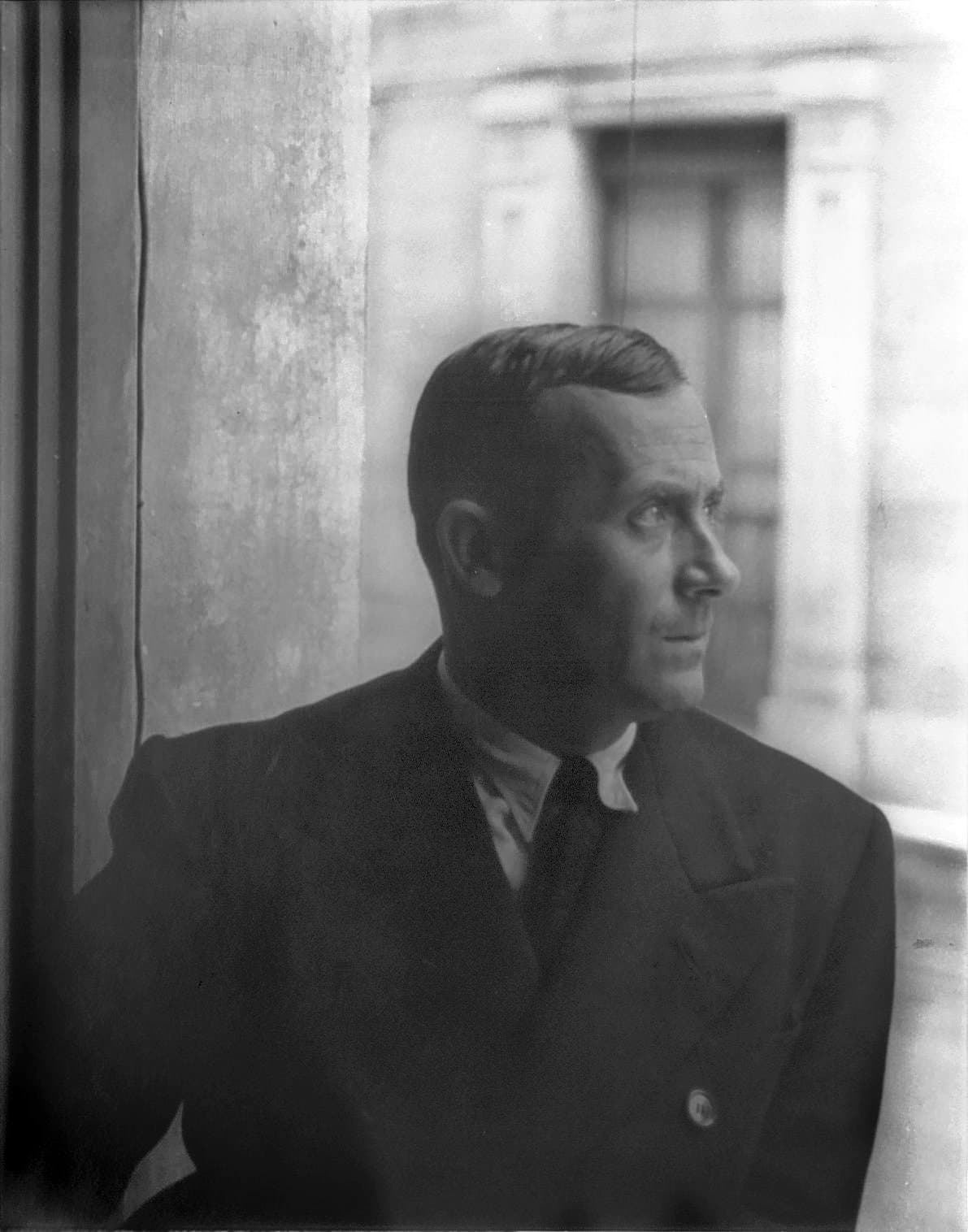
Joan Miro valuation
Catalan Surrealist who reduced the world to a line, a star, a bird and a woman.
Joan Miro was born in Barcelona in 1893, worked as a clerk before a breakdown pushed him into painting, and reached Paris in 1920.
What a work by Joan Miro is worth
Send photographs and whatever paperwork came with it. The first question is what the work actually is — edition or unique, when, and in what condition — because everything else follows from the answer. A valuation is free, made online from the photographs you send, and it commits you to nothing. We act for sellers across the United Kingdom, Europe and the United States.
Write to info@whitebankfineart.co.uk, or start below.
Bio
Joan Miro was born in Barcelona in 1893, worked as a clerk before a breakdown pushed him into painting, and reached Paris in 1920. He signed on with Surrealism and made the Constellations during the German advance in 1940, working on small sheets while moving between Normandy, Paris and Mallorca. The vocabulary that came out of it — the star, the crescent, the ladder, the eye, the bird, the reduced female figure — carried him through six decades of painting, ceramics with Artigas, monumental sculpture and public murals. He died at Palma in 1983.
Miro is very heavily forged, and the Successio Miro in Palma is the authority that issues opinions; nothing significant should be transacted without addressing it. The printed output is enormous — lithographs, etchings, carborundum prints and illustrated books catalogued by Dupin and by Cramer — and the crucial distinctions are lifetime versus posthumous printing, signed versus unsigned, and whether a sheet was removed from a book. Unsigned book plates and later reproductions are the most common thing offered as an original print. Ceramics and bronzes exist in editions requiring their own identification.
At a glance
- Born
- 20 April 1893, Barcelona
- Died
- 25 December 1983, Palma
- Movement
- Surrealism
More on Wikipedia.
Derrière le miroir and the book lithographs
Many of the Miró lithographs on the market come from Derrière le miroir, the magazine published by the Galerie Maeght in Paris from 1946. Issues devoted to Miró contained original lithographs, printed in large numbers, unsigned, unnumbered and folded through the centre as issued. Removed from the magazine and framed, they are genuine lithographs, valued as unsigned magazine prints.
The volumes of Miró Lithographs, published from the 1970s by Maeght and others, also contain original lithographs from unsigned editions printed by Mourlot. In both cases the absence of a pencil signature and number, the centre fold or the book's dimensions identify the source. A signed and numbered impression from a separate edition is a different object entirely, and the Dupin and Cramer catalogues tell the two apart.
The Farm, the books and the foundations
His first solo show, at the Galeries Dalmau in Barcelona in 1918, was ridiculed and its pictures defaced, and the dealer Josep Dalmau went on to arrange his first Paris exhibition, at the Galerie la Licorne, in 1921. The Farm, painted at his family's summer house at Mont-roig del Camp, was bought by Ernest Hemingway. Catalan Landscape (The Hunter) and The Tilled Field followed, and André Breton called him the most Surrealist of us all.
He illustrated more than 250 books. Les pénalités de l'enfer ou les Nouvelles Hébrides, published in 1974 at the urging of Robert Desnos's widow, set 25 lithographs to a manuscript the poet wrote in 1922. Late in life he made the ceramic Wall of the Moon and Wall of the Sun for the UNESCO building in Paris. The Fundació Joan Miró opened in Barcelona in 1975 and a second foundation in Palma in 1981, and Tate Modern's retrospective, The Ladder of Escape, came in 2011.
Whitebank Fine Art is an art advisory and gallery, not an auction house, and is not affiliated with any auction house or with the artist, their estate or their representatives. This page describes the range we advise on. Nothing here is investment advice.
