

Surrealism
Surrealism was a movement founded in Paris in 1924 by the poet André Breton, which set out to release the unconscious mind through dream imagery, automatic drawing and the unexpected meeting of unrelated things; its best-known painters are Salvador Dalí, René Magritte, Max Ernst and Joan Miró.
Breton defined it in the first Surrealist Manifesto, published in October 1924, as pure psychic automatism: thought expressed without the control of reason. He had read Freud, had worked on a neurological ward as a medical student in the war, and came out of Paris Dada. The first Surrealist painting exhibition followed in 1925, with work by Arp, de Chirico, Ernst, Klee, Man Ray, André Masson, Miró and Picasso.
Two kinds of Surrealist painting grew up side by side. One was automatic: Masson's and Miró's free, improvised line, and Ernst's frottage and decalcomania, chance techniques that let images emerge. The other was illusionistic: Dalí, Magritte, Yves Tanguy and Paul Delvaux painted impossible scenes in meticulous, academic detail, so that the dream looks real. The movement spread through international exhibitions in London in 1936 and Paris in 1938, and when the Second World War scattered its members, it seeded Abstract Expressionism in New York and, in Mexico, a community of exiled painters that included Leonora Carrington and Remedios Varo.
At a glance
- When
- 1924 to the 1960s
- Where
- Paris, then worldwide
- Leading artists
- Salvador Dali, Rene Magritte, Max Ernst, Joan Miro
Characteristics of Surrealism
- Dream imagery
- Illogical scenes painted with photographic clarity.
- Automatism
- Drawing or writing without conscious control, to let the unconscious speak.
- Unexpected meetings
- Unrelated objects brought together, after Lautréamont's 'chance meeting of a sewing machine and an umbrella on a dissecting table'.
- New techniques
- Frottage, grattage, decalcomania and the collective drawing game of the exquisite corpse.
- Desire and the uncanny
- Eroticism, metamorphosis and the familiar made strange.
Surrealist artists
Every artist below has a page on this site, with a short biography and what a valuation of their work turns on.
Paris
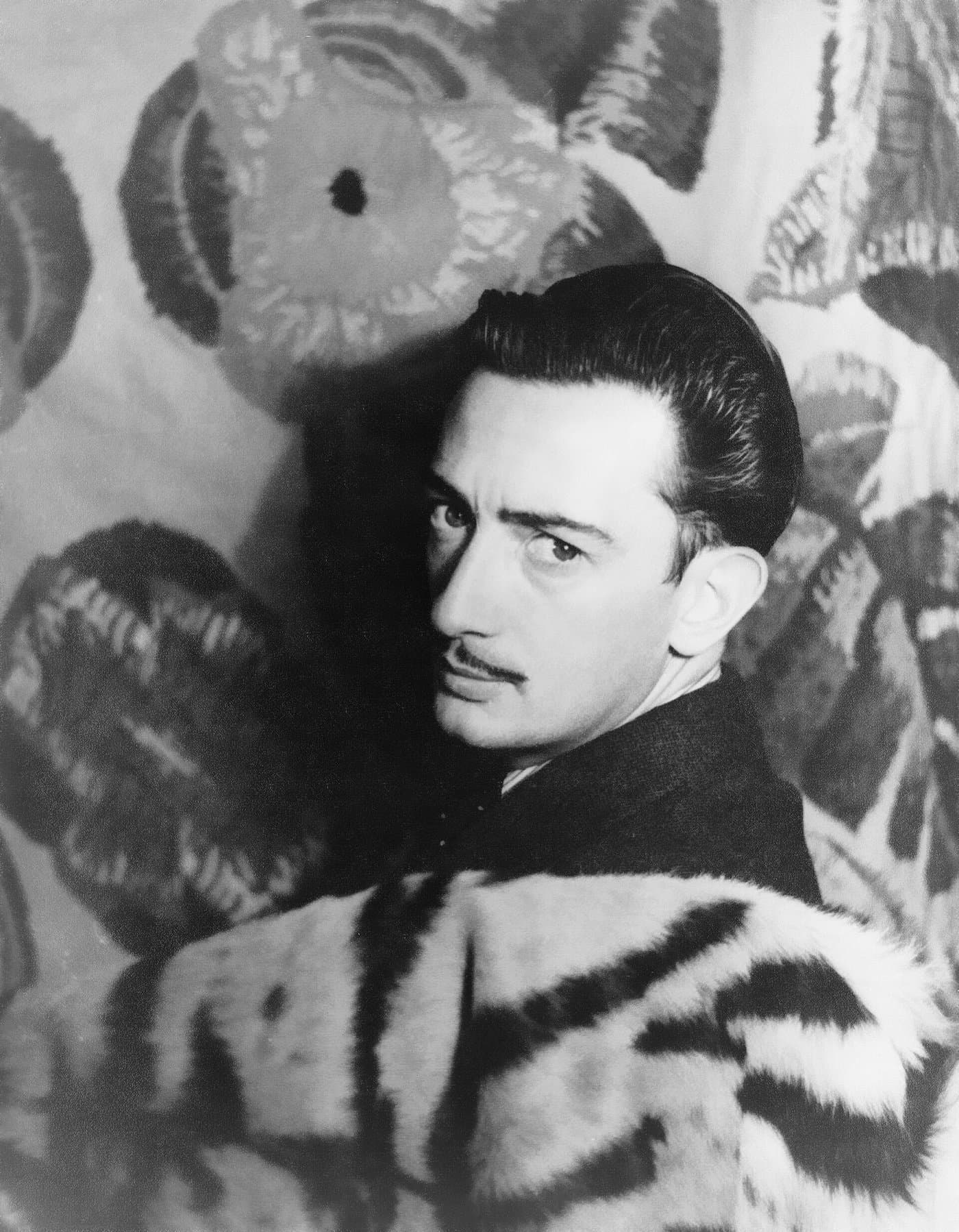
- Salvador DaliMelting clocks, a waxed moustache, and a signature he sold by the ream.
- Rene MagritteBowler hats, pipes that are not pipes, and skies painted with a commercial artist's discipline.
- Max ErnstDada in Cologne, Surrealism in Paris, and the inventor of frottage, grattage and decalcomania.
- Joan MiroCatalan Surrealist who reduced the world to a line, a star, a bird and a woman.
- Yves TanguySelf-taught Surrealist of empty plains and smooth, bone-like forms, who left Paris for Connecticut.
- Man RayDada and Surrealist photographer who made pictures without a camera and called them rayographs.
- Jean ArpDada in Zurich, Surrealism in Paris, and then fifty years of forms that look grown rather than carved.
- Victor BraunerRomanian Surrealist who painted a self-portrait with an eye put out, then lost his own.
- Óscar DomínguezCanary Islands Surrealist who made decalcomania a Surrealist method and painted the volcanic landscapes of Tenerife.
- Raoul UbacSurrealist photographer who burned his own negatives, then spent forty years carving slate.
- Paul DelvauxBelgian Surrealist of moonlit stations, classical temples and sleepwalking women.
Women of Surrealism
- Leonora CarringtonLancashire-born Surrealist who spent most of her life in Mexico, painting animals, ritual and transformation.
- Remedios VaroSpanish Surrealist who painted, in Mexico and with a miniaturist's brush, women alchemists and travellers in impossible machines.
- Dorothea TanningSurrealist of endless hotel corridors and doors, who later sewed her figures out of tweed.
- Leonor FiniPainted sphinxes, sorceresses and men asleep, and refused to join the Surrealists.
Forerunners and the wider circle
- Giorgio de ChiricoPainted empty arcades and long shadows before he was thirty, and repainted them for the next fifty years.
- Roberto MattaChilean architect turned Surrealist, who painted psychological space as if it were weather.
- Wifredo LamCuban modernist who put Afro-Cuban religion into a language learned from Picasso and the Surrealists.
- Frida KahloPainted herself, her injuries and her marriage to Diego Rivera, mostly at small scale and mostly in Mexico.
- Paul NashWar artist in both wars, and the painter who made the English landscape look like a dream someone else was having.
Famous Surrealist works
- The Elephant CelebesMax Ernst, 1921, Tate, London
- Harlequin's CarnivalJoan Miró, 1924–25, Buffalo AKG Art Museum
- The Treachery of ImagesRené Magritte, 1929, Los Angeles County Museum of Art
- The Persistence of MemorySalvador Dalí, 1931, Museum of Modern Art, New York
- Object (Le Déjeuner en fourrure)Meret Oppenheim, 1936, Museum of Modern Art, New York
- Self-Portrait (Inn of the Dawn Horse)Leonora Carrington, about 1937–38, Metropolitan Museum of Art, New York
What a valuation turns on
Surrealism is one of the deepest markets in modern art, and one of the most crowded with prints, multiples and fakes. Dalí is the extreme case: from the 1960s a great many prints were published in his name, some on sheets he had signed in advance, and many lithographs and etchings sold as his are reproductions or unauthorised. The catalogues of his prints by Field, and by Michler and Löpsinger, and the Dalí foundation's catalogue raisonné of paintings, are the first references.
For Magritte, the catalogue raisonné edited by David Sylvester is the reference; Miró's many prints are catalogued by Mourlot, Cramer and Dupin; Ernst, Tanguy and the others have catalogues and committees of their own. A Surrealist work with no place in any of them needs a documented history before it can be sold.
Common questions
What is Surrealism?
Surrealism is a movement in art and literature founded in Paris in 1924 by André Breton. Drawing on Freud, it set out to release the unconscious through dream imagery, automatic drawing and writing, and the unexpected combination of unrelated things.
Who were the most famous Surrealist artists?
Salvador Dalí, René Magritte, Max Ernst, Joan Miró, Yves Tanguy, Man Ray, André Masson and Paul Delvaux, with Leonora Carrington, Remedios Varo, Dorothea Tanning, Leonor Fini and Meret Oppenheim. Frida Kahlo was claimed by the Surrealists but rejected the label.
Who founded Surrealism?
The French poet André Breton, who published the first Surrealist Manifesto in October 1924 and led the movement for the next four decades.
What are the characteristics of Surrealist art?
Dreamlike, illogical scenes painted with precise realism; automatic, improvised drawing; strange juxtapositions of everyday objects; metamorphosis and the uncanny; and new techniques such as frottage and decalcomania.
Is my Dalí print real?
Possibly, but many are not. Check for a pencil signature and an edition number, look for the publisher and the paper, and compare the image with the catalogues of his prints. Many 'Dalí' prints are photomechanical reproductions. Send photographs of the front, the signature, the number and the back for a free, confidential opinion.
