
Lucian Freud valuation
Painted flesh as a fact, over hundreds of sittings, for sixty years.
Lucian Freud was born in Berlin in 1922, grandson of Sigmund, and came to England in 1933.
What a work by Lucian Freud is worth
Send photographs and whatever paperwork came with it. The first question is what the work actually is — edition or unique, when, and in what condition — because everything else follows from the answer. A valuation is free, made online from the photographs you send, and it commits you to nothing. We act for sellers across the United Kingdom, Europe and the United States.
Write to info@whitebankfineart.co.uk, or start below.
Bio
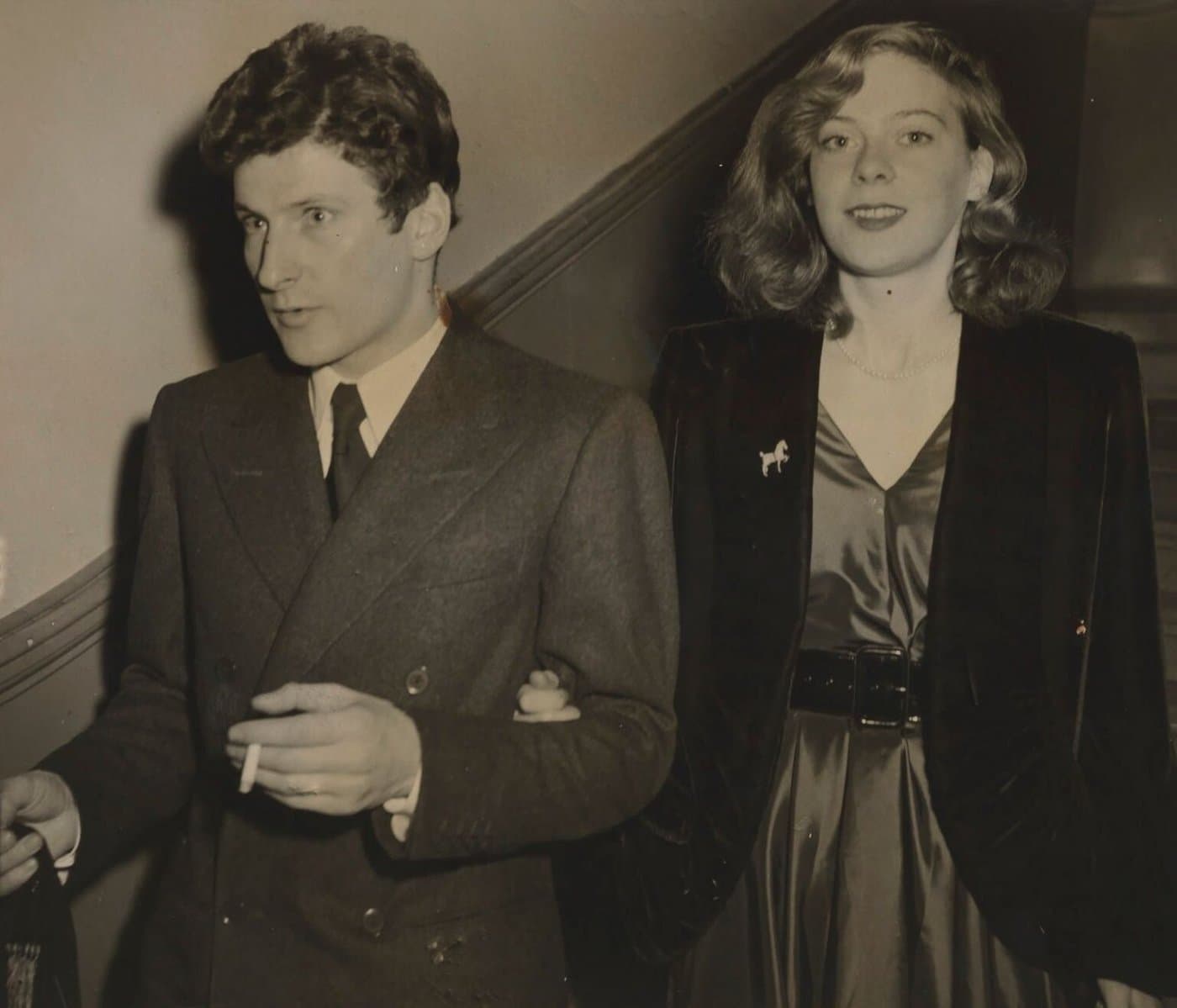
Lucian Freud was born in Berlin in 1922, grandson of Sigmund, and came to England in 1933. The early work is tight, linear and slightly airless; from the late 1950s, having switched to hog-hair brushes and Cremnitz white, he began painting standing up and produced the thick, unsparing figure paintings that define him. Sitters — family, friends, Leigh Bowery, Sue Tilley, the Queen — came for hundreds of sessions over months and years. He was one of the group Robert Hughes labelled the School of London, and he worked in Holland Park until his death in 2011.
The output is small in relation to demand because of how slowly he worked, and the paintings of the 1990s and 2000s lead. Etchings are the other significant body: Freud etched standing at the plate as he painted, in small editions typically of forty to fifty, and they are catalogued and well documented. Early works on paper from the 1940s are scarce and sought. Provenance and exhibition history do most of the work in a valuation, and the two-volume catalogue raisonne of paintings is the reference point.
At a glance
- Born
- 8 December 1922, Berlin
- Died
- 20 July 2011, London
- Movements
- Expressionism, School of London
More on Wikipedia.
The etchings in practice
Most of the etchings come from Freud's last three decades and were printed in London by Marc Balakjian of Studio Prints, who worked with him from 1985. The large heads and figures from those years are among the best-known British prints of the period. The catalogue raisonné of the prints by Toby Treves, published in 2022, records every image with its states and edition, and is the place to start with any sheet.
Alongside the numbered editions there are artist's proofs and printer's proofs, which are legitimate and recorded, and the difference between them usually matters less than condition. The sheets are large, so handling creases, staining from old mounts and fading at the margins are the faults to look for. Posters for his exhibitions are a separate category with a much smaller market, and are sometimes framed to look like prints.
Dedham, The Glass Tower and Girl with a Kitten
Freud's mother named him after the ancient writer Lucian of Samosata. His father, Ernst, was an architect, and his younger brother was the broadcaster Clement Freud. In England he went to Dartington Hall and then Bryanston, which expelled him, and he became a British subject in 1939. He studied briefly at the Central School of Art, then from 1939 to 1942 with Cedric Morris at the East Anglian School of Painting and Drawing in Dedham, and at Goldsmiths' College in 1942 and 1943. In 1941 he sailed as a merchant seaman in an Atlantic convoy before being invalided out.
In 1943 the editor Tambimuttu commissioned him to illustrate The Glass Tower, a collection of poems by Nicholas Moore, and its stuffed zebra and palm tree reappeared in The Painter's Room at his first solo exhibition in 1944. The postwar pictures are small and thinly painted with tiny sable brushes, as in Man with a Thistle of 1946 and the portraits of his first wife, Kitty Garman, among them Girl with a Kitten of 1947; both are at Tate. He married Lady Caroline Blackwood in Paris in 1953. His first full-length nude dates from 1966, and he was shortlisted for the Turner Prize in 1989, the year after his Hayward Gallery retrospective.
Best auction results
- Benefits Supervisor Resting $56.2m
- Oil on canvas, 1994 · New York · May 2015
- Publicly reported
- The artist's auction record.
- The Brigadier $34.9m
- Oil on canvas, 2004 · New York · 10 November 2015
- Publicly reported
- Benefits Supervisor Sleeping $33.6m
- Oil on canvas, 1995 · New York · May 2008
- Publicly reported
- At the time, the highest price at auction for a work by a living artist.
Results as reported at the time of sale, inclusive of buyer's premium. They are a record of what specific works achieved on specific days, not a guide to what any other work is worth.
Whitebank Fine Art is an art advisory and gallery, not an auction house, and is not affiliated with any auction house or with the artist, their estate or their representatives. This page describes the range we advise on. Nothing here is investment advice.