
Marino Marini valuation
Made the horse and rider his single subject, and watched the rider gradually fall off.
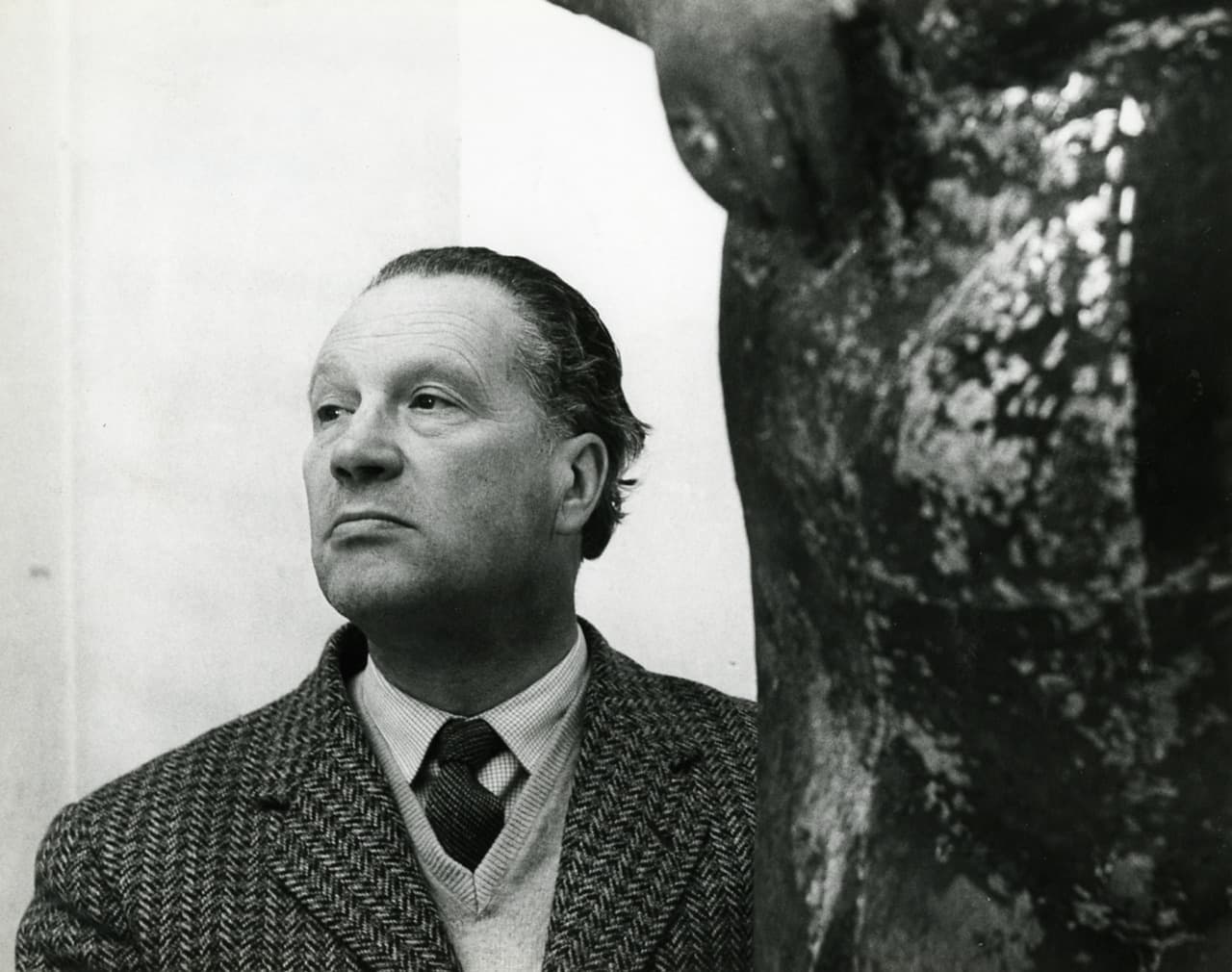
Marino Marini was born at Pistoia in 1901 and trained in Florence, drawing on Etruscan and archaic sculpture rather than on the classical tradition.
What a work by Marino Marini is worth
Send photographs and whatever paperwork came with it. The first question is what the work actually is — edition or unique, when, and in what condition — because everything else follows from the answer. A valuation is free, made online from the photographs you send, and it commits you to nothing. We act for sellers across the United Kingdom, Europe and the United States.
Write to info@whitebankfineart.co.uk, or start below.
Bio
Marino Marini was born at Pistoia in 1901 and trained in Florence, drawing on Etruscan and archaic sculpture rather than on the classical tradition. From the 1930s he worked almost exclusively on one motif — a horse with a rider — which he repeated for four decades as the rider's seat became less secure, the arms flung wider, the horse's neck more rigid, until in the post-war versions the figure is falling or already thrown. He read it explicitly as an image of the century. He also made portrait heads of exceptional quality, including Stravinsky and Chagall, and died in 1980.
Bronzes exist in editions, often small, and cast number, foundry, lifetime or posthumous casting and above all the surface are what a valuation turns on: Marini frequently painted, waxed and worked his bronzes by hand after casting, so no two are quite alike and repatination destroys precisely what makes a good example good. Unauthorised posthumous casts are a known problem and the Fondazione Marino Marini and the Marini estate archive are the references. Polychrome plasters and terracottas are unique, fragile and sought. There is a substantial output of drawings and lithographs.
At a glance
- Born
- 27 February 1901, Pistoia
- Died
- 6 August 1980, Viareggio
- Movement
- Modern art
More on Wikipedia.
Monza, Brera and San Pancrazio
Marini studied at the Accademia di Belle Arti in Florence from 1917 and gave himself mainly to sculpture from about 1922. He succeeded Arturo Martini as professor at the art school in the Villa Reale at Monza in 1929, and in 1940 became professor of sculpture at the Brera Academy in Milan, where his students included Parviz Tanavoli. He spent part of the war in Switzerland and settled in Milan in 1946.
Curt Valentin began showing him at the Buchholz Gallery in New York in 1950, and the Hanover Gallery in London gave him a solo show the same year. The Angel of the City, at the Peggy Guggenheim Collection in Venice, is among the best-known of the horse and rider bronzes. A museum of his work occupies the former church of San Pancrazio in Florence.
Tenero, the Pomonas and the Venice prize
In the 1930s Marini travelled often to Paris, where he knew Massimo Campigli, de Chirico, Alberto Magnelli and Filippo de Pisis, and from 1936 he lived partly at Tenero, near Locarno, visiting Zürich and Basel and befriending Giacometti, Germaine Richier and Fritz Wotruba. He won the prize of the Rome Quadriennale in 1936 and married Mercedes Pedrazzini in 1938. Besides the horse and rider he worked on three other themes: the Pomonas, his nudes; portraits; and circus figures.
The horse and rider first appeared in 1936, slender and calm; by 1937 the horse rears, by 1940 the forms are squatter and more archaic, and after the war the horse stands planted with its neck stretched out. In New York in 1950 he met Arp, Beckmann, Calder, Feininger and Lipchitz, and in London Henry Moore. He won the Grand Prize for Sculpture at the Venice Biennale in 1952 and the Feltrinelli Prize in 1954, and the Kunsthaus Zürich gave him a retrospective in 1962. His paintings were first exhibited at Toninelli Arte Moderna in Milan in 1963 and 1964.
Whitebank Fine Art is an art advisory and gallery, not an auction house, and is not affiliated with any auction house or with the artist, their estate or their representatives. This page describes the range we advise on. Nothing here is investment advice.