
Oskar Kokoschka valuation
Viennese expressionist who painted his sitters as though he could see through them.
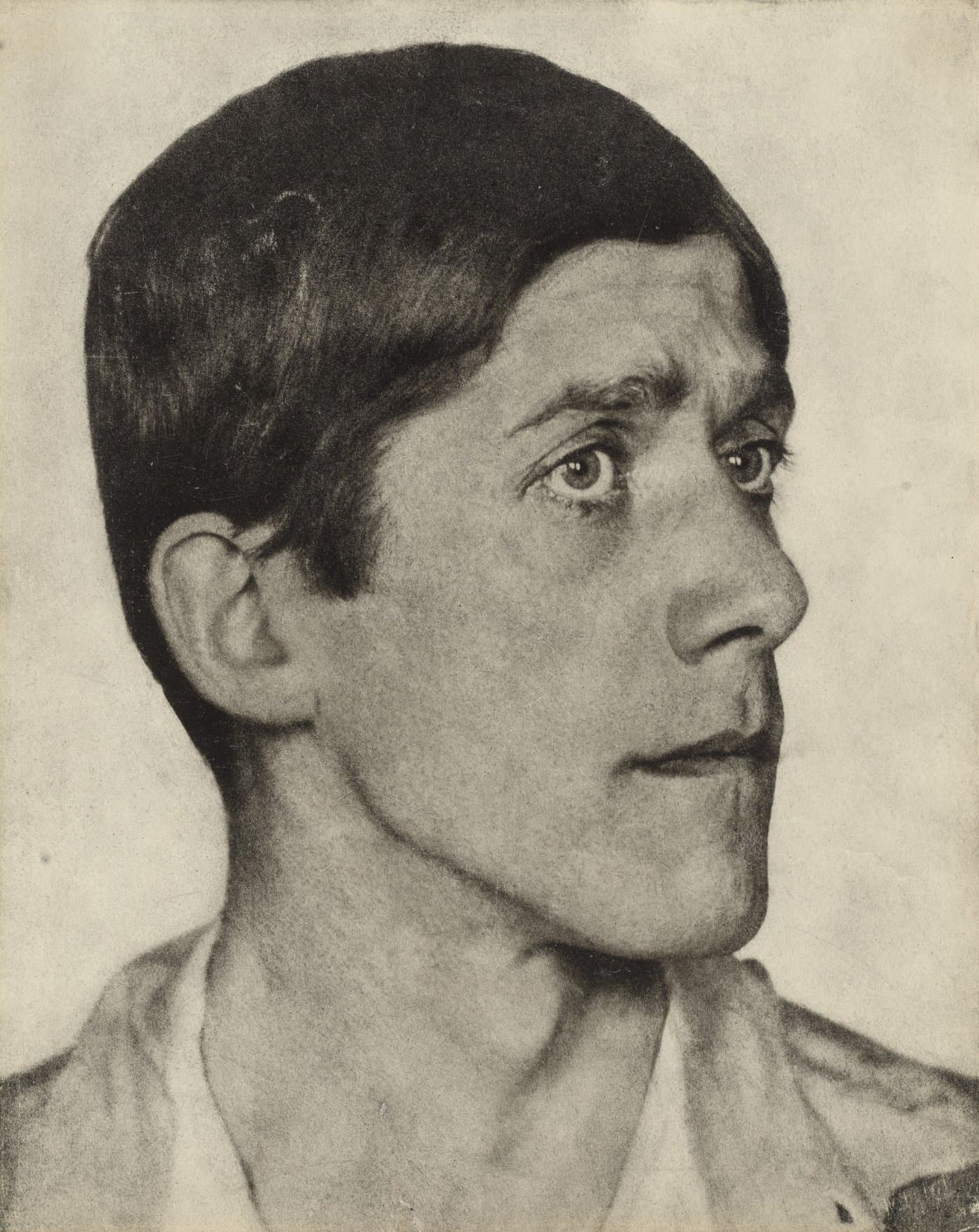
Oskar Kokoschka was born at Pochlarn in Austria in 1886 and was notorious in Vienna before he was twenty-five, both for the psychological portraits and for the play Murderer, the Hope of Women.
What a work by Oskar Kokoschka is worth
Send photographs and whatever paperwork came with it. The first question is what the work actually is — edition or unique, when, and in what condition — because everything else follows from the answer. A valuation is free, made online from the photographs you send, and it commits you to nothing. We act for sellers across the United Kingdom, Europe and the United States.
Write to info@whitebankfineart.co.uk, or start below.
Bio
Oskar Kokoschka was born at Pochlarn in Austria in 1886 and was notorious in Vienna before he was twenty-five, both for the psychological portraits and for the play Murderer, the Hope of Women. The affair with Alma Mahler produced The Bride of the Wind and, after it ended, the life-size doll he had made in her likeness. He was severely wounded in the First World War, was condemned as degenerate and fled to Prague and then to London, taking British citizenship, and spent the later decades painting panoramic city views from high windows across Europe. He died in Switzerland in 1980, at ninety-three.
The market divides between the early Viennese portraits, which are scarce and are the works the reputation rests on, and the later landscapes and city views, which are far more numerous. Both are unique oils. There is a substantial graphic output — lithographs, etchings and illustrated books, much of it from the Vienna years and some of it published in significant editions. Provenance for anything with a pre-1945 Central European history requires care, as restitution questions are live for this generation. The signature is usually the monogram OK.
At a glance
- Born
- 1 March 1886, Pöchlarn
- Died
- 22 February 1980, Montreux
- Movement
- Expressionism
More on Wikipedia.
Polperro, Ullapool and the Prometheus Triptych
After reaching London in 1938 he spent the first years of the war at Polperro in Cornwall, where he painted the harbour and The Crab, the first of a series of allegories against the Nazi regime, and summers at Ullapool in Wester Ross, where he developed his way of drawing in coloured pencil. He became a British subject in 1947 and had a retrospective at the Tate Gallery in 1962.
The Myth of Prometheus, the triptych of 1950 painted for the collector Count Antoine Seilern, is at the Courtauld Gallery in London. The coloured-pencil drawings and Scottish watercolours of the 1940s are a body of work in their own right.
Loos, Der Sturm and the Dresden years
Kokoschka, the son of a goldsmith, studied at the Kunstgewerbeschule in Vienna from 1904 to 1909 under Carl Otto Czeschka. Asked by the Wiener Werkstätte for illustrations to a children's book for the first Kunstschau in 1908, he produced instead The Dreaming Youths, a poem of his own about adolescent love. Most of the portraits of 1909 to 1914 were ordered by the architect Adolf Loos, who agreed to buy any the sitter refused, which left Kokoschka free to paint as he saw; the sitters included Peter Altenberg, Lotte Franzos and Hans and Erica Tietze.
In Berlin in 1910 the dealer Paul Cassirer took him up, and Herwarth Walden published 28 of his drawings in the first year of Der Sturm. He taught at the Dresden academy from 1919. He took Czechoslovak citizenship in Prague in 1935 and settled at Villeneuve in Switzerland in 1953, teaching at the Internationale Sommerakademie. He showed at the first three documentas, painted Konrad Adenauer for the Bundestag in 1966, and regained Austrian citizenship in 1978. Paul Hindemith set his play Murderer, the Hope of Women as an opera.
Whitebank Fine Art is an art advisory and gallery, not an auction house, and is not affiliated with any auction house or with the artist, their estate or their representatives. This page describes the range we advise on. Nothing here is investment advice.