
Gustav Klimt valuation
Vienna Secession, gold leaf, and several thousand drawings that are the practical market.
Gustav Klimt was born at Baumgarten near Vienna in 1862, the son of a gold engraver, and began as a successful decorator of public buildings before breaking with the establishment to found the Vienna Secession in 1897.
What a work by Gustav Klimt is worth
Send photographs and whatever paperwork came with it. The first question is what the work actually is — edition or unique, when, and in what condition — because everything else follows from the answer. A valuation is free, made online from the photographs you send, and it commits you to nothing. We act for sellers across the United Kingdom, Europe and the United States.
Write to info@whitebankfineart.co.uk, or start below.
Bio
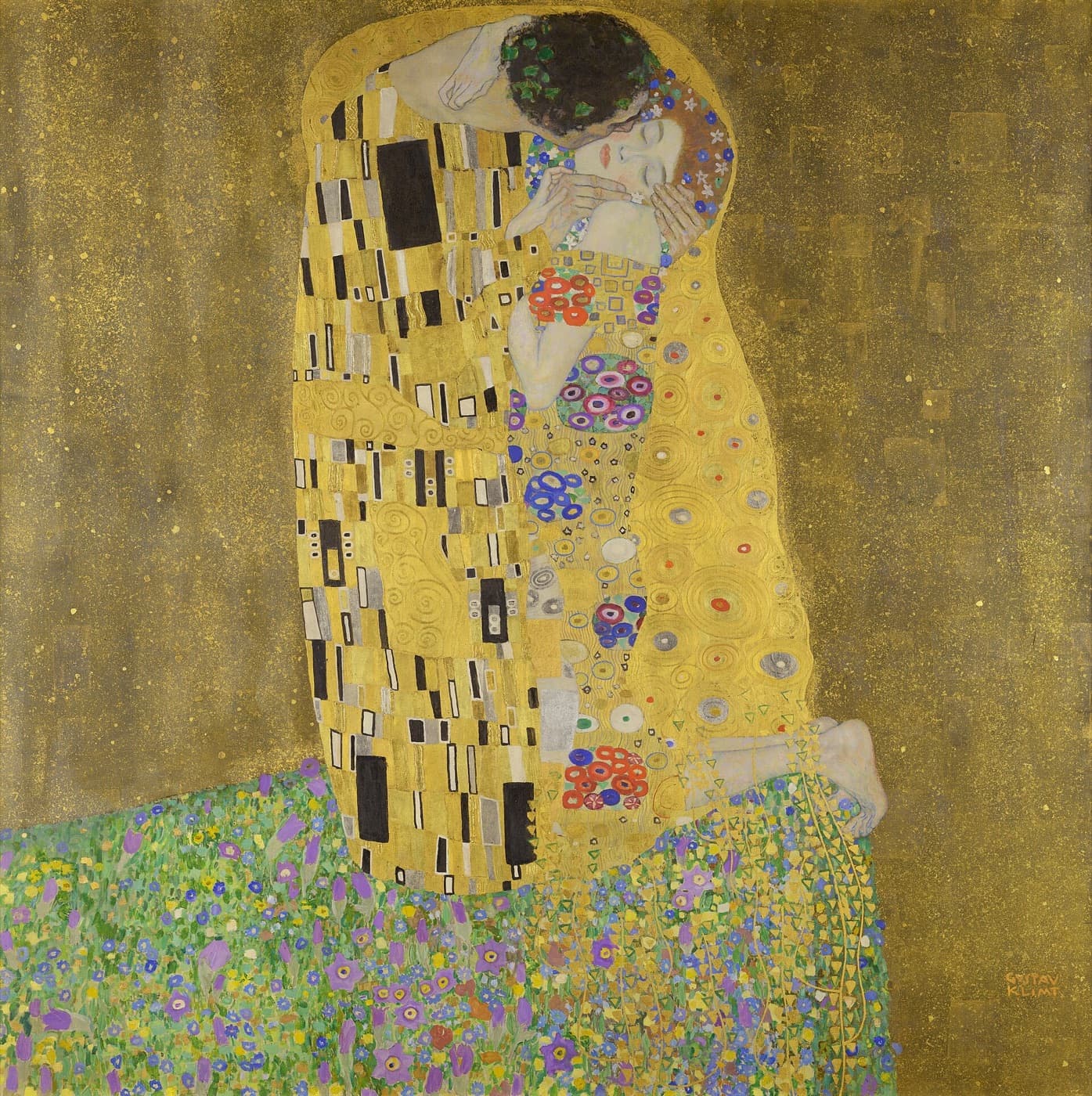
Gustav Klimt was born at Baumgarten near Vienna in 1862, the son of a gold engraver, and began as a successful decorator of public buildings before breaking with the establishment to found the Vienna Secession in 1897. The ceiling paintings commissioned by the university were rejected as pornographic and later destroyed in the war. The gold-ground pictures of the following decade — The Kiss, the portrait of Adele Bloch-Bauer — are among the most reproduced images in Western art, and their restitution histories are among the best known in the field. He also painted landscapes in square format at the Attersee. He died in 1918.
The paintings are few, are almost entirely in institutions, and carry restitution and provenance questions that must be settled before anything else; wartime and pre-war ownership history is the first document requested, not the last. The practical market is the drawings, of which several thousand survive — pencil studies of women, sparse and rapid, sometimes with a red or blue crayon accent. Attribution among them is not straightforward and the Strobl catalogue is the reference. Paper is generally thin and often light-struck. Later reproductions are extremely common.
At a glance
- Born
- 14 July 1862, Baumgarten
- Died
- 6 February 1918, Altes AKH
- Movements
- Symbolism, Art Nouveau, Jugendstil
More on Wikipedia.
The estate stamp, and the gold reproductions
Many genuine drawings carry the stamp of Klimt's sister Hermine, who sold work from the estate after his death in 1918: Nachlass meines Bruders Gustav, the estate of my brother Gustav. It is a good indication of where a drawing has been, though a stamp can be copied and it does not replace comparison with the catalogue. Drawings without it are not ruled out, since the estate was divided among several members of the family.
The paintings people most often own are reproductions of The Kiss and the portraits of Adele Bloch-Bauer, frequently on canvas or board with metallic gold added to imitate the gilding. Some are decades old and handsomely framed. They are decorative pictures with a value of their own, and the online Klimt database kept by the Klimt Foundation in Vienna is a quick way to confirm where an original hangs.
Whitebank Fine Art is an art advisory and gallery, not an auction house, and is not affiliated with any auction house or with the artist, their estate or their representatives. This page describes the range we advise on. Nothing here is investment advice.