
Theo Tobiasse valuation
Spent two years hidden in a Paris flat as a child, and painted exile and the Old Testament ever after.
Theo Tobiasse was born in Jaffa in 1927 to Lithuanian Jewish parents, moved to Paris at four, and spent two years of the occupation hidden with his family in a single apartment while relatives were deported.
What a work by Theo Tobiasse is worth
Send photographs and whatever paperwork came with it. The first question is what the work actually is — edition or unique, when, and in what condition — because everything else follows from the answer. A valuation is free, made online from the photographs you send, and it commits you to nothing. We act for sellers across the United Kingdom, Europe and the United States.
Write to info@whitebankfineart.co.uk, or start below.
Bio
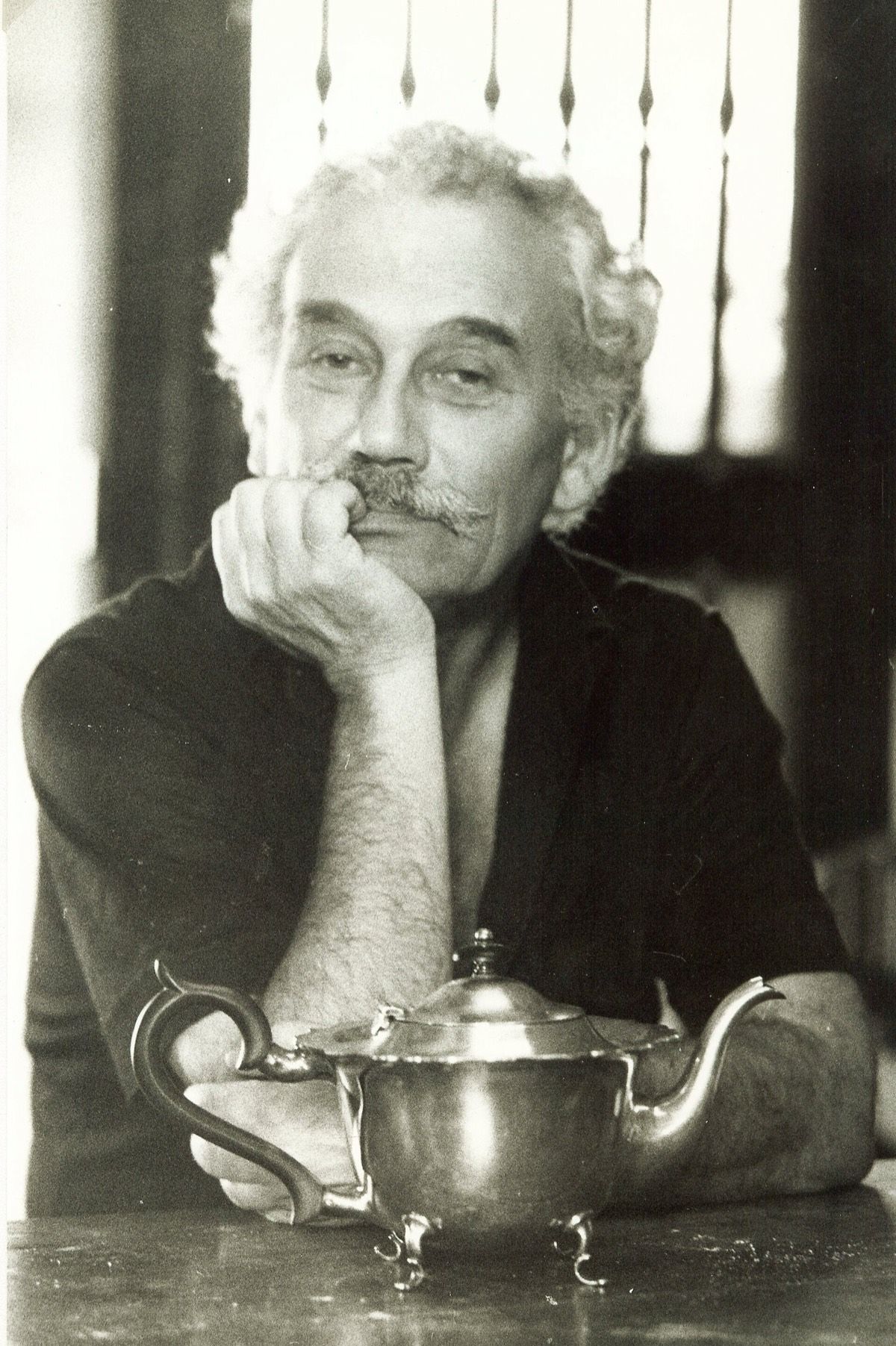
Theo Tobiasse was born in Jaffa in 1927 to Lithuanian Jewish parents, moved to Paris at four, and spent two years of the occupation hidden with his family in a single apartment while relatives were deported. He worked in advertising for over a decade before painting full time, and settled in Nice. The pictures are crowded, high-coloured and deliberately unstable in perspective, built around exile, the Old Testament, women, Vilnius, and the memory of hiding — a personal iconography he repeated and reworked for fifty years. He died in 2012.
A market principally in France, with a substantial following in the United States and Japan built through gallery representation rather than the salerooms. Oils and acrylics on canvas lead. The main practical issue is the volume of editions: Tobiasse published lithographs and carborundum prints in very large numbers over decades, frequently on heavy embossed paper, and owners routinely mistake these for unique works or overestimate their scarcity. He also made mixed-media works on paper and painted objects, and signature is normally on the face.
At a glance
- Born
- 26 April 1927, Jaffa
- Died
- 3 November 2012, Cagnes-sur-Mer
Drouant, Saint-Paul-de-Vence and the lithographs
Tobiasse took French nationality in 1950 and moved to Nice, where he worked as an advertising designer. His first canvases were shown at the Salon des Peintres du Sud-Est in 1960, and after a prize for young Mediterranean painting in 1961 the dealer Armand Drouant gave him a contract and a show in Paris in 1962. His first solo exhibition in New York followed in 1968.
From 1976 his main studio was at Saint-Paul-de-Vence. There, with the lithographer Pierre Chave, he developed lithographs printed in eighteen to twenty colours for editions such as Song of Songs of 1975, and he also made stained glass, pottery and sculpture. The title, publisher and edition number written on a sheet are what separate a print from a unique work on paper.
Hermès, the Hotel Chelsea and Le Cannet
He was born Tobias Eidesas. In occupied Paris the École des Arts Décoratifs refused him a place for racial reasons, and after the Liberation he worked as a graphic designer for the art printer Draeger and made tapestry cartoons, stage sets and window displays for Hermès in the rue du Faubourg Saint-Honoré. From 1964 the paintings turned to his own memories: the train that carried his family from Kaunas to Paris, and the trains to the camps, became a recurring motif, first in It was in 42, the train of 16 July, of 1965.
Encouraged by the American dealer Kenneth Nahan, he moved to New York in 1984, working first at the Hotel Chelsea and then in a studio in Manhattan, and from then on divided his time between New York and Saint-Paul-de-Vence; the novelist Chaim Potok's monograph Tobiasse: Artist in Exile appeared in 1986. His public commissions include the decoration of the Chapelle Saint-Sauveur at Le Cannet in 1989, now a museum of his work, seven windows for the synagogue on the Esplanade in Strasbourg in 1991, twelve for the Great Synagogue of Nice in 1993, and a bronze Venus at the entrance to Saint-Paul-de-Vence. Retrospectives were held in Nice in 1983, at the château-museum of Cagnes-sur-Mer in 1992 and at the Palais Carnolès in Menton in 2000.
Whitebank Fine Art is an art advisory and gallery, not an auction house, and is not affiliated with any auction house or with the artist, their estate or their representatives. This page describes the range we advise on. Nothing here is investment advice.