Performance Art
Performance art is art in which the live actions of the artist, usually in front of an audience, are the work itself, a practice that grew from Futurist and Dada events into a recognised form in the 1960s and 1970s through artists such as Joseph Beuys and Marina Abramović.
The Italian Futurists staged riotous evenings from 1910, and in Zurich in 1916 the Dadaists opened the Cabaret Voltaire. After the Second World War, John Cage organised an untitled event at Black Mountain College in 1952, and Allan Kaprow's 18 Happenings in 6 Parts in New York in 1959 gave a name to a new form. The Gutai group in Japan, the Fluxus network, to which Nam June Paik and Yoko Ono belonged, and Yves Klein's Anthropometries of 1960, with models pressing painted bodies against canvas, all moved art away from the object.
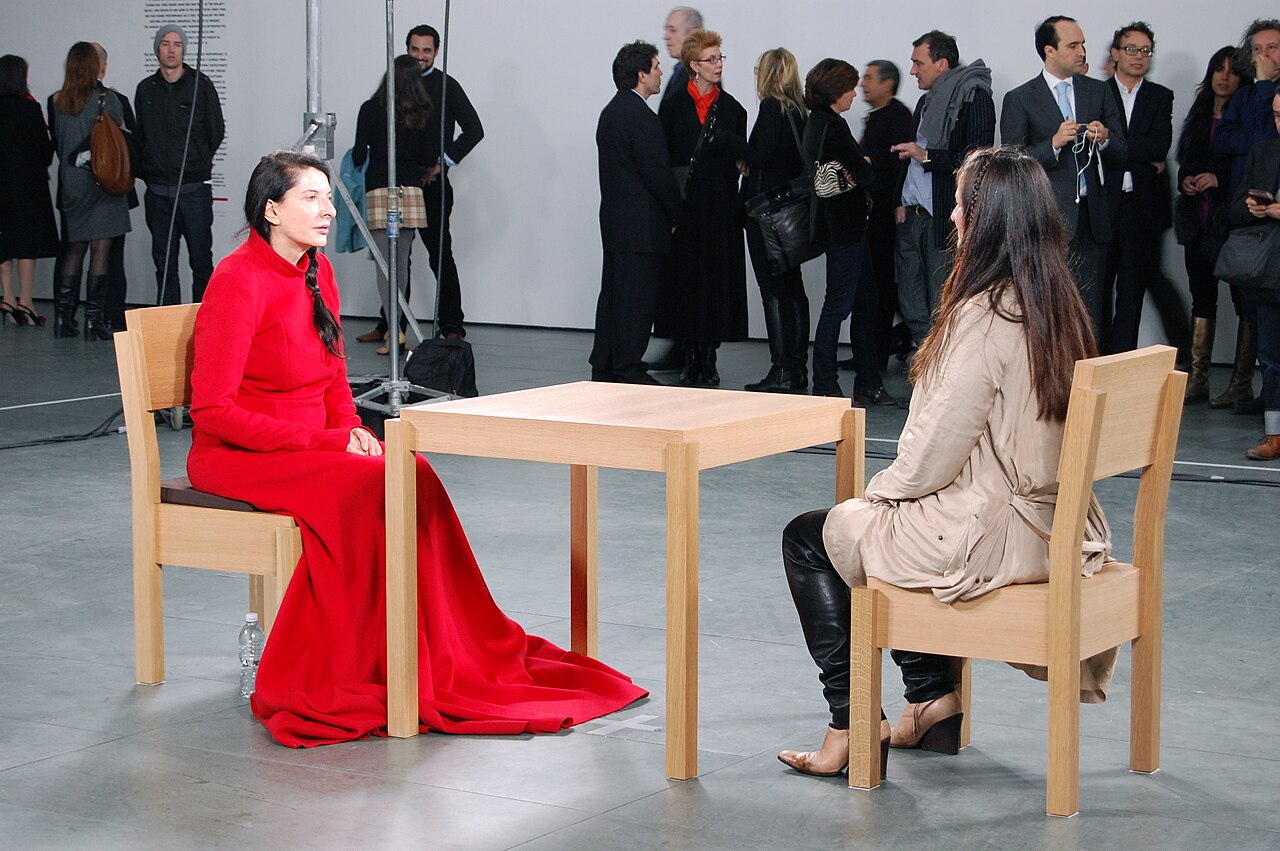
By the 1970s performance art had a name and a set of practitioners. Joseph Beuys explained pictures to a dead hare in 1965 and spent days with a coyote in New York in 1974. Vito Acconci, Chris Burden and Marina Abramović tested the limits of the body, while the Viennese Actionists, including Hermann Nitsch, staged ritual events. Valie Export and Ana Mendieta made work about gender and the body, and in London Gilbert & George declared themselves living sculptures. Museums have gradually taken it in: Abramović sat in silence for The Artist is Present at the Museum of Modern Art in 2010, and Tate Modern opened the Tanks for live work in 2012.
At a glance
- When
- 1960s to the present, with roots in the 1910s
- Where
- New York, Europe and Japan
- Leading artists
- Yves Klein, Joseph Beuys, Nam June Paik, Hermann Nitsch
Characteristics of performance art
- The body as material
- The artist's own presence and endurance as the medium.
- Live and temporary
- An event in time that can never be fully repeated.
- Audience involvement
- Viewers who watch, take part or become part of the work.
- Documentation
- Photographs, film and props that remain after the event.
- Challenge to the market
- Work that resists being owned, bought or sold.
Performance artists
Every artist below has a page on this site, with a short biography and what a valuation of their work turns on.
Early actions
- Yves KleinPatented his own blue, painted with fire and with bodies, and did it all in seven years.
- Joseph BeuysFelt, fat, a Luftwaffe crash he may have invented, and the claim that everyone is an artist.
- Nam June PaikKorean-born artist regarded as a founder of video art, known for his television sculptures.
- Hermann NitschAustrian co-founder of Viennese Actionism, whose Orgien Mysterien Theater joined ritual actions, music and large poured paintings.
The body and identity
- Marina AbramovićSat silently at a table in MoMA for three months and let strangers sit opposite her.
- Ana MendietaPressed, burned and dug the outline of her own body into earth, sand and rock, and photographed what was left.
- VALIE EXPORTAustrian pioneer of feminist performance, expanded cinema and conceptual photography, from Touch Cinema to the Body Configurations.
- Bruce NaumanAmerican artist of neon, video, sculpture and performance, for whom whatever happened in the studio was the art.
Famous Performance works
- Anthropometries of the Blue PeriodYves Klein, 1960, Paris
- Cut PieceYoko Ono, 1964, Kyoto
- How to Explain Pictures to a Dead HareJoseph Beuys, 1965, Düsseldorf
- The Singing SculptureGilbert & George, 1969
- Rhythm 0Marina Abramović, 1974, Naples
- The Artist is PresentMarina Abramović, 2010, Museum of Modern Art, New York
What a valuation turns on
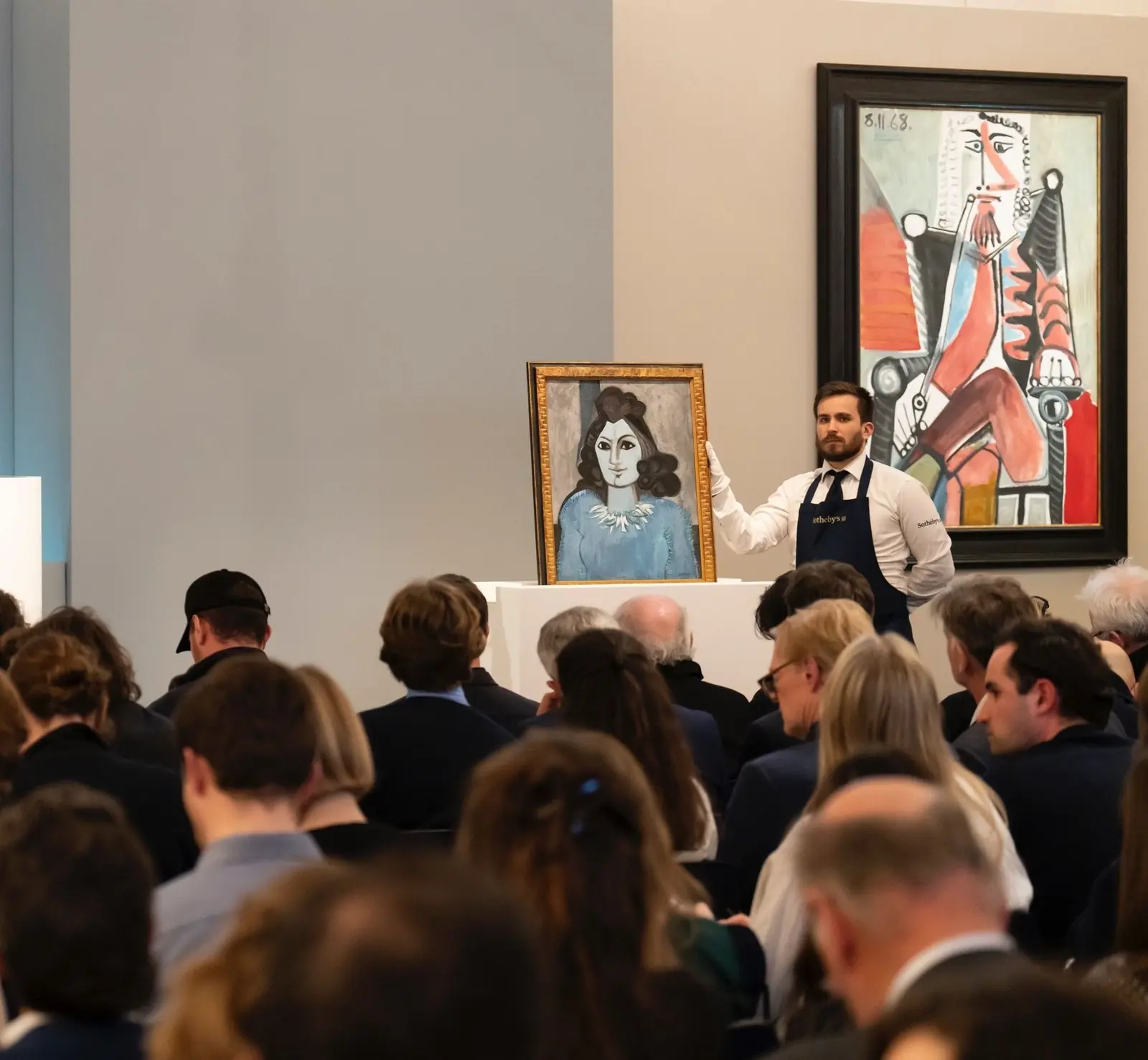
A live performance cannot be sold in the usual way, so what comes to market is what it leaves behind: photographs, films, relics and props, and works made in connection with an event. Beuys's multiples, Klein's Anthropometries on paper and canvas, and Abramović's editioned photographs are the established forms. Some artists sell the right to restage a piece, with written instructions.
Paperwork is central. A buyer will want the certificate or contract, the edition number and evidence of how the object relates to a recorded event. Relics have a value that depends on that link, and materials such as felt, fat and blood-stained cloth bring conservation questions of their own. Later prints of performance photographs should be distinguished from those made at the time.
Common questions
What is performance art?
Performance art is art in which the live actions of the artist are the work itself. It may take place anywhere, last minutes or days, and often involves the audience.
Who is the most famous performance artist?
Marina Abramović is widely known, along with Joseph Beuys, Yves Klein, Yoko Ono and Gilbert & George.
When did performance art start?
Its roots lie in Futurist and Dada events of the 1910s. It became a distinct art form in the 1960s and 1970s.
Can you buy performance art?
Usually you buy what remains, such as photographs, film, props or relics. Some artists also sell the right to restage a work, with written instructions.
How do I sell a work or relic connected to a performance?
Send photographs of the front, any signature or marks, and the back for a free, confidential valuation, with any labels or documents. We check the work against the published record, look at condition, and compare a confidential private sale with auction.