Installation Art
Installation art is art that transforms an entire space, often for a limited time, so that the viewer walks into and experiences the work, a form that became established in the 1970s and is seen in the work of Ilya Kabakov, Yayoi Kusama and Olafur Eliasson.
Its ancestors include Kurt Schwitters's Merzbau, a growing structure that filled rooms of his house in Hanover from the 1920s, and Marcel Duchamp's web of string across a New York gallery in 1942. In the late 1950s and 1960s, Allan Kaprow's environments and Yayoi Kusama's mirrored rooms invited viewers inside, and Dan Flavin's fluorescent lights, Donald Judd's boxes and the Minimalists drew attention to the room itself. The term came into use in the 1970s, when Judy Chicago's The Dinner Party and the work of artists such as Ilya Kabakov, who spoke of the total installation, gave it a shape of its own.
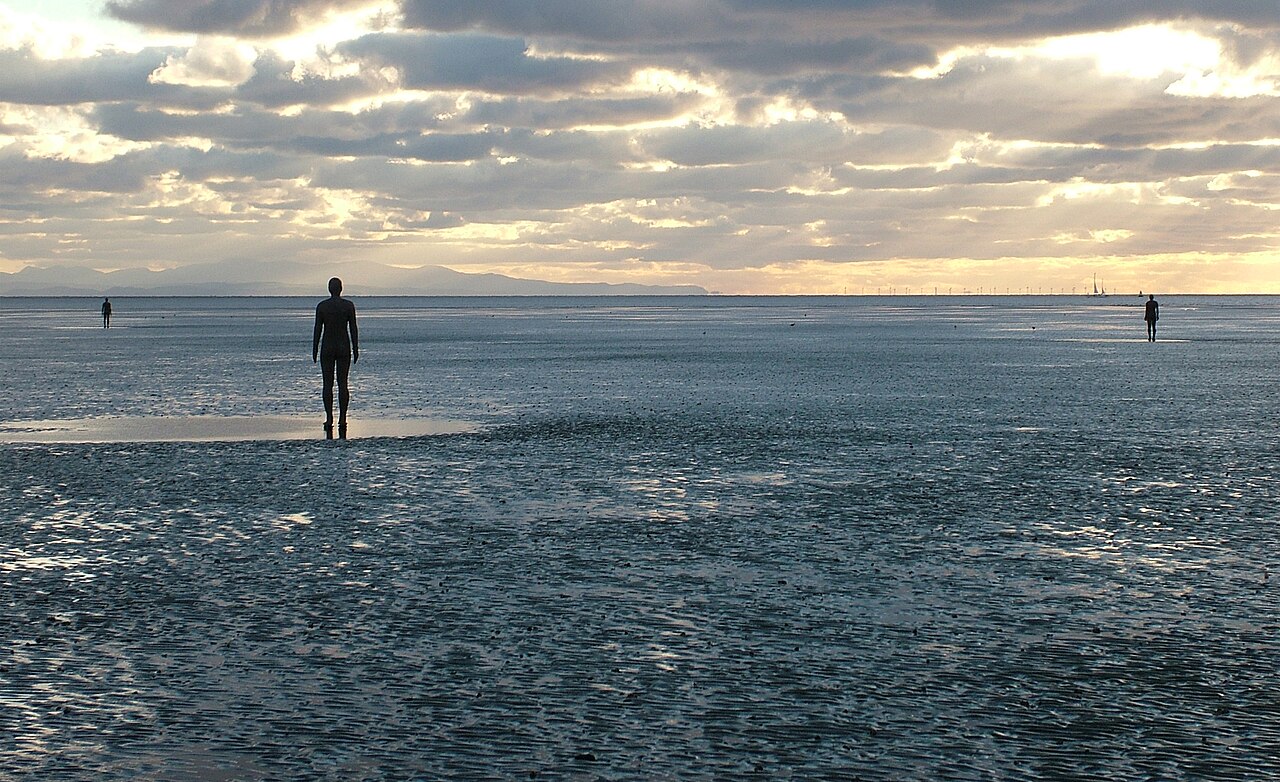
It became a dominant form of contemporary art. The large halls of new museums called for it, and since 2000 the Turbine Hall at Tate Modern has hosted a series of commissions, beginning with Louise Bourgeois and including Olafur Eliasson's The Weather Project in 2003. In Britain, Tracey Emin's My Bed, Cornelia Parker's suspended fragments and Antony Gormley's Another Place, whose iron figures stand on Crosby Beach, have become familiar. Mona Hatoum, Yinka Shonibare and Sarah Sze use it to address politics, history and scale.
At a glance
- When
- 1970s to the present, with roots in the 1920s
- Where
- Europe, the United States and worldwide
- Leading artists
- Marcel Duchamp, Yayoi Kusama, Dan Flavin, Ilya and Emilia Kabakov
Characteristics of installation art
- A whole environment
- The space itself is the artwork, not a thing placed in it.
- The viewer inside
- Visitors walk through the piece and become part of it.
- Mixed materials
- Found objects, light, sound, video and architecture.
- Site-specific
- Often made for one place and impossible to move intact.
- Temporary life
- Frequently dismantled after a show and known through documentation.
Installation artists
Every artist below has a page on this site, with a short biography and what a valuation of their work turns on.
Pioneers
- Marcel DuchampInventor of the readymade, painter of Nude Descending a Staircase, and the forerunner of Conceptual art.
- Yayoi KusamaOne of the largest markets in contemporary art, and one of the most counterfeited — which makes the certificate the first question.
- Dan FlavinMade art from shop-bought fluorescent tubes, turning light, colour and corners into sculpture.
- Ilya and Emilia KabakovSoviet-born artists of the total installation, whole rooms built around invented characters and the communal apartment.
- Nam June PaikKorean-born artist regarded as a founder of video art, known for his television sculptures.
In Britain
- Tracey EminThe neons are the works most often owned and most often misunderstood, because a different colour is a different work.
- Cornelia ParkerBlew up a garden shed, hung the pieces from the ceiling, and lit it from inside.
- Antony GormleyCasts his own body, puts it on beaches and rooftops, and made an angel out of Gateshead steel.
- Rachel WhitereadCasts the space inside and underneath things — a room, a bath, a house, a staircase.
- Michael LandyBritish artist of the Young British Artists generation, best known for destroying all his possessions in Break Down.
- Yinka ShonibareDresses headless Victorian figures in Dutch wax fabric to unpick empire, trade and identity.
International
- Olafur EliassonDanish-Icelandic artist of installations made with light, water and air, best known for The Weather Project at Tate Modern.
- James TurrellUses light itself as the material, and has been reshaping an Arizona volcano since 1977.
- Louise BourgeoisSpiders, cells and fabric figures, from an artist who was seventy before the world caught up.
- Mona HatoumBeirut-born British-Palestinian artist whose performances, sculptures and installations turn the domestic into the dangerous.
- Ai WeiweiDropped a Han dynasty urn, filled the Turbine Hall with sunflower seeds, and was detained for 81 days.
- Sarah SzeAmerican artist of intricate installations built from everyday objects, images and light.
- Bill ViolaAmerican video artist whose slow, large-scale works draw on religious painting and human experience.
- Theaster GatesChicago artist working across sculpture, ceramics and the renewal of buildings and neighbourhoods.
Famous Installation works
- MerzbauKurt Schwitters, about 1923–37, Destroyed; Hanover
- The Dinner PartyJudy Chicago, 1974–79, Brooklyn Museum, New York
- Cold Dark Matter: An Exploded ViewCornelia Parker, 1991, Tate, London
- Another PlaceAntony Gormley, 1997, Crosby Beach, Merseyside
- My BedTracey Emin, 1998
- The Weather ProjectOlafur Eliasson, 2003, Tate Modern, London
What a valuation turns on
Full installations are bought mainly by museums and major collectors. An installation is usually sold with a certificate and a set of instructions that govern how it may be shown, and without these the physical parts may amount to little more than materials. Works by Kusama, Turrell and Eliasson are also available in editions and in smaller formats, and drawings and maquettes by installation artists often appear on the market.
A buyer will want to know the edition, the display conditions and who may install it. Lights, motors and screens age and may need replacing, and any changes should be recorded with the artist's studio or estate. Transport and storage can be substantial, and they affect how a work is valued and sold.
Common questions
What is installation art?
Installation art transforms a whole space into a work that viewers enter and experience. It can use objects, light, sound, video or architecture, and is often temporary.
Who are the most famous installation artists?
Yayoi Kusama, Ilya and Emilia Kabakov, Olafur Eliasson, James Turrell, Tracey Emin and Antony Gormley.
When did installation art start?
Its roots include Kurt Schwitters's Merzbau of the 1920s and Marcel Duchamp's interventions. It became an established form in the 1970s.
Can you sell an installation?
Yes, usually with a certificate and instructions that say how it may be shown. Without that paperwork, the materials alone may have little value.
How do I sell an installation or a work by an installation artist?
Send photographs of the front, any signature or marks, and the back for a free, confidential valuation, with any labels or documents. We check the work against the published record, look at condition, and compare a confidential private sale with auction.