
Banksy at auction
Where Banksy sells, what it has made, and what a seller pays to get there.
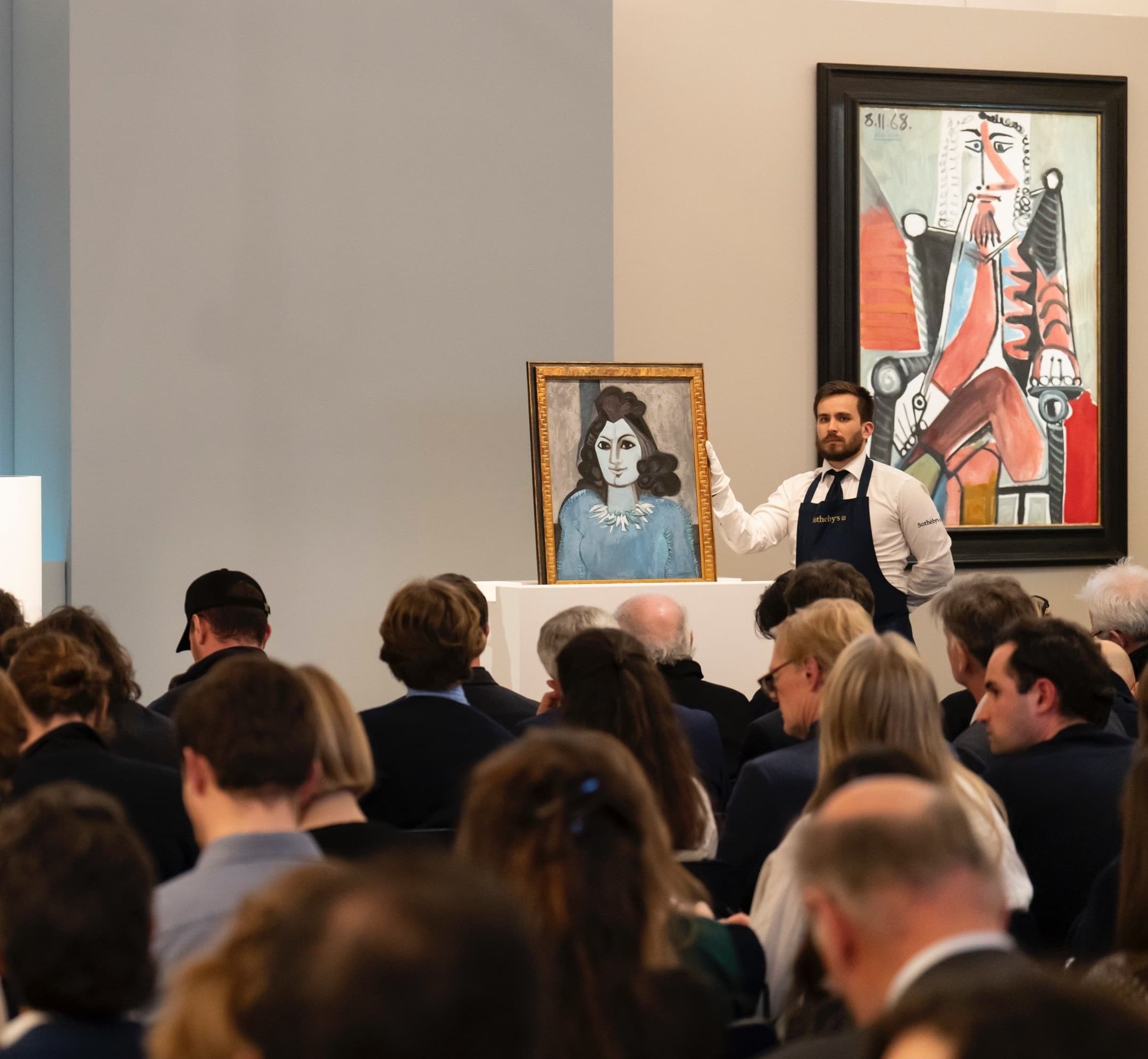
Banksy is one of the most frequently offered artists at auction. Originals appear in the evening sales of the big London and New York houses, and the prints and editions appear almost every month somewhere, in sales built for them.
For a seller that frequency helps: there is always a sale coming and a recent result to measure against. It also means a lot of choice, and choosing badly — the wrong house, the wrong sale, terms accepted as offered — costs more than most sellers expect. This page covers where Banksy sells, what it has made, and what a sale costs.
Where Banksy sells at auction
Most of the market runs through a handful of houses, of four broad kinds. Which of them suits a given work depends on what it is, and working that out is the first thing we do.
- The major international houses
- Originals and the rarest prints go into their contemporary evening and day sales in London and New York. Editions go into dedicated prints and multiples sales, held several times a year, with online-only sales in between.
- Specialist print salerooms
- London houses where Banksy editions come up constantly, and where the buyers looking for them already are. Often the right home for a print that would be one lot among hundreds in a bigger sale.
- The American market
- Houses in the United States with sales built around street art and popular culture, which can suit particular images and particular buyers.
- Regional salerooms
- Banksy prints turn up in regional sales across the UK. Fees can be lower and the audience is smaller, which suits some prints and costs others money.
When the sales are
London’s main contemporary sales fall in late winter and in October, around Frieze; New York’s in May and November. Those are where originals and the most sought-after prints are placed. Prints and multiples sales run on their own calendar at each house, several times a year, and online sales fill the gaps. Houses close a sale to new consignments some weeks before it, earlier where a printed catalogue is involved, so the sale a work can realistically join is usually a few weeks to two months away.
Banksy’s auction records
The results people remember are all for unique works, and most of them were set in London. The most famous is two sales of the same canvas: Girl With Balloon shredded itself in its frame as the hammer fell in 2018, and returned three years later as Love is in the Bin at eighteen times the price.
| Work | Sale | Result |
|---|---|---|
| Love is in the BinThe shredded Girl With Balloon, reoffered | London14 October 2021 | £18.6m |
| Game ChangerOil on canvas, sold for NHS charities | London23 March 2021 | £16.8m |
| Devolved ParliamentOil on canvas, chimpanzees in the Commons | London3 October 2019 | £9.9m |
| Girl With BalloonShredded in its frame as the lot closed | London5 October 2018 | £1.04m |
| Keep It SpotlessThe record for the decade that followed | New YorkFebruary 2008 | $1.87m |
None of these says anything about what a print is worth. Prints are priced by title, edition, signature and condition: a signed and an unsigned Love Is In The Air are two different markets, not one market with a discount. The Banksy price guide sets out what they sell for, title by title.
What a seller pays at auction
The figure in the press is the buyer’s premium. What you pay is something else, spread across a contract and a schedule of terms, and most of it is negotiable before the work is catalogued.
Seller's commission
A percentage of the hammer price, deducted from what you receive. The rate card is where the conversation starts, not where it ends: on a work a house wants, it moves.
The buyer's premium
Paid by the buyer, on top of the winning bid, and currently in the region of 25 to 30% at the lower tier across the major houses. It does not come out of your proceeds, but it caps what bidders are willing to bid.
Photography, cataloguing and insurance
Per-lot charges and cover while the house holds the work. Modest on one print, less so on a group, and often waived on a lot the house is keen to have.
The unsold fee
Charged if the lot fails to sell, usually as a percentage of the reserve. It is the charge for the outcome you did not want, and among the first worth negotiating away.
VAT on the fees
Charged on the commission and the other charges, not on the hammer price, which makes a 10% commission cost 12% in practice.
Selling at auction goes through every charge in more detail, including settlement periods and the Artist’s Resale Right.
What the saleroom will ask for
The Pest Control certificate first: without it no major house will take the work, and the authentication guide explains how to get one. Then photographs of the front, the reverse and any signature or number; a condition report, ideally with the work out of its frame; and whatever provenance you have. The consignment contract then fixes the estimate, the reserve, which at the major houses cannot sit above the low estimate, and the terms for withdrawing the lot if you change your mind.
How we place a Banksy at auction
We act for the seller, not the saleroom. From photographs we give you a written valuation with the comparable results behind it. We then put the work to the houses that suit it, compare their estimates, sale dates and settlement terms, and negotiate the commission, the unsold fee and the marketing costs rather than accept a rate card. You choose the house. The contract and the remittance stay in your name throughout.
Our fees are typically 0%, and on rare occasions 2.5 to 10% where a sale is complex; because we negotiate reduced seller’s rates, the overall cost is usually the same or lower than consigning directly. Auction is not always the right answer, and selling a Banksy compares it with a private sale and an outright purchase.
Questions about Banksy at auction
Which auction house is best for selling a Banksy?
The one whose sale, audience and terms fit that particular work. A unique work or a rare proof belongs in a major London or New York sale. A common unsigned print can do as well, or better, in a specialist prints sale where Banksy buyers are already looking, with lower costs. We compare estimates and terms across the houses before anything is consigned.
Will an auction house sell a Banksy without a Pest Control certificate?
Not a reputable one. Pest Control has been the only body authenticating Banksy's work since 2008, and the major houses will not offer a work without its certificate. If the paperwork is missing, the application comes first, and it adds months before a sale is possible.
How long does it take to sell a Banksy at auction?
Usually one to three months from consignment to payment. The next sale that can take the work is typically a few weeks to two months away, and most houses settle with the seller around 30 to 35 days after it, once the buyer has paid.
Can the seller's commission be negotiated?
Yes, along with the unsold fee, photography and insurance. The published rates are a starting point. How far they move depends on how much the house wants the work, which is why it helps to have more than one house bidding for the consignment.
What happens if my Banksy does not sell at auction?
It is bought in, an unsold fee is usually charged, and the failure is recorded in the price databases buyers consult, which makes the next attempt harder. Agreeing a realistic estimate and reserve before the sale does more to prevent that than anything after it.
Are Banksy auction results public?
Yes. The houses publish their results, and price databases collect them. They are what a valuation is built from, and we set out the comparable results behind any figure we give you.
Whitebank Fine Art is an art advisory and gallery, not an auction house, and is not affiliated with Banksy, Pest Control, Pictures on Walls or any auction house. Only Pest Control can authenticate a work by Banksy. Auction results are as reported by the houses concerned and are included for context, not as a valuation of any individual work, and nothing here is investment advice.