
Selling a Banksy
Compare estimates from major auction houses, assess an outright sale versus a private gallery sale.
Where can I sell a Banksy print?
Three routes, offering varying timelines.
| Consideration | Public auction | Outright purchase | Private sale |
|---|---|---|---|
| Time to funds | 1–3 months | Days | 2–6 weeks |
| Seller's cost | Commission, plus photography, insurance and an unsold fee | None, but the buyer's margin is inside the price | Our fee, agreed in advance — typically none |
| Price ceiling | Highest, if two determined bidders appear | Lowest — a trade price by definition | Close to auction, without the downside |
| If it does not sell | A public unsold record follows the work | Not applicable | Nothing is published; you keep the work |
| Discretion | The result is public and permanent | Private | Private |
| Best when | Rare, headline images with competitive demand | You need certainty and speed more than price | Certified prints where price and discretion both matter |
We broker private sales, so treat the third column as an interested party’s account of its own product. The comparison is fair, but check it against what an auction specialist tells you before you decide.
The auction trade-off, stated plainly
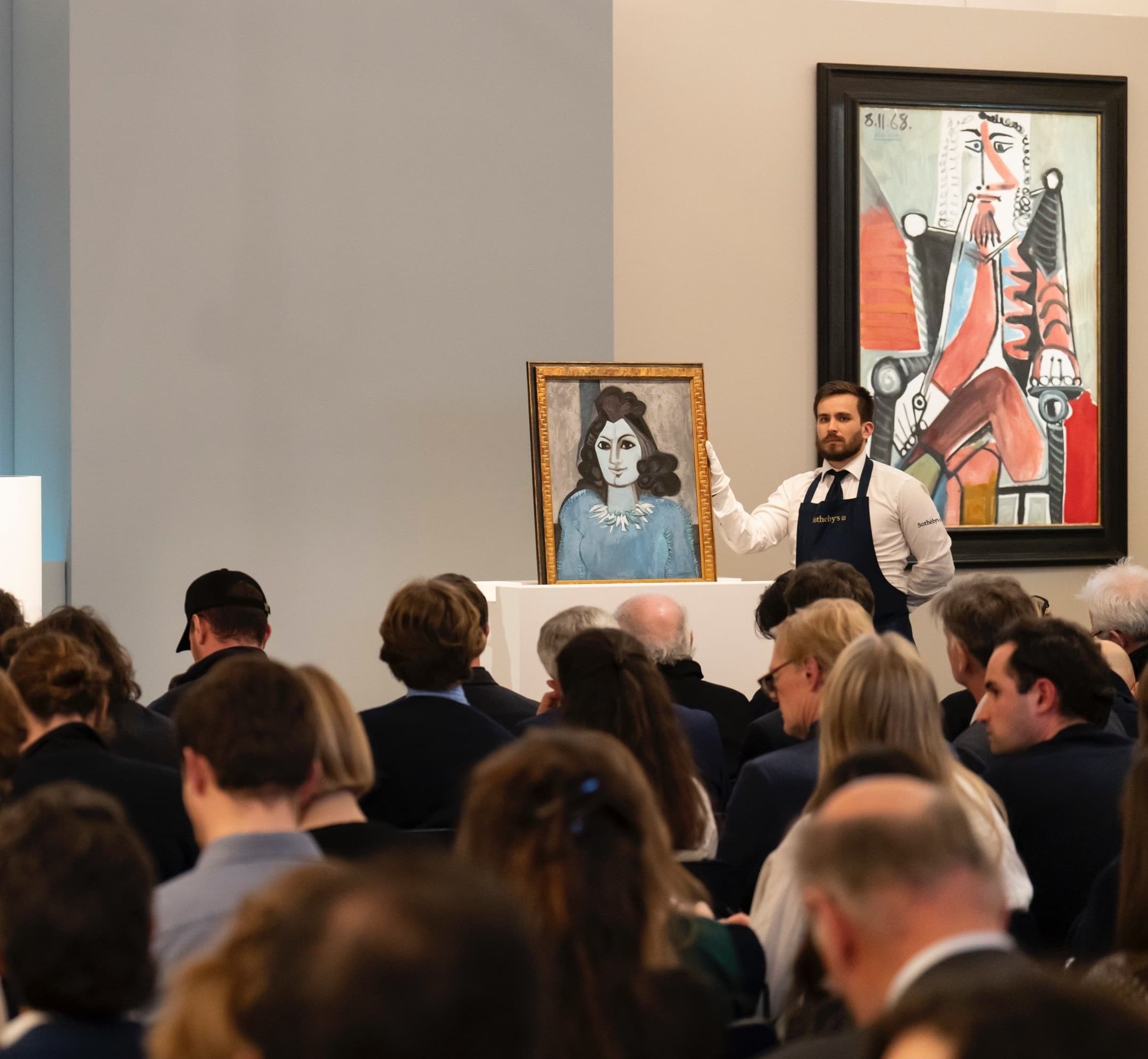
A public auction is the only route that can produce a runaway result, and occasionally it does. The cost of that possibility is a fixed date, a public reserve and a permanent record. An unsold lot is not a neutral event: it is recorded in the price databases every serious buyer consults, and it makes the next attempt harder. If your print is a common unsigned image, the odds of the runaway result are low and the odds of the record are not. What selling at auction actually costs sets out every fee that comes off the hammer price, and Banksy at auction covers which houses sell Banksy and when their sales fall.
Why “we’ll buy it today” is the expensive option
A dealer offering to buy outright is offering you certainty, and certainty is a product with a price. That price is the margin they need to carry the work, insure it, market it and wait for a buyer. It is a perfectly legitimate transaction and sometimes exactly what a seller needs.
What actually moves the price
In rough order of impact. The first two are usually worth more than the other four combined.
01Edition size
The single strongest driver. A signed edition of 25 and an unsigned edition of 600 are different markets wearing the same image. Look at the edition before you look at anything else.
02Signature
Signed examples command a substantial premium, largely because signed editions are far smaller.
03Certification
A Pest Control certificate is close to binary. With it you have a market; without it you have a heavily discounted work in a thin corner of one.
04Condition
Toning, light-fading, creasing, foxing and trimming all bite, and trimming bites hardest — a trimmed sheet has lost original material and cannot be put back.
05Colourway and proofs
Rare colourways and artist's proofs trade above the standard edition.
06Provenance
A documented chain of ownership back to the publisher removes doubt, and removing doubt is worth money at the negotiating table.
For what prints actually sell for, signed and unsigned, see Banksy prices.
The one that surprises people
Framing. A work sealed behind non-conservation glass on acidic board for fifteen years may have toned irreversibly, and the owner is the last person to notice because it happened slowly on their own wall. Good framing protects value; cheap framing quietly removes it. If a print has never been out of its frame, that is the first thing we look at.
How selling through us works
Six steps. You can stop at any of them, and there is no cost to you if you do.
01Send photographs
The front, the signature or edition number, and the reverse of the sheet. If there is a Pest Control certificate, a photograph of that too. There is no charge and no obligation to go further.
02A written valuation
A realistic range with the comparable results it is built from, so you can see the reasoning rather than take a number on trust.
03Seeing the work
Where it helps, we look at the work out of its frame before anything is offered to anyone. A mount and non-conservation glass can hide a great deal.
04Choosing the route
Auction or private sale, and if auction, which house and which sale. We compare estimates and terms across the salerooms and negotiate the seller's commission and unsold fees rather than accept a published rate card.
05Your decision
Every offer is relayed in full, including ones we think you should refuse. Nothing is agreed without your approval.
06Completion
The paperwork and the remittance stay in your name throughout. You keep legal title until the funds are cleared.
What we will not do
Take a work we cannot place. Quote an inflated figure to win the consignment and revise it downwards later. Or accept an uncertified print and hope Pest Control agrees with us after the fact. Where any of those is the honest answer, we will say so.
Questions sellers ask
Where can I sell my Banksy print in the UK?
Three realistic routes: a public auction house, a dealer buying outright, or a private sale through an advisory. Auction gives maximum exposure and a permanent public record either way. An outright purchase gives you speed at a trade price. A private sale sits between them and is usually the best balance for a certified print. The table above sets out the differences.
Can I sell a Banksy without a Pest Control certificate?
Not through any reputable UK channel. Pest Control has been the sole authenticating body since 2008, and dealers, auction houses and platforms will not transact without its certificate. Uncertified works change hands at a heavy discount, if at all.
How long does it take to sell a Banksy print?
A certified print in good condition typically completes privately within two to six weeks. A public auction is bound to the sale calendar — usually one to three months from consignment to payment. If the work is uncertified, a Pest Control application comes first and adds months to the front of the process.
What do you charge?
Our fees are typically 0%. On rare occasions we may need to charge a 2.5% to 10% commission where the sale is complex. Even then, because we negotiate reduced seller's rates on your behalf, the overall cost is usually the same or lower than consigning directly, and unsold and marketing fees can often be avoided entirely. Third-party costs — specialist shipping, conservation, a Pest Control application — are quoted in advance.
Do you buy prints yourself?
Sometimes. We are an advisory and a gallery, and works are offered directly through our own catalogue as well as brokered on behalf of sellers. We tell you which of those we are proposing before you decide anything, because the two are not the same transaction and should never be presented as though they were.
Is now a good time to sell a Banksy?
The market peaked in 2021 and reset sharply afterwards. What replaced it is more selective rather than simply lower: strong images, small editions, signed examples and clean condition still find committed buyers, while common unsigned images in average condition move slowly. Which group your print falls into matters far more than the month you choose.
Whitebank Fine Art is an art advisory and gallery, not an auction house, and is not affiliated with Banksy, Pest Control, Pictures on Walls or any auction house. Only Pest Control can authenticate a work by Banksy. Price figures on this page are third-party reported market averages included for context, not a valuation of any individual work, and nothing here is investment advice.