
Barnett Newman valuation
A single vertical band down a field of colour, and forty years of argument about whether that is enough.
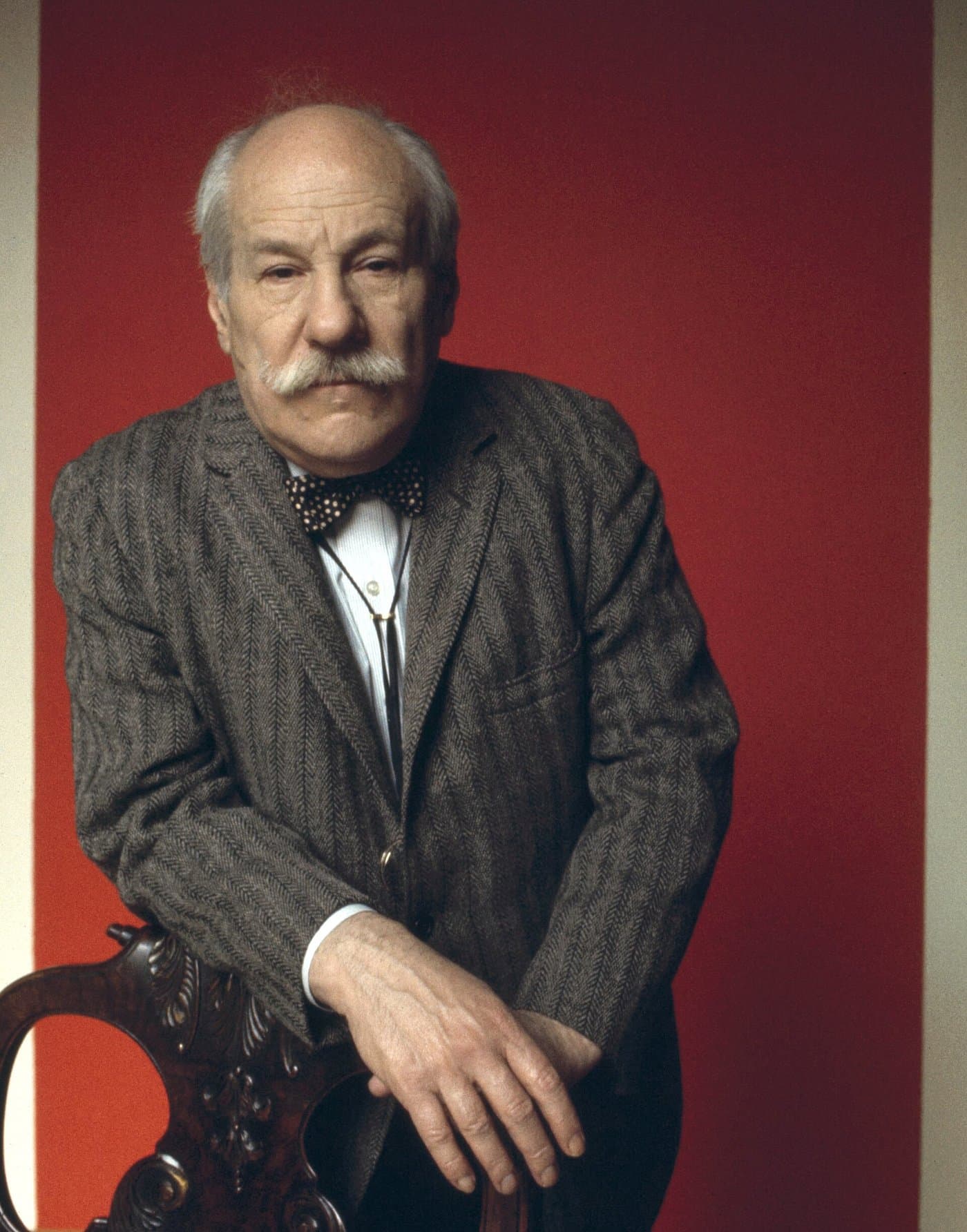
Barnett Newman was born in New York in 1905 to Polish Jewish emigrants, studied philosophy, worked as a teacher and a critic, and destroyed most of what he had painted before 1944.
What a work by Barnett Newman is worth
Send photographs and whatever paperwork came with it. The first question is what the work actually is — edition or unique, when, and in what condition — because everything else follows from the answer. A valuation is free, made online from the photographs you send, and it commits you to nothing. We act for sellers across the United Kingdom, Europe and the United States.
Write to info@whitebankfineart.co.uk, or start below.
Bio
Barnett Newman was born in New York in 1905 to Polish Jewish emigrants, studied philosophy, worked as a teacher and a critic, and destroyed most of what he had painted before 1944. Onement I of 1948 — a field of cadmium red divided by a single vertical strip of masking tape left in place and painted over — is the point at which the work begins. He called the bands zips, and made them the entire content of the painting for the rest of his life, at scales from the very small to the wall-filling. He was largely dismissed in his lifetime and died in 1970.
Very little trades: the output was small, he destroyed early work, and the major paintings are institutional. The colour fields are flat, evenly applied and often unvarnished, which makes them among the least forgiving surfaces in post-war painting — a scuff, a retouch or a stretcher mark reads across the whole picture, and several works have suffered high-profile vandalism and difficult restorations. Sculpture exists in small editions. There is a lithograph and etching output, including the 18 Cantos portfolio, which is where most collectors actually encounter him.
At a glance
- Born
- 29 January 1905, New York City
- Died
- 4 July 1970, New York City
- Movements
- Abstract Expressionism, Color Field
More on Wikipedia.
The Stations of the Cross, and the catalogue raisonné
The Stations of the Cross, fourteen black and white paintings made between 1958 and 1966, begun after he recovered from a heart attack and subtitled Lema Sabachthani, are usually seen as the summit of his work. Anna's Light, of 1968, named for his mother, is his largest painting, and Broken Obelisk is his best-known sculpture. He died in New York in 1970.
The Barnett Newman Foundation's catalogue raisonné, published in 2004, records the paintings, sculpture and works on paper, and with so small an output any work offered should be found there.
City College, the Uptown Group and Betty Parsons
Newman studied philosophy at the City College of New York and worked in his father's clothing business. He met Annalee Greenhouse in 1934, when both were substitute teachers at Grover Cleveland High School, and they married in June 1936. Before he showed his own paintings he wrote catalogue forewords and reviews and organised exhibitions, and he became a member of the Uptown Group. His first solo show was at the Betty Parsons Gallery in 1948, and soon afterwards, at an Artists' Session at Studio 35, he said that the artists were making the world, to an extent, in their own image.
After the breakthrough of 1948 he and Annalee agreed that he should give all his energy to painting, and they lived almost entirely on her teaching salary until the late 1950s, when his pictures began to sell consistently. Black Fire I dates from 1961 and Voice of Fire from 1967, and Vir Heroicus Sublimis is among his best-known canvases. Annalee Newman founded the Barnett Newman Foundation in 1979; it acts as his estate and was instrumental in the catalogue raisonné. In 2018 the Foundation gave more than 70 works to the Jewish Museum in New York.
Best auction results
- Black Fire I $84.2m
- Oil on canvas, 1961 · New York · 13 May 2014
- Publicly reported
- The artist's auction record.
- Onement VI $43.8m
- Oil on canvas, 1953 · New York · May 2013
- Publicly reported
Results as reported at the time of sale, inclusive of buyer's premium. They are a record of what specific works achieved on specific days, not a guide to what any other work is worth.
Whitebank Fine Art is an art advisory and gallery, not an auction house, and is not affiliated with any auction house or with the artist, their estate or their representatives. This page describes the range we advise on. Nothing here is investment advice.