
Daido Moriyama valuation
Photographed Tokyo grainy, blurred and off-kilter, and has published more than 150 photobooks.
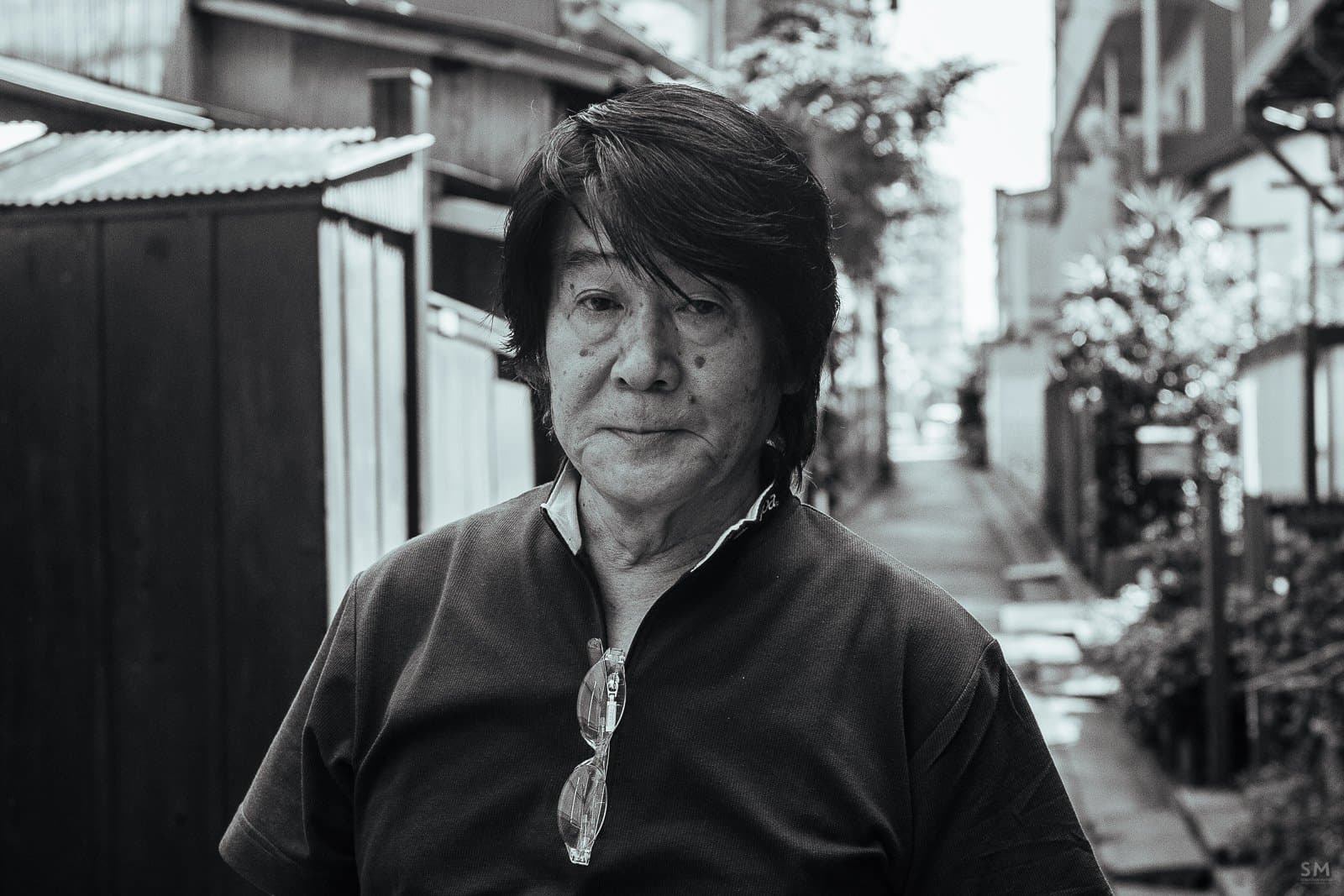
Daido Moriyama was born in Ikeda, near Osaka, in 1938, worked as a graphic designer and went to Tokyo in 1961 to assist the photographer Eikoh Hosoe.
What a work by Daido Moriyama is worth
Send photographs and whatever paperwork came with it. The first question is what the work actually is — edition or unique, when, and in what condition — because everything else follows from the answer. A valuation is free, made online from the photographs you send, and it commits you to nothing. We act for sellers across the United Kingdom, Europe and the United States.
Write to info@whitebankfineart.co.uk, or start below.
Bio
Daido Moriyama was born in Ikeda, near Osaka, in 1938, worked as a graphic designer and went to Tokyo in 1961 to assist the photographer Eikoh Hosoe. He went freelance in 1964, and his first book, Japan: A Photo Theater, came out in 1968. He joined Provoke, the short-lived magazine of 1968 to 1970 whose photographers answered the polished documentary style of the day with pictures that were rough, grainy, blurred and out of focus, are-bure-boke in Japanese. His stray dog, photographed in Misawa in 1971, became the emblem of the work, and Farewell Photography, of 1972, pushed the style almost to abstraction. He has worked mostly in the streets of Tokyo, Shinjuku above all, with a small handheld camera, in black and white and later in colour too, and has published more than 150 photobooks. He received the Hasselblad Award in 2019.
Prints from the Provoke years made at the time are scarce, and most of his prints on the market were made later, often many years after the negative, as signed gelatin silver prints; some images exist in several sizes and printings. The date of printing, the size and the signature are the first things to establish. His books are a market of their own: first editions of the early titles, Japan: A Photo Theater, Farewell Photography and A Hunter among them, are scarce and sought after, and as with any rare Japanese photobook their condition, the dust jacket and the obi, the paper band around the cover, all matter.
Whitebank Fine Art is an art advisory and gallery, not an auction house, and is not affiliated with any auction house or with the artist, their estate or their representatives. This page describes the range we advise on. Nothing here is investment advice.