
Giorgio Morandi valuation
Painted the same bottles, jars and boxes in his Bologna studio for half a century, and made stillness his subject.
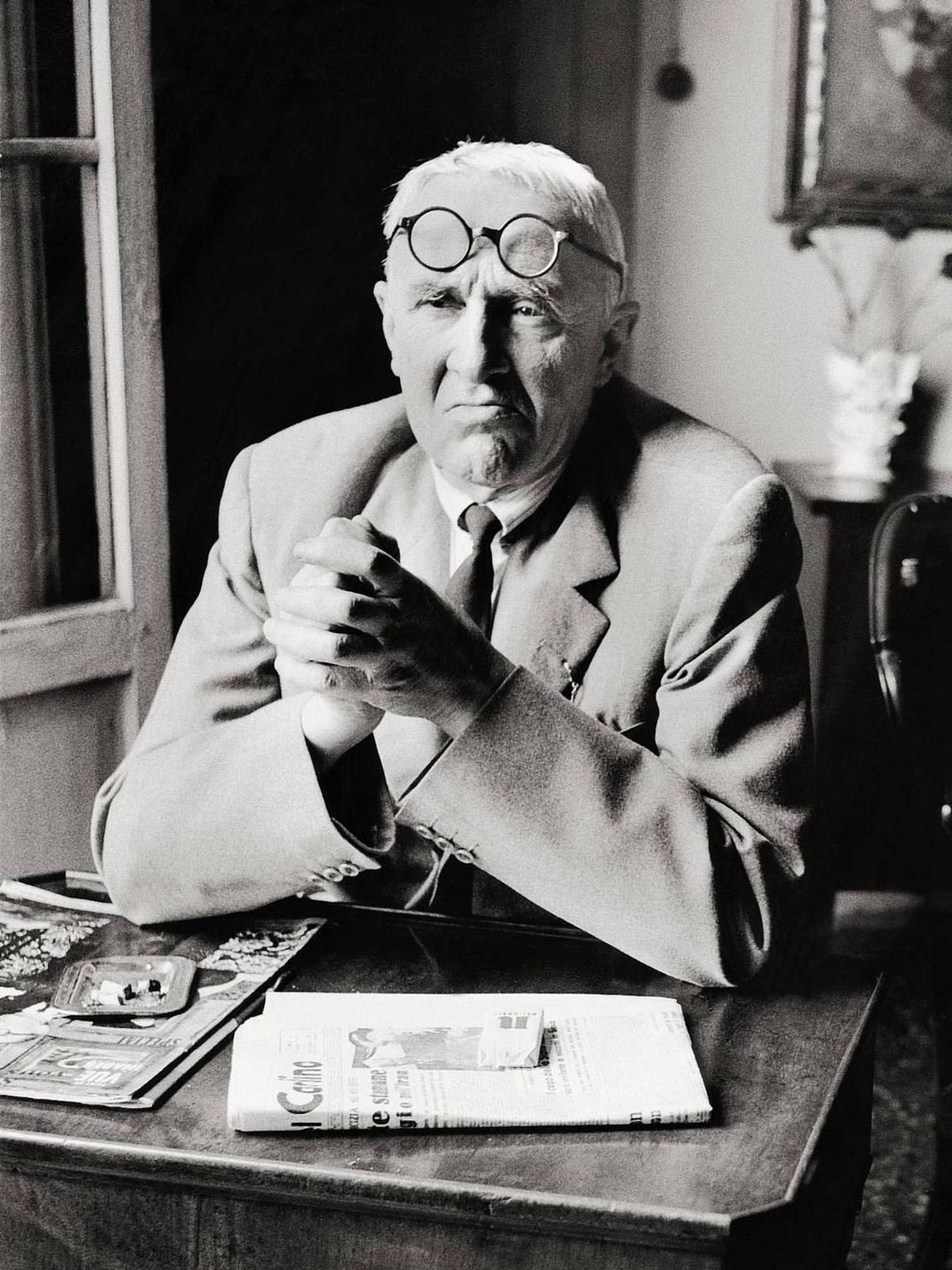
Giorgio Morandi was born in Bologna in 1890 and lived there almost all his life, in the family flat in Via Fondazza with his three sisters.
What a work by Giorgio Morandi is worth
Send photographs and whatever paperwork came with it. The first question is what the work actually is — edition or unique, when, and in what condition — because everything else follows from the answer. A valuation is free, made online from the photographs you send, and it commits you to nothing. We act for sellers across the United Kingdom, Europe and the United States.
Write to info@whitebankfineart.co.uk, or start below.
Bio
Giorgio Morandi was born in Bologna in 1890 and lived there almost all his life, in the family flat in Via Fondazza with his three sisters. He studied at the Accademia di Belle Arti from 1907 to 1913, taught himself etching from books on Rembrandt, and passed briefly through Futurism and, from 1918 to 1922, metaphysical painting. From then on he painted still lifes of a small group of bottles, jars and boxes, sometimes painting their surfaces to remove labels and reflections, along with landscapes of the country around Bologna and Grizzana. He taught etching at the Bologna academy from 1930 to 1956, won the painting prize at the Venice Biennale in 1948, and died in Bologna in 1964.
Morandi's still lifes look alike at a glance and differ in every detail, which makes Lamberto Vitali's catalogue raisonné the essential reference for the paintings. The etchings, printed in small editions, have catalogues of their own, and watercolours and drawings come up regularly. Copies and forgeries exist, so a work's place in the literature and a documented provenance matter.
Via Fondazza, the Biennale and São Paulo
He won the grand prize for prints at the São Paulo Biennial in 1953 and the prize for painting there in 1957.
The Museo Morandi in Bologna holds a large collection of his work, and his flat in Via Fondazza is open to visitors as Casa Morandi.
Grizzana, Roffeno and La dolce vita
Morandi was the eldest of five children. A visit to Florence in 1910 put him in front of Giotto, Masaccio, Piero della Francesca and Uccello, and from 1914 to 1929 he taught drawing in Bologna's elementary schools. He showed at the First Free Futurist Exhibition at the Sprovieri Gallery in Rome in 1914, worked with Mario Broglio's magazine Valori Plastici after the war, and exhibited with de Chirico, Carrà and Arturo Martini at the Fiorentina Primaverile in 1922. He illustrated Vincenzo Cardarelli's Il sole a picco in 1929, and went to Paris for the first time only in 1956.
The family first spent a summer at Grizzana in 1913, returned regularly, sat out the Second World War there, and at the end of the 1950s built a summer house that is now the Casa Museo Morandi; the hay barns of the Campiaro, seen from it, recur in the landscapes. From the five summers he spent at Rocca di Roffeno between 1934 and 1938, 39 works are known. Fellini put his paintings into La dolce vita, as Antonioni did in La Notte, and in 2016 Joel Meyerowitz published photographs of more than 260 of the objects he kept, as Morandi's Objects.
Best auction results
- Natura morta $4.3m
- Oil on canvas, oval, about 1940 · New York · 8 May 2018
- Publicly reported
- One of only two oval canvases he painted, from the collection of Peggy and David Rockefeller.
Results as reported at the time of sale, inclusive of buyer's premium. They are a record of what specific works achieved on specific days, not a guide to what any other work is worth.
Whitebank Fine Art is an art advisory and gallery, not an auction house, and is not affiliated with any auction house or with the artist, their estate or their representatives. This page describes the range we advise on. Nothing here is investment advice.