

Edgar Degas valuation
Drew dancers, laundresses and racehorses from angles nobody had thought to use.
Edgar Degas was born in Paris in 1834 into a banking family and trained in the classical manner under a pupil of Ingres, which is why the draughtsmanship never loosens even when the subject does.
What a work by Edgar Degas is worth
Send photographs and whatever paperwork came with it. The first question is what the work actually is — edition or unique, when, and in what condition — because everything else follows from the answer. A valuation is free, made online from the photographs you send, and it commits you to nothing. We act for sellers across the United Kingdom, Europe and the United States.
Write to info@whitebankfineart.co.uk, or start below.
Bio
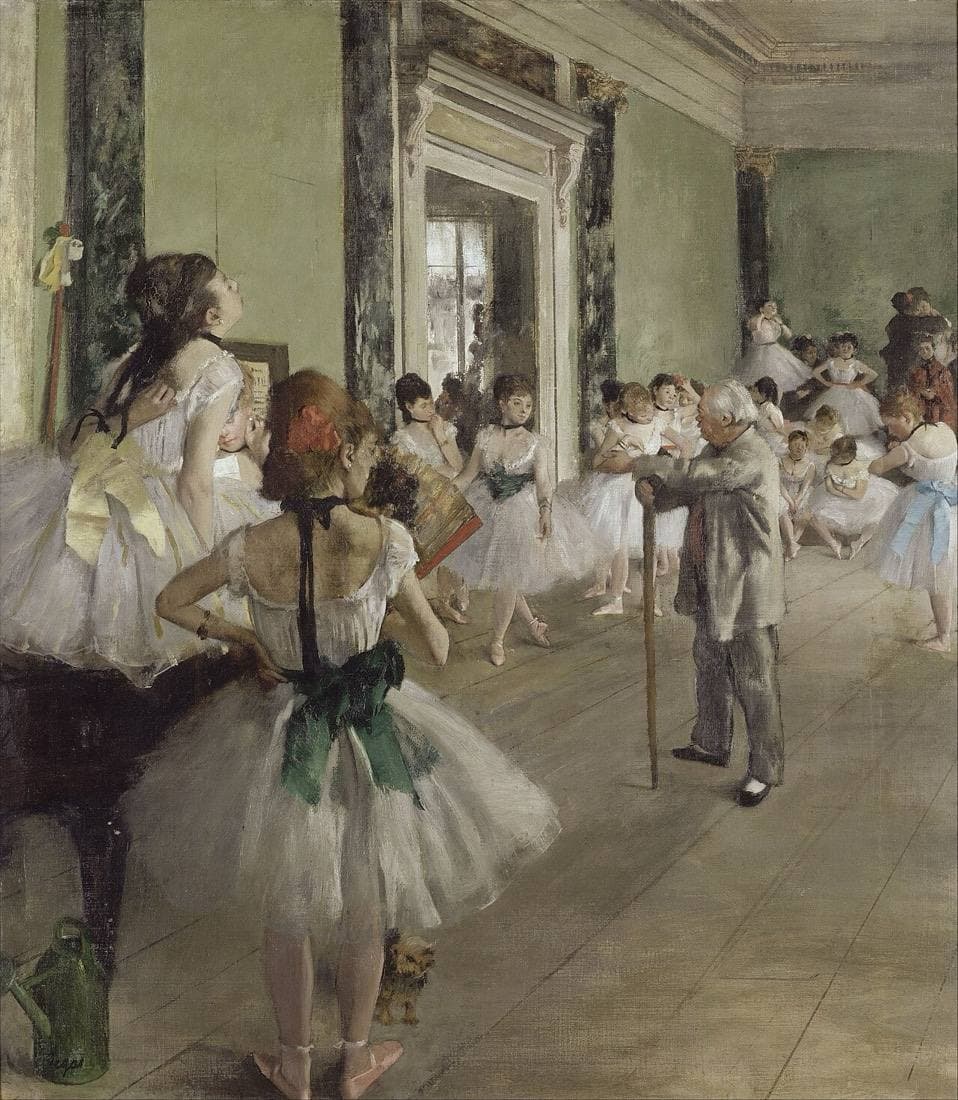
Edgar Degas was born in Paris in 1834 into a banking family and trained in the classical manner under a pupil of Ingres, which is why the draughtsmanship never loosens even when the subject does. He exhibited with the Impressionists but disliked the label and worked indoors, from memory and from studies rather than from nature: the ballet rehearsal rooms, the milliners, the laundresses, the racecourse, the woman in the tub, composed with the cropping and the raised viewpoint he took from Japanese prints and from photography. As his sight failed he turned increasingly to pastel and to modelling in wax. He died in Paris in 1917.
The bronzes are the item most often misunderstood. Degas cast almost nothing in his lifetime; the familiar bronzes, including the Little Dancer Aged Fourteen, were cast from the wax models found in the studio after his death, in editions and under the estate, and later unauthorised casts and surmoulages exist in quantity. Foundry mark, letter or number, and documented provenance are therefore essential rather than desirable. The pastels and monotypes are unique and extremely light-sensitive. The Lemoisne catalogue is the standard reference for the paintings and pastels.
At a glance
- Born
- 19 July 1834, Paris
- Died
- 27 September 1917, Paris
- Movement
- Impressionism
More on Wikipedia.
The studio sales and the red stamp
After Degas died in 1917, the contents of his studio were sold in four auctions at the Galerie Georges Petit in Paris, two in 1918 and two in 1919, with further sales of his collection and of his prints. Works from those sales were stamped with his signature in red, and often with a separate studio stamp on the back, and a great many of the drawings and pastels on the market today carry them.
The stamp is a mark of origin rather than a signature in Degas's hand, and on its own it is not a guarantee, since stamps can be imitated. A stamped work should match an entry in the sale catalogues, which were illustrated and are available in reprint, and that match, together with the later ownership history, is what an attribution rests on.
Whitebank Fine Art is an art advisory and gallery, not an auction house, and is not affiliated with any auction house or with the artist, their estate or their representatives. This page describes the range we advise on. Nothing here is investment advice.
