Edward Hopper valuation
Painted empty rooms, all-night diners and New England light, and made American solitude his subject.
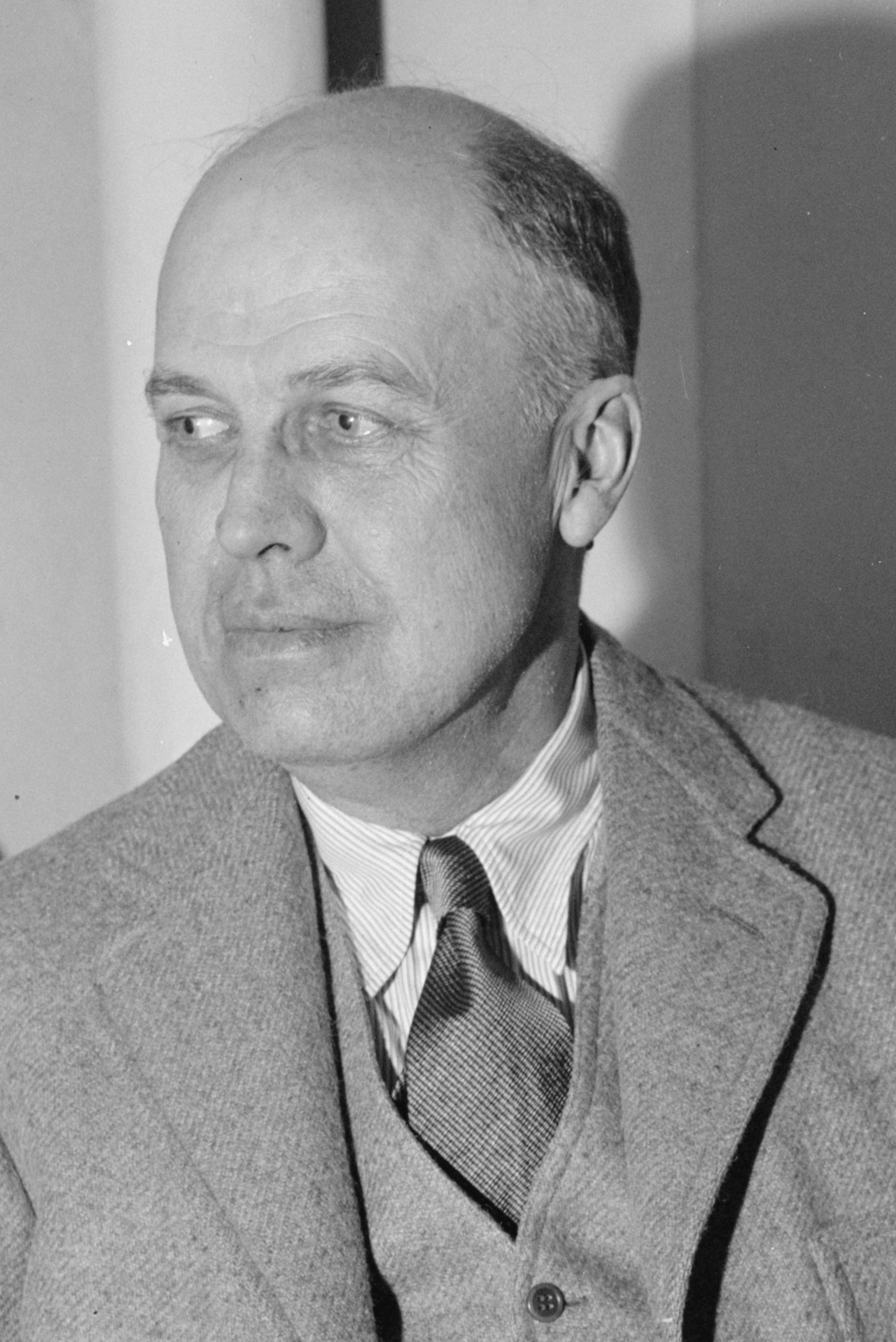
Edward Hopper was born at Nyack, New York, in 1882 and studied at the New York School of Art under William Merritt Chase and Robert Henri.
What a work by Edward Hopper is worth
Send photographs and whatever paperwork came with it. The first question is what the work actually is — edition or unique, when, and in what condition — because everything else follows from the answer. A valuation is free, made online from the photographs you send, and it commits you to nothing. We act for sellers across the United Kingdom, Europe and the United States.
Write to info@whitebankfineart.co.uk, or start below.
Bio
Edward Hopper was born at Nyack, New York, in 1882 and studied at the New York School of Art under William Merritt Chase and Robert Henri. He worked for years as a commercial illustrator and made his name first with etchings in the late 1910s and early 1920s, then with watercolours; the Brooklyn Museum bought one of his Gloucester watercolours in 1923. He married the painter Josephine Nivison in 1924, and she kept his records and posed for almost every woman in his paintings. House by the Railroad was given to the Museum of Modern Art in 1930, the first oil painting in its collection, and Nighthawks of 1942 is in the Art Institute of Chicago. He lived and worked in the same studio on Washington Square from 1913 until his death in 1967.
Hopper's oils are scarce in private hands. Jo Hopper left the contents of the studio to the Whitney Museum of American Art, and most of the major paintings are in museums. What comes to market more often is the etchings, watercolours and drawings, along with a great many posters and reproductions of Nighthawks and other images, which are not his work. For an etching, the impression, the paper and the signature are the questions; for anything else, a place in Gail Levin's catalogue raisonné is expected.
The Armory Show, Washington Square and Cape Cod
Hopper sold his first painting, Sailing, at the Armory Show of 1913, and his first solo exhibition of paintings, at the Frank Rehn Gallery in 1924, sold out. The Whitney gave him retrospectives in 1950 and 1964.
From 1934 the Hoppers spent their summers in a house and studio they built at South Truro on Cape Cod, and its light and plain buildings run through his later work. His boyhood home at Nyack is now the Edward Hopper House Museum and Study Center.
366 canvases, the Whitney bequest and the market
Hopper painted only 366 canvases, and in the 1950s, in his seventies, he finished about five a year. Jo Hopper left their joint collection of more than three thousand works to the Whitney. A Baptist minister, Arthayer Sanborn, who had visited the household to care for Hopper's sister Marion, came into possession of about three hundred drawings and paintings, and the art historian Gail Levin has noted that those works lack the documentation the Whitney holds for Jo's gifts.
Mark Rothko's early Composition I paraphrases Chop Suey, and House by the Railroad is reported to have shaped the house in Hitchcock's Psycho. The Tate Modern exhibition of 2004 drew more than 420,000 visitors, then the second highest in the gallery's history. Hotel Window, of 1956, went from his dealer Frank Rehn to the collector Olga Knoepke in 1957 and later to the actor Steve Martin.
Best auction results
- Chop Suey $91.9m
- Oil on canvas, 1929 · New York · November 2018
- Publicly reported
- From the collection of Barney A. Ebsworth. The artist's auction record.
- Hotel Window $26.89m
- Oil on canvas, 1956 · New York · November 2006
- Publicly reported
- Sold by the actor Steve Martin. The artist's auction record at the time.
Results as reported at the time of sale, inclusive of buyer's premium. They are a record of what specific works achieved on specific days, not a guide to what any other work is worth.
Whitebank Fine Art is an art advisory and gallery, not an auction house, and is not affiliated with any auction house or with the artist, their estate or their representatives. This page describes the range we advise on. Nothing here is investment advice.