
Fernand Leger valuation
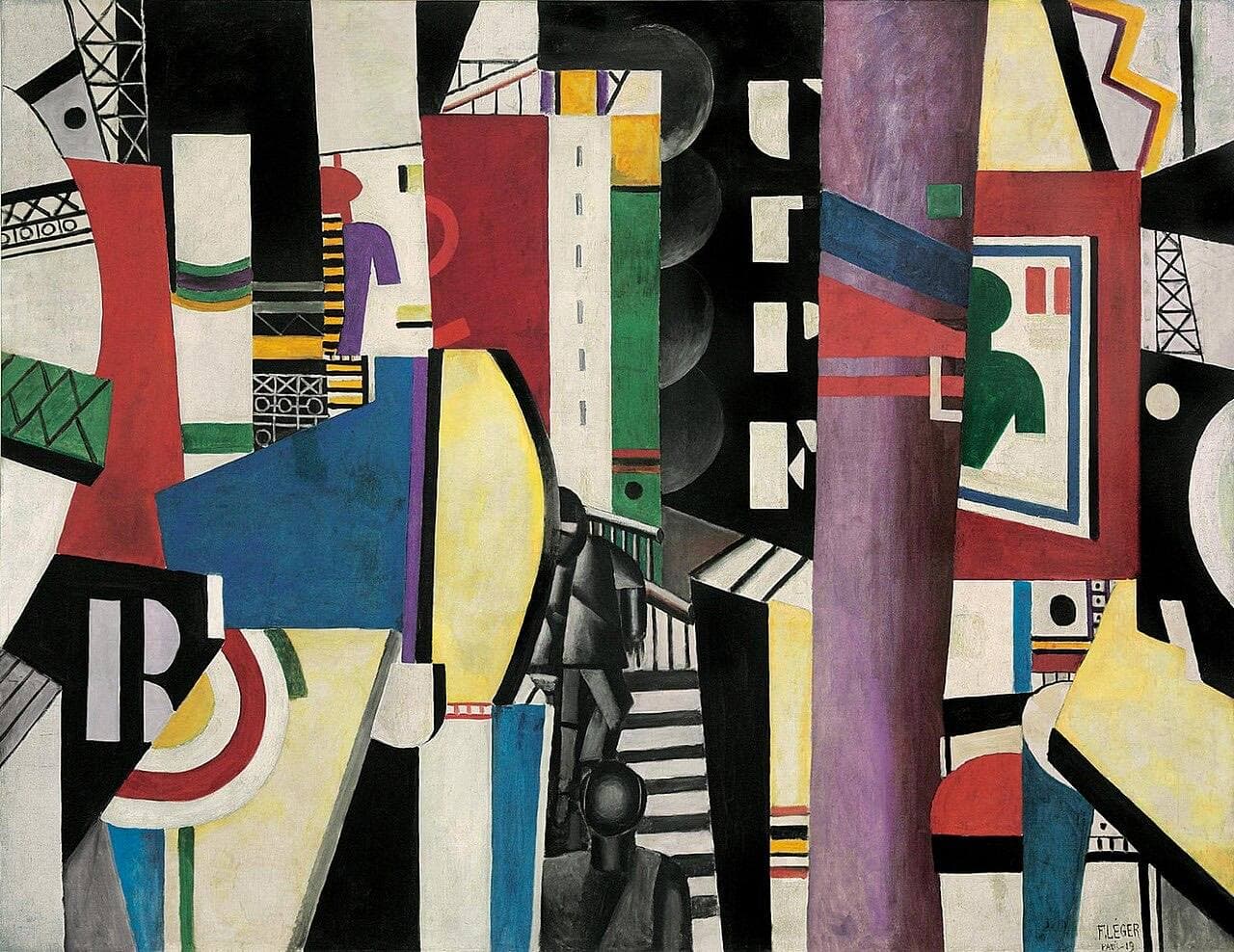
Came back from the trenches convinced that painting should look like machinery, and made it.
Fernand Leger was born in Normandy in 1881, trained as an architectural draughtsman, and was making his own version of Cubism — tubular, mechanical, which critics called Tubism — before 1914.
What a work by Fernand Leger is worth
Send photographs and whatever paperwork came with it. The first question is what the work actually is — edition or unique, when, and in what condition — because everything else follows from the answer. A valuation is free, made online from the photographs you send, and it commits you to nothing. We act for sellers across the United Kingdom, Europe and the United States.
Write to info@whitebankfineart.co.uk, or start below.
Bio
Fernand Leger was born in Normandy in 1881, trained as an architectural draughtsman, and was making his own version of Cubism — tubular, mechanical, which critics called Tubism — before 1914. Four years at the front, much of it at Verdun, confirmed rather than broke the direction: he said the breech of a seventy-five millimetre gun in sunlight taught him more than any museum. The post-war work is an art of workers, cyclists, builders and machine parts in flat primary colour and heavy black contour, extended into murals, ceramics, stained glass and the film Ballet Mecanique. He died in 1955.
The mechanical period from 1918 to the mid-1920s leads the market. Leger is extensively forged, and the Bauquier catalogue raisonne and the Musee National Fernand Leger at Biot are the references. He produced a large body of gouaches and drawings, many of them studies for known compositions, and these require particular care in attribution. The printed output — lithographs, pochoirs and illustrated books, including Cirque — is substantial, and posthumous editions printed after 1955 circulate widely and should be distinguished from lifetime impressions.
At a glance
- Born
- 4 February 1881, Argentan
- Died
- 17 August 1955, Gif-sur-Yvette
- Movements
- Cubism, Modernism
More on Wikipedia.
Ballet mécanique, Cirque and Biot
Léger was drawn to the cinema and in 1924 made the film Ballet mécanique with the director Dudley Murphy, with Man Ray's help and music by George Antheil. The same year he opened the Académie Moderne in Paris with Amédée Ozenfant, a free school where he taught. Late in life he designed mosaics and stained glass, including windows for the Central University of Venezuela in Caracas.
The Musée National Fernand Léger at Biot opened in 1960, five years after his death. For a lithograph or a plate from one of his illustrated books, such as Cirque, the edition and whether the sheet is signed or came from the book are what an owner should establish.
Whitebank Fine Art is an art advisory and gallery, not an auction house, and is not affiliated with any auction house or with the artist, their estate or their representatives. This page describes the range we advise on. Nothing here is investment advice.