

Gino Severini valuation
The Futurist in Paris, who painted dancers as shattered light and later returned to order.
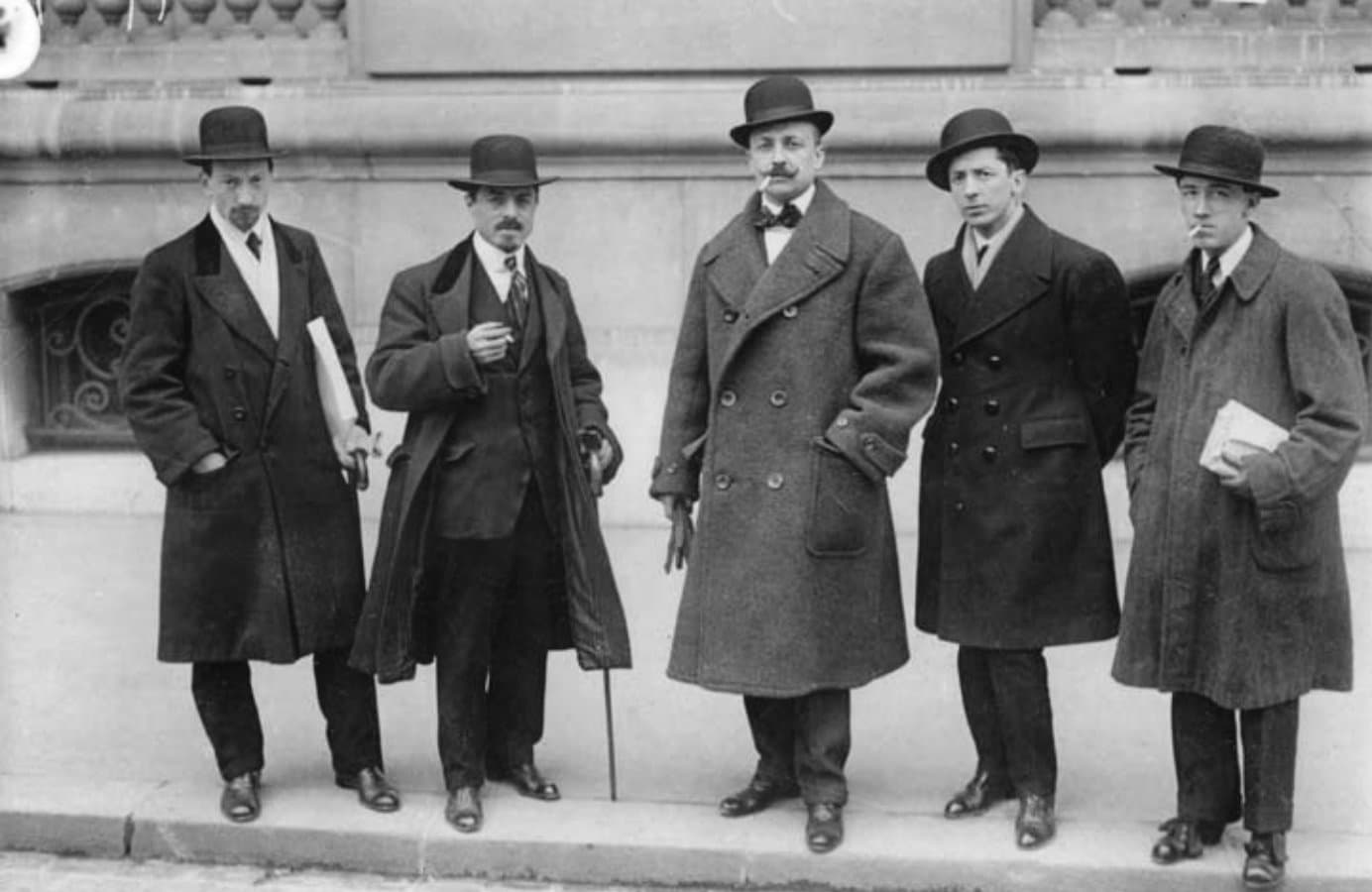
Gino Severini was born at Cortona in 1883, moved to Paris in 1906 and was the Futurists' link to the French avant-garde, signing the movement's manifestos while living among the Cubists.
What a work by Gino Severini is worth
Send photographs and whatever paperwork came with it. The first question is what the work actually is — edition or unique, when, and in what condition — because everything else follows from the answer. A valuation is free, made online from the photographs you send, and it commits you to nothing. We act for sellers across the United Kingdom, Europe and the United States.
Write to info@whitebankfineart.co.uk, or start below.
Bio
Gino Severini was born at Cortona in 1883, moved to Paris in 1906 and was the Futurists' link to the French avant-garde, signing the movement's manifestos while living among the Cubists. His subject was the dance hall — the Bal Tabarin, the Pan Pan at Monico — painted as fractured planes of light, movement and sequins, sometimes with real sequins stuck to the canvas. After the First World War he turned decisively towards classicism, wrote on proportion and geometry, and spent much of his later career on mosaic and fresco for churches and public buildings in Italy and Switzerland. He died in Paris in 1966.
The Futurist years of 1910 to 1915 are the peak of the market by a very large margin, and works from that period are scarce and heavily documented. The post-war classical work and the later decorative and commedia dell'arte subjects form a much broader and more modest field. Severini is well catalogued, and the archives held by his family and by Italian institutions are the reference. There is a substantial output of drawings, gouaches and prints, and forgeries of the Futurist manner exist.
At a glance
- Born
- 7 April 1883, Cortona
- Died
- 25 February 1966, Paris
- Movements
- Futurism, De Stijl
More on Wikipedia.
The manifestos, Montegufoni and the mosaics
In 1910 Severini signed both the Manifesto of the Futurist Painters and the Technical Manifesto, with Balla, Boccioni, Carrà and Russolo. In Paris he lived in Montmartre and was a friend of Modigliani. In 1921 he published Du cubisme au classicisme, on proportion and geometry, and painted murals for Sir George Sitwell at the castle of Montegufoni in Tuscany.
He showed at the Venice Biennale in 1930 and the Rome Quadriennale in 1931 and 1935, and in the 1950s went back to the Futurist subjects of dancers, light and movement. His church commissions include mosaics for Saint-Pierre in Fribourg, Switzerland. He died in Paris in February 1966 and is buried at Cortona.
Cortona, Rome and Bernheim-Jeune
Severini's father was a junior court official and his mother a dressmaker. At fifteen he and a group of classmates were expelled from the entire Italian school system for trying to steal exam papers, and he never went back to formal education. In 1899 he moved to Rome with his mother, worked as a shipping clerk and painted in his spare time. With the help of a patron from Cortona he attended the free school for the nude, an annex of the Rome Fine Art Institute, and a private academy, until after two years the patron stopped his allowance.
He helped to organise the first Futurist exhibition outside Italy, at Galerie Bernheim-Jeune in Paris in February 1912, and in 1913 had solo shows at the Marlborough Gallery in London and at Der Sturm in Berlin. From 1916 he moved away from Futurism, painting in a Crystal Cubist manner until 1920 and then applying the Golden Section to still lifes and commedia dell'arte subjects such as The Two Pulcinellas of 1922. Later he decorated the KLM offices in Rome and the Alitalia offices in Paris, rebuilt his Pan Pan Dance mosaic in Rome after it was destroyed in the war, and received the Premio Nazionale di Pittura of the Accademia di San Luca.
Whitebank Fine Art is an art advisory and gallery, not an auction house, and is not affiliated with any auction house or with the artist, their estate or their representatives. This page describes the range we advise on. Nothing here is investment advice.
