
Jackson Pollock valuation
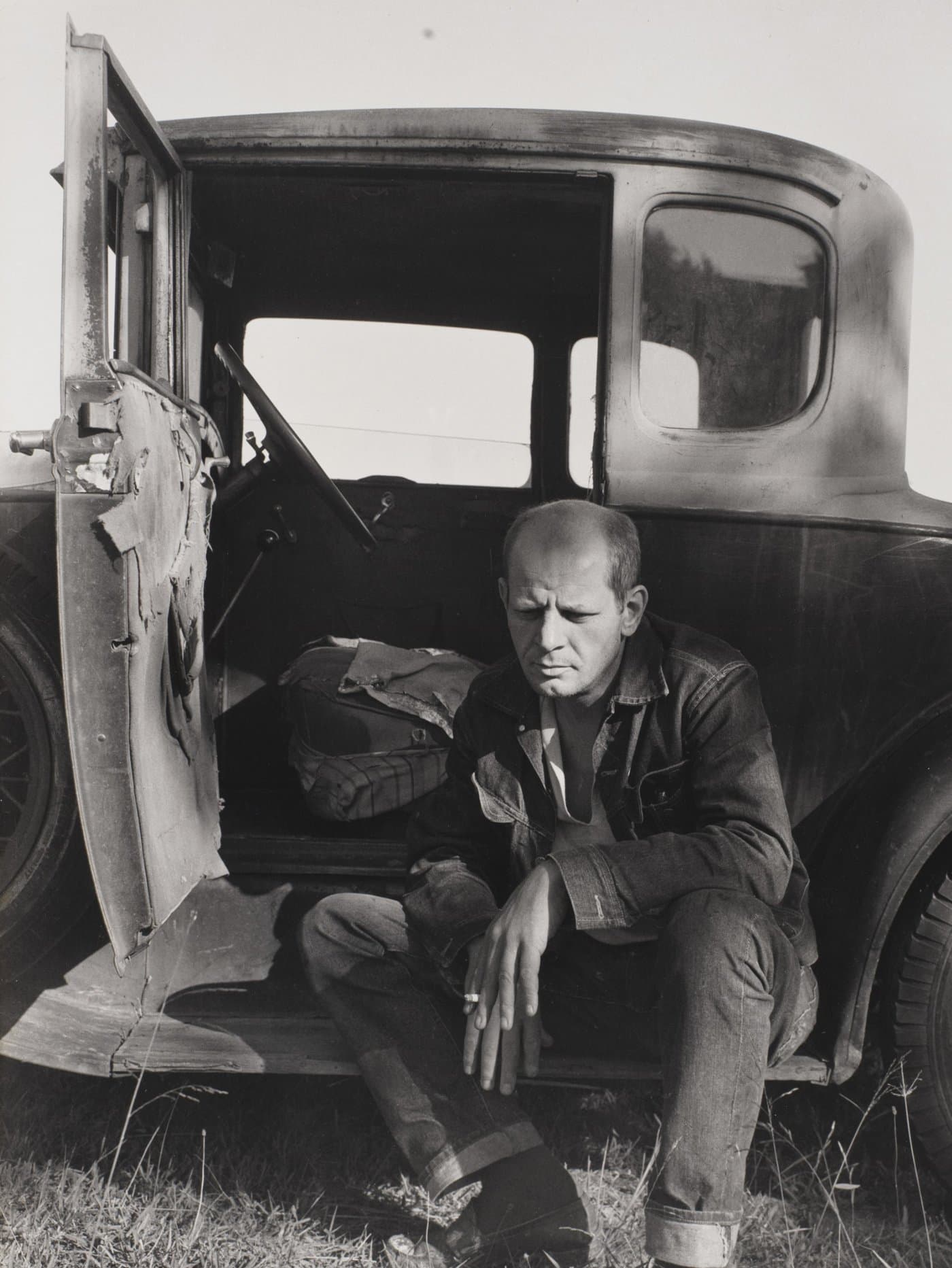
Put the canvas on the floor and poured, and made American painting the centre of the argument.
Jackson Pollock was born in Wyoming in 1912, studied under Thomas Hart Benton at the Art Students League, and worked through the 1930s on the federal art project while drinking heavily and undergoing Jungian analysis.
What a work by Jackson Pollock is worth
Send photographs and whatever paperwork came with it. The first question is what the work actually is — edition or unique, when, and in what condition — because everything else follows from the answer. A valuation is free, made online from the photographs you send, and it commits you to nothing. We act for sellers across the United Kingdom, Europe and the United States.
Write to info@whitebankfineart.co.uk, or start below.
Bio
Jackson Pollock was born in Wyoming in 1912, studied under Thomas Hart Benton at the Art Students League, and worked through the 1930s on the federal art project while drinking heavily and undergoing Jungian analysis. Between 1947 and 1950, in a barn on Long Island, he laid unstretched canvas on the floor and poured and flung household enamel across it, producing the drip paintings that made him internationally famous — Life magazine asked in 1949 whether he was the greatest living painter in the United States. He returned to figuration, stopped painting almost entirely, and was killed driving drunk in 1956.
Very little comes to market and nearly everything of consequence is documented in the O'Connor and Thaw catalogue raisonne and its supplements. Attribution disputes are frequent and well publicised, and the Pollock-Krasner Foundation ceased authenticating in 1996, so no body issues opinions — provenance, materials analysis and the catalogue are what carry a work. The commercial enamel he used is chemically unstable and cracks; drip paintings on unprimed canvas have significant conservation histories. Early works on paper are the accessible end of the market and are also the most forged.
At a glance
- Born
- 28 January 1912, Cody
- Died
- 11 August 1956, East Hampton
- Movements
- Abstract Expressionism, Action Painting
More on Wikipedia.
The engravings, and what materials analysis can show
Between 1944 and 1945 Pollock made eleven engravings at Atelier 17, the workshop Stanley William Hayter had moved from Paris to New York during the war. He pulled only trial proofs in his lifetime. The impressions usually met with were printed from the plates in 1967, after his death, mostly in editions of fifty, and are correctly described as posthumous. Knowing which of the two you have is the first question for any Pollock print.
For paintings and works on paper the scientific evidence carries unusual weight, because no body now issues opinions and his materials are well understood. Analysis of pigments and binders can date paint, and has more than once found materials in a supposed Pollock that were not available until after his death. A recent attribution, a work that surfaced without exhibition history, or a story of a gift from the artist all call for that analysis before anything else.
Siqueiros, Peggy Guggenheim and Blue Poles
Pollock first used liquid paint in 1936, at an experimental workshop in New York run by the Mexican muralist David Alfaro Siqueiros. In July 1943 he signed a contract with Peggy Guggenheim, who commissioned Mural, eight feet by twenty, for her townhouse; Duchamp suggested he paint it on canvas so it could be moved. He applied paint with hardened brushes, sticks and basting syringes. Clement Greenberg later wrote that Pollock admitted Janet Sobel's all-over paintings, which they saw at Guggenheim's gallery in 1946, had made an impression on him.
The black pourings he showed at Betty Parsons after 1951 did not sell, and he moved to the Sidney Janis Gallery. Scent and Search, both of 1955, are his last paintings; in 1956 he made only a few sculptures of wire, gauze and plaster at Tony Smith's home. In 1973 the Australian government bought Blue Poles for the National Gallery of Australia, and the Museum of Modern Art's retrospective of 1998 was the first time it had been shown in America since the purchase. Lee Krasner managed the estate for the rest of her life.
Best auction results
- Number 7A $181.2m
- Drip painting, 1948 · New York · 18 May 2026
- Publicly reported
- Including fees. The artist's auction record.
- Number 19 $58.4m
- Drip painting, 1948 · New York · May 2013
- Publicly reported
Results as reported at the time of sale, inclusive of buyer's premium. They are a record of what specific works achieved on specific days, not a guide to what any other work is worth.
Whitebank Fine Art is an art advisory and gallery, not an auction house, and is not affiliated with any auction house or with the artist, their estate or their representatives. This page describes the range we advise on. Nothing here is investment advice.