

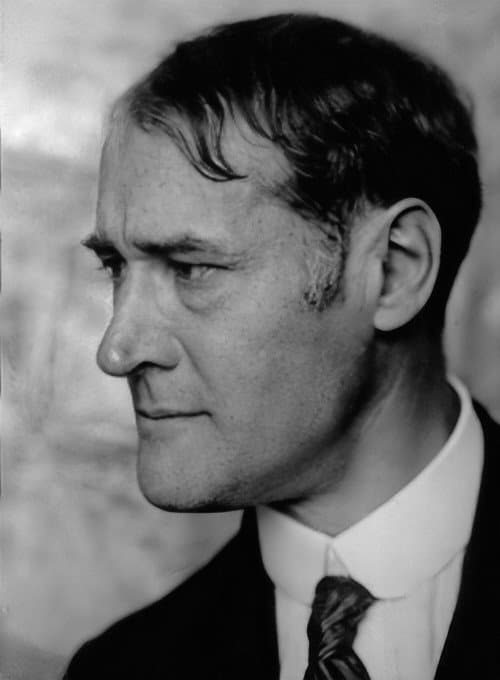
Lyonel Feininger valuation
Bauhaus master who built churches, ships and sea out of overlapping planes of transparent colour.
Lyonel Feininger was born in New York in 1871 to German musician parents and went to Germany at sixteen intending to study music.
What a work by Lyonel Feininger is worth
Send photographs and whatever paperwork came with it. The first question is what the work actually is — edition or unique, when, and in what condition — because everything else follows from the answer. A valuation is free, made online from the photographs you send, and it commits you to nothing. We act for sellers across the United Kingdom, Europe and the United States.
Write to info@whitebankfineart.co.uk, or start below.
Bio
Lyonel Feininger was born in New York in 1871 to German musician parents and went to Germany at sixteen intending to study music. He worked for years as a newspaper cartoonist in Berlin and Chicago before turning to painting in his late thirties, absorbing Cubism in Paris and joining the Blaue Reiter circle. Walter Gropius made him the first appointment to the Bauhaus in 1919, and his woodcut of a cathedral appeared on its founding manifesto. The mature paintings — Gothic churches, the Baltic sailing barges, the sea at Deep — are built from long transparent planes of overlapping colour. Declared degenerate by the Nazis, he returned to New York in 1937 and died there in 1956.
Watercolours and ink drawings are the most frequently traded part of the work by a wide margin, and they are typically small, signed and dated in his very distinctive hand, and often inscribed with a place name. The woodcuts are numerous, many printed by the artist in small numbers. Paper condition is the recurring issue: the watercolours were often made on thin sheets and have commonly been light-struck or acid-burnt by old mounts. The Achim Moeller Institute in New York is the authority on attribution and issues opinions.
At a glance
- Born
- 17 July 1871, New York City
- Died
- 13 January 1956, New York City
- Movement
- Expressionism
More on Wikipedia.
The Kin-der-Kids, Gelmeroda and the photographs
Before he painted, Feininger drew The Kin-der-Kids and Wee Willie Winkie's World for the Chicago Tribune in 1906. At the Bauhaus he ran the printmaking workshop, and the village church at Gelmeroda, near Weimar, became one of his most repeated subjects. From 1928, living in Dessau next door to László Moholy-Nagy, he also took photographs, which he kept within his circle of friends and which were not shown in his lifetime.
The Whitney Museum in New York gave him a retrospective, At the Edge of the World, in 2011, and the Schirn Kunsthalle in Frankfurt another in 2023. His sons Andreas and T. Lux Feininger were both photographers, so a photograph signed Feininger should be checked for which of the three made it.
Hamburg, the humour papers and Usedom
Feininger's father, Karl, was a violinist and composer and his mother a singer. In Germany he switched from music to drawing at the Hamburger Gewerbeschule, studied at the Berlin academy under Ernst Hancke from 1888, and then in Paris at Filippo Colarossi's school. From 1894 he drew caricatures for magazines including Harper's Young People, Lustige Blätter and Ulk, and he showed drawings at the Berlin Secession from 1901 to 1903. He joined the Secession in 1909, was associated with the Novembergruppe and Die Blaue Vier, and had his first solo exhibition at the Sturm gallery in Berlin in 1917.
From 1909 to 1918 he spent his summers on the island of Usedom, and the Baltic shore stayed in his work for the rest of his life. His Bauhaus students included Ludwig Hirschfeld-Mack and Margarete Koehler-Bittkow. In America he taught at Mills College before settling in New York, and in 1955 he was elected to the American Academy of Arts and Letters. He also composed piano pieces and fugues for organ, and credited Bach as his master in painting; in October 2011 the American Symphony Orchestra played three of his fugues at Carnegie Hall alongside the Whitney retrospective. He also photographed painted toy figures set in front of drawn backgrounds.
Whitebank Fine Art is an art advisory and gallery, not an auction house, and is not affiliated with any auction house or with the artist, their estate or their representatives. This page describes the range we advise on. Nothing here is investment advice.
