
Marc Chagall valuation
Vitebsk, floating lovers, fiddlers on roofs, and eighty years of the same remembered village.
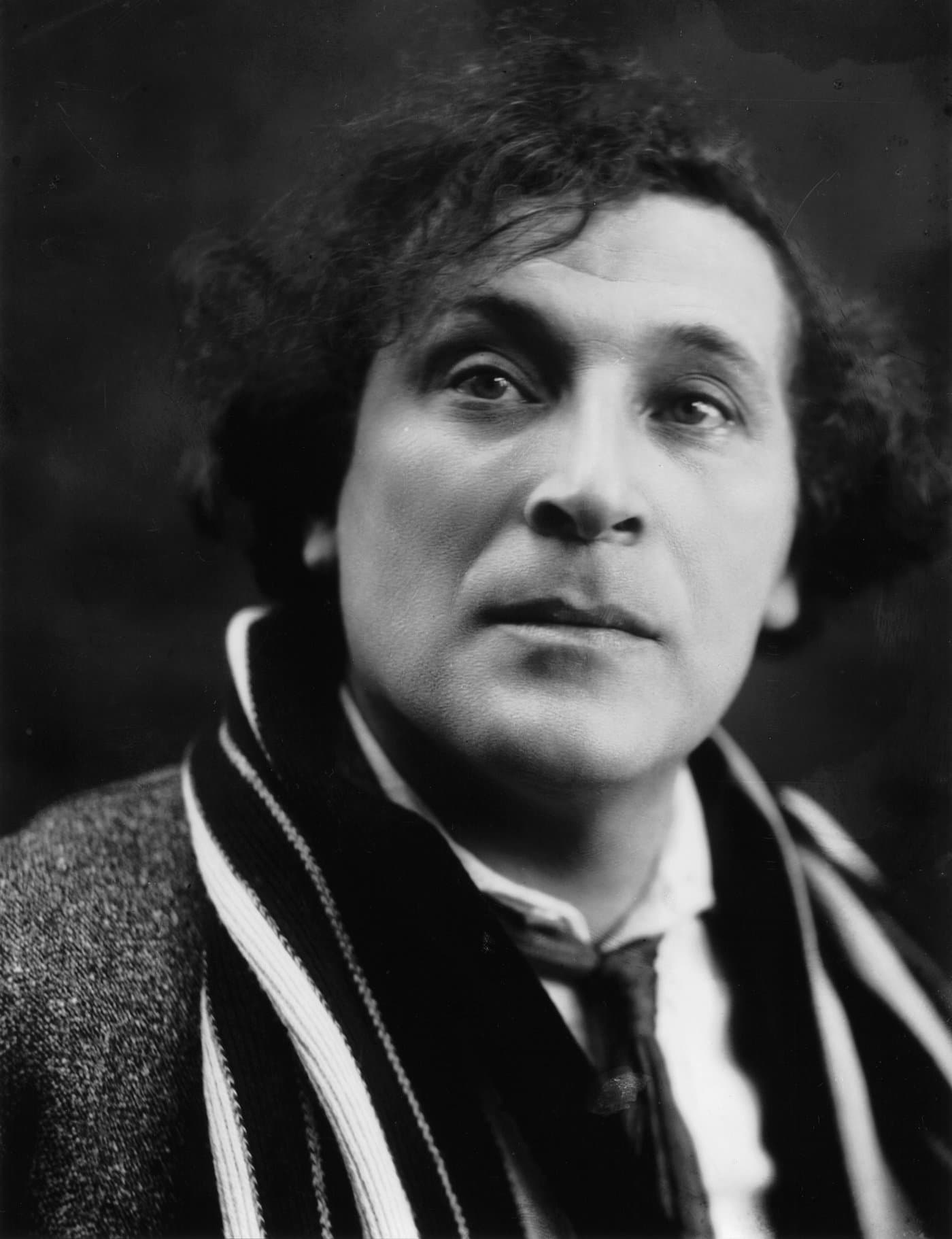
Marc Chagall was born near Vitebsk in 1887 into a Hasidic Jewish family and left Russia for Paris in 1910, returning after the revolution to run an art school in his home town before leaving for good.
What a work by Marc Chagall is worth
Send photographs and whatever paperwork came with it. The first question is what the work actually is — edition or unique, when, and in what condition — because everything else follows from the answer. A valuation is free, made online from the photographs you send, and it commits you to nothing. We act for sellers across the United Kingdom, Europe and the United States.
Write to info@whitebankfineart.co.uk, or start below.
Bio
Marc Chagall was born near Vitebsk in 1887 into a Hasidic Jewish family and left Russia for Paris in 1910, returning after the revolution to run an art school in his home town before leaving for good. He spent the rest of a very long life — he died in 1985, at ninety-seven — painting a remembered world of fiddlers, cattle, brides, roosters and lovers rising off the ground, and he did it through Cubism, Surrealism, exile in New York during the war, and a late career of monumental commissions: the Paris Opera ceiling, windows at Reims and Jerusalem, mosaics and tapestries.
Chagall is among the most forged artists of the twentieth century, and the Comite Chagall in Paris is the only body whose opinion carries weight — it can and does refuse works, and it has historically had the power to have forgeries destroyed. No painting should be bought or sold without addressing this. He was also one of the century's great printmakers: the Bible, Daphnis et Chloe and Les Ames mortes suites, catalogued by Cramer and Mourlot, run to thousands of impressions, and a valuation there turns on lifetime versus later printing, signed versus unsigned, and whether a sheet was removed from a book.
At a glance
- Born
- 14 July 1887, Vitebsk
- Died
- 28 March 1985, Saint-Paul-de-Vence
- Movements
- Expressionism, Catalan Modernism
More on Wikipedia.
Lithographs by Chagall, and lithographs after him
Chagall worked for decades with the Mourlot printing studio in Paris, and the lithographs he drew himself are recorded in the catalogue by Fernand Mourlot and Charles Sorlier, which gives each a Mourlot number. Sorlier was also his master printer, and some lithographs were drawn on the stone by Sorlier from Chagall's paintings and gouaches, with Chagall's approval and often his signature. A lithograph after Chagall is a different thing from one by him, and the catalogue entry is where the difference shows.
Unsigned lithographs are common too. Many were printed for the magazine Derrière le miroir, for the volumes of the Mourlot catalogue itself, which include original lithographs as covers and frontispieces, and for books he illustrated. They are genuine prints, but an unsigned sheet from a book or magazine is a different object from a signed and numbered impression, and the catalogue number usually settles which it is.
Vitebsk, Jerusalem and the last tapestry
After the revolution he founded the People's Art School and a museum of modern art in Vitebsk, then worked in and near Moscow before settling in Paris again in 1923. He escaped occupied France for New York, stayed seven years and came back to France in 1948. In the south he took up ceramics, at first painting existing pots and then designing his own, and went on to ceramic murals and sculpture.
The twelve Jerusalem Windows, one for each tribe of Israel, were made from 1960 for the synagogue of the Hadassah Medical Center. Each is about eleven feet high, and they were shown in Paris and at the Museum of Modern Art in New York before being installed in February 1962. He also made windows for the cathedrals of Reims and Metz, the Fraumünster in Zürich, the United Nations and the Art Institute of Chicago. His last work was Job, a tapestry for the Rehabilitation Institute of Chicago, woven by Yvette Cauquil-Prince, who matched its final colours with him in March 1985.
Whitebank Fine Art is an art advisory and gallery, not an auction house, and is not affiliated with any auction house or with the artist, their estate or their representatives. This page describes the range we advise on. Nothing here is investment advice.