
Mary Cassatt valuation
American who exhibited with the Impressionists in Paris and painted women's private lives, above all mothers and children.
Mary Cassatt was born in Allegheny, now part of Pittsburgh, in 1844 and studied at the Pennsylvania Academy of the Fine Arts from the age of fifteen.
What a work by Mary Cassatt is worth
Send photographs and whatever paperwork came with it. The first question is what the work actually is — edition or unique, when, and in what condition — because everything else follows from the answer. A valuation is free, made online from the photographs you send, and it commits you to nothing. We act for sellers across the United Kingdom, Europe and the United States.
Write to info@whitebankfineart.co.uk, or start below.
Bio
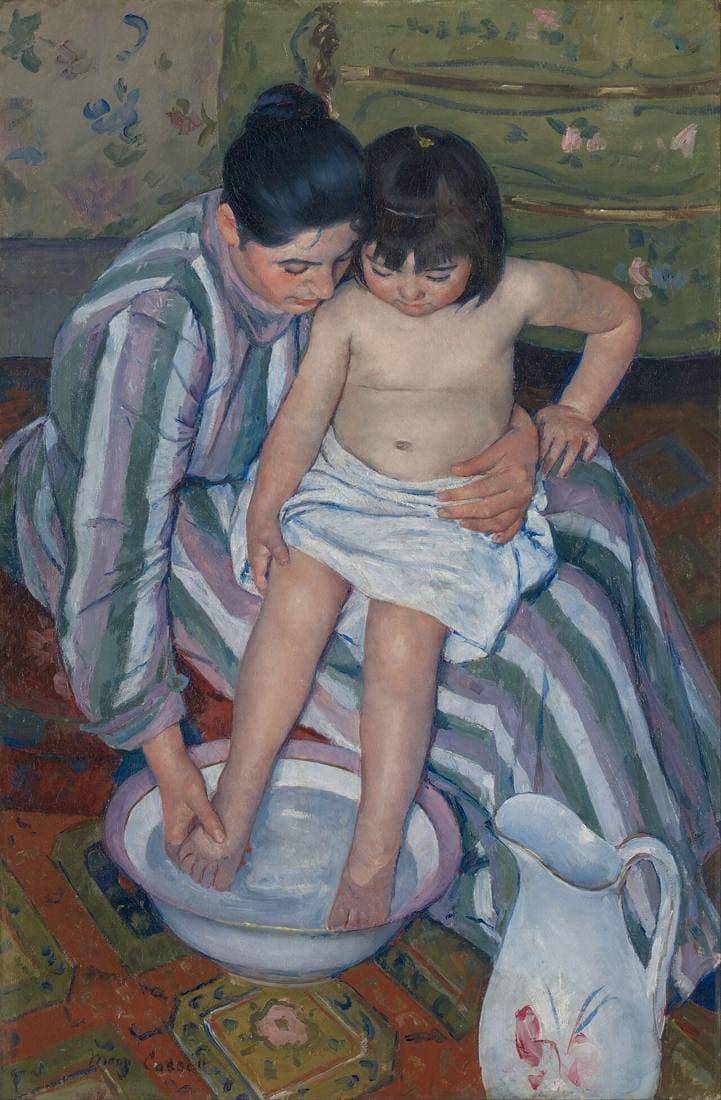
Mary Cassatt was born in Allegheny, now part of Pittsburgh, in 1844 and studied at the Pennsylvania Academy of the Fine Arts from the age of fifteen. In 1866 she moved to Paris, where women could not enter the École des Beaux-Arts, and studied privately with Jean-Léon Gérôme and later Thomas Couture, copying in the Louvre. She exhibited at the Salon from 1868 and then, at Degas's invitation, with the Impressionists, the only American officially associated with them. Her subjects were women at home and at the theatre and, above all, mothers and children, in oil, pastel and print. She lived in France for the rest of her life and died at her country house, the Château de Beaufresne, north of Paris, in 1926.
Pastels and prints make up much of what comes to market, along with drawings and some oils. Her drypoints and aquatints were printed in small editions, so the state and the impression matter. Adelyn Breeskin's catalogues raisonnés of the paintings and of the prints are the references.
Degas, the Havemeyers and the 1891 prints
Through her friend Louisine Havemeyer she guided some of the most important American purchases of Impressionist painting, many of which reached the Metropolitan Museum of Art with the Havemeyer bequest of 1929.
Her ten colour prints of 1891, made after she saw the exhibition of Japanese woodblock prints at the École des Beaux-Arts in 1890, combine drypoint and aquatint.
Whitebank Fine Art is an art advisory and gallery, not an auction house, and is not affiliated with any auction house or with the artist, their estate or their representatives. This page describes the range we advise on. Nothing here is investment advice.