

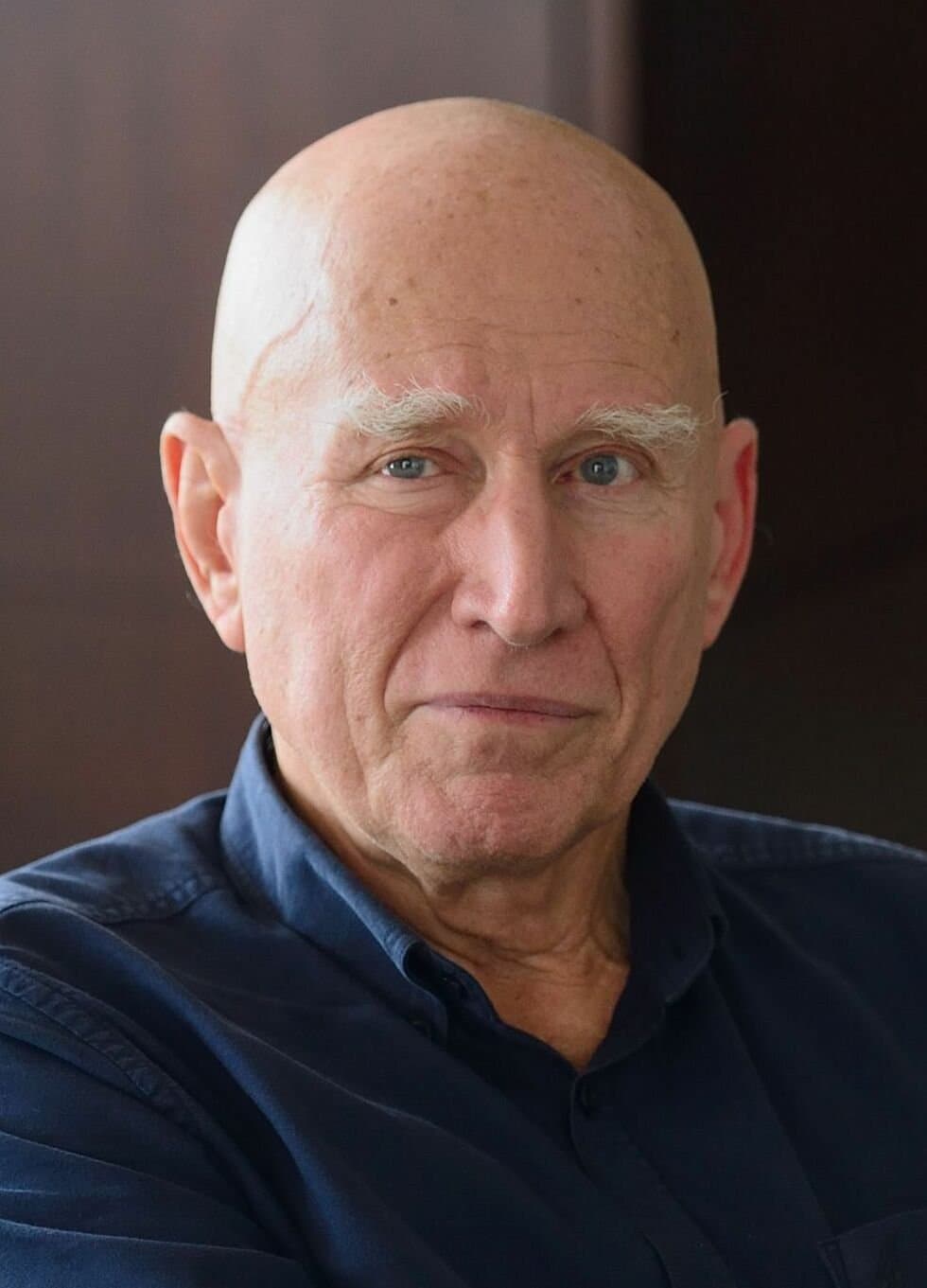
Sebastião Salgado valuation
Trained as an economist, then spent forty years photographing labour, migration and the last wild places.
Sebastião Salgado was born in Minas Gerais in Brazil in 1944, took a doctorate in economics and was working for the International Coffee Organization when he changed course to photography in 1973.
What a work by Sebastião Salgado is worth
Send photographs and whatever paperwork came with it. The first question is what the work actually is — edition or unique, when, and in what condition — because everything else follows from the answer. A valuation is free, made online from the photographs you send, and it commits you to nothing. We act for sellers across the United Kingdom, Europe and the United States.
Write to info@whitebankfineart.co.uk, or start below.
Bio
Sebastião Salgado was born in Minas Gerais in Brazil in 1944, took a doctorate in economics and was working for the International Coffee Organization when he changed course to photography in 1973. The projects are long and are conceived as books and exhibitions rather than assignments: Workers, on manual labour worldwide, including the Serra Pelada gold mine; Migrations, on displacement; Genesis, on landscapes and peoples largely untouched by industry; and Amazonia. With his wife Lelia he replanted the deforested family land in Brazil, now an Atlantic Forest reserve. He worked in black and white throughout and died in 2025.
Prints are editioned and exist in several sizes, most commonly as gelatin silver prints; later pigment prints of the same images are a separate category and the two are regularly conflated. Edition size varies between image and format, so the certificate and the verso markings identify the work rather than the picture doing so. Signature is usually in pencil on the verso or the margin, with a title and edition number, and Amazonas Images documentation is the reference. The books are a serious collecting field in their own right.
Genesis, the collector's edition and Instituto Terra
Genesis was published by Taschen in 2013, and its collector's edition, two very large volumes in a signed and numbered edition of 2,500 with a bookstand designed by the architect Tadao Ando, is collected alongside the prints. Copies are judged on completeness, with the stand and the wooden crate they came in, and on condition.
In 1998 he and Lélia Wanick Salgado turned the replanted family land in Minas Gerais into a nature reserve and founded Instituto Terra. He died in Paris on 23 May 2025, at eighty-one.
Aimorés, Magnum and Amazonas Images
Salgado was born in Aimorés, in Minas Gerais. He studied economics at the Federal University of Espírito Santo, took a master's degree at the University of São Paulo in 1968 and a doctorate at the University of Paris in 1971. As an economist for the International Coffee Organization he travelled often to Africa on missions for the World Bank, and it was there that he began to photograph seriously. He started on news assignments with the agencies Sygma and Gamma in Paris, joined Magnum Photos in 1979, and left it in 1994 to set up Amazonas Images with Lélia Wanick Salgado.
His best-known pictures, of the Serra Pelada gold mine in Brazil, were taken between 1986 and 1989. Other long projects became the books The Other Americas and Sahel, and he worked on Genesis from 2004 to 2011. In 2007 he showed photographs of coffee workers from India, Guatemala, Ethiopia and Brazil at the Brazilian Embassy in London. He received the W. Eugene Smith grant in 1982 and the Royal Photographic Society's Centenary Medal in 1993, was a UNICEF Goodwill Ambassador from 2001, and was elected to the Académie des Beaux-Arts in 2016. Wim Wenders and Juliano Ribeiro Salgado made the film The Salt of the Earth about him in 2014.
Whitebank Fine Art is an art advisory and gallery, not an auction house, and is not affiliated with any auction house or with the artist, their estate or their representatives. This page describes the range we advise on. Nothing here is investment advice.
