

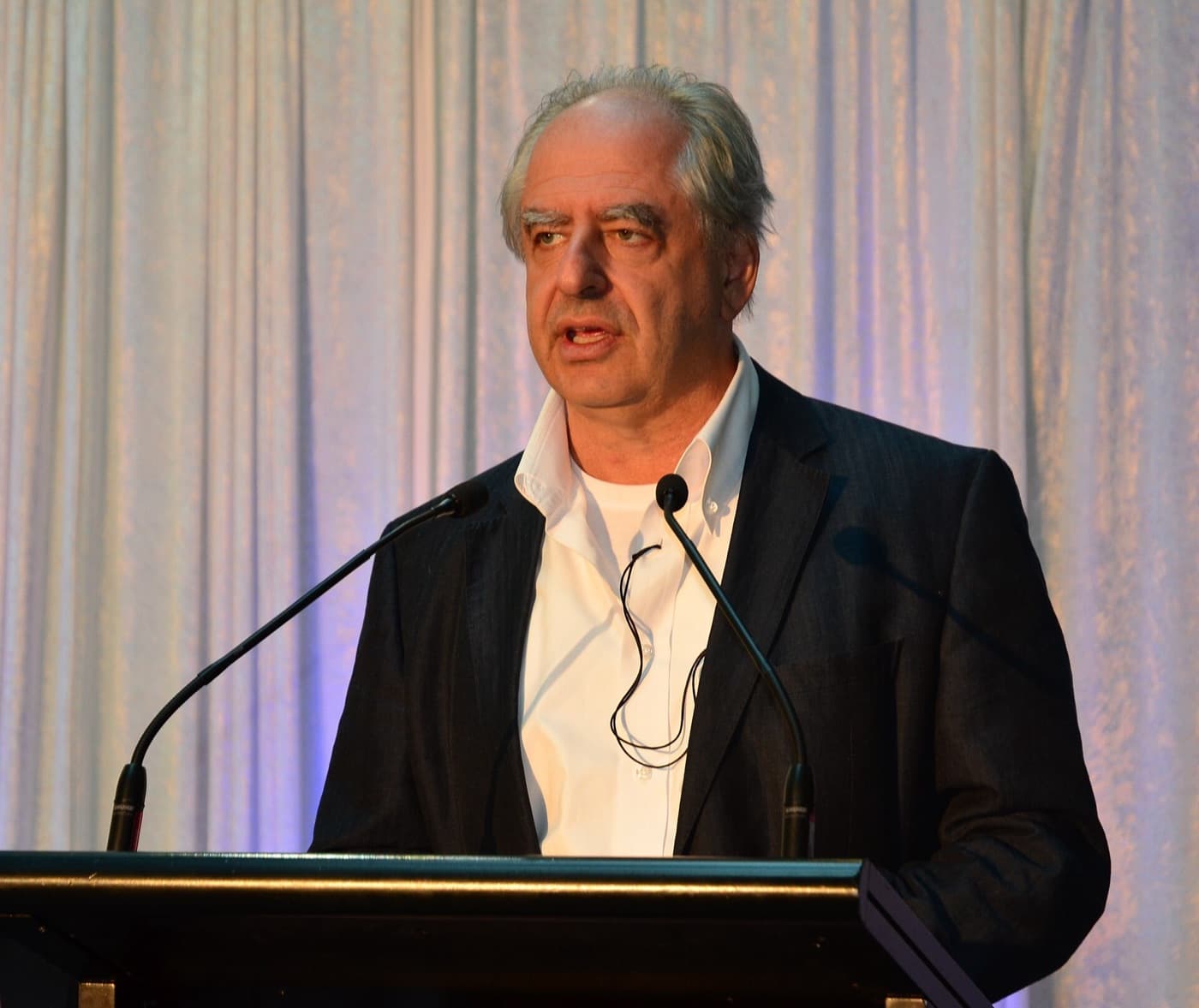
William Kentridge valuation
Makes films by drawing in charcoal, photographing, erasing and redrawing the same sheet.
William Kentridge was born in Johannesburg in 1955 to two lawyers who acted against the apartheid state, and studied politics and African studies before theatre in Paris.
What a work by William Kentridge is worth
Send photographs and whatever paperwork came with it. The first question is what the work actually is — edition or unique, when, and in what condition — because everything else follows from the answer. A valuation is free, made online from the photographs you send, and it commits you to nothing. We act for sellers across the United Kingdom, Europe and the United States.
Write to info@whitebankfineart.co.uk, or start below.
Bio
William Kentridge was born in Johannesburg in 1955 to two lawyers who acted against the apartheid state, and studied politics and African studies before theatre in Paris. His animation method is deliberately primitive and physically laborious: a charcoal drawing is photographed, partly erased, redrawn and photographed again, so the finished film carries the smudged ghost of everything that came before it. The Drawings for Projection, following Soho Eckstein and Felix Teitlebaum through the end of apartheid, are the central work. He also directs opera, makes tapestries, sculpture and enormous processional friezes.
The residual charcoal drawings from the films are the most sought unique works and are physically among the most vulnerable objects in contemporary art — unfixed or barely fixed charcoal that cannot be cleaned and that abrades on contact, so glazing and handling history are decisive. Film editions are sold with their equipment and documentation, and completeness matters. Kentridge is also a serious and prolific printmaker in etching, drypoint, linocut and letterpress, often over found book pages, and those editions are the accessible part of the output.
Tapestries, prints and the Royal Academy
Kentridge has made tapestries with the Stephens Tapestry Studio since 2001, woven in mohair spun and dyed for each piece and worked on the looms at the studio in Diepsloot, on the outskirts of Johannesburg. A sequence of large tapestries was made for his exhibition at the Royal Academy in London in 2022, the largest showing of his work in Britain to that date.
His prints are documented in William Kentridge: Prints, published by David Krut in 2006 with more than 180 works, from the linocuts of the 1970s to the drypoints made while he was staging The Magic Flute, and David Krut has published many of his editions. A print should be matched to the publisher's details of size, technique and edition.
Lecoq, the Pit monotypes and Triumphs and Laments
Kentridge made his first charcoal drawing at about eight, in children's art classes, and in 2016 became perhaps the first artist to have a catalogue raisonné devoted to his juvenilia. After the University of the Witwatersrand he took a diploma at the Johannesburg Art Foundation, acted and directed with the Junction Avenue Theatre Company from 1975 to 1991, and in the early 1980s studied mime and theatre at the École Jacques Lecoq in Paris, where he found he was a poor actor and settled for being an artist. The twenty to thirty monotypes of 1979 known as the Pit series and about fifty small etchings of 1980, the Domestic Scenes, established his identity as an artist, and in 1996 and 1997 he made Ubu Tells the Truth, eight prints connected with the Truth and Reconciliation Commission.
His opera productions include Monteverdi's Il ritorno d'Ulisse in patria, The Magic Flute, Shostakovich's The Nose, Berg's Lulu at the Metropolitan Opera in 2015 and Wozzeck at the Salzburg Festival in 2017, and Sibyl, at the Barbican, won him the Olivier Award for Outstanding Achievement in Opera in 2023. In 2016 he unveiled Triumphs and Laments, a frieze of more than eighty figures along 550 metres of the Tiber embankment in Rome. He gave the Norton lectures at Harvard in 2012, published as Six Drawing Lessons; The Refusal of Time, made for documenta 13, was acquired jointly by the Metropolitan Museum and SFMOMA; and in 2017 he founded the Centre for the Less Good Idea in Johannesburg with Bronwyn Lace. He is represented by the Goodman Gallery, Lia Rumma and, since 2024, Hauser & Wirth.
Whitebank Fine Art is an art advisory and gallery, not an auction house, and is not affiliated with any auction house or with the artist, their estate or their representatives. This page describes the range we advise on. Nothing here is investment advice.
