Art Deco
Art Deco was the leading style of design and decoration between the two world wars, named after the Paris exhibition of decorative arts of 1925; it combined geometric form, stylised ornament and luxurious or modern materials, and ran from fashion and jewellery to ocean liners, cinemas and skyscrapers.
The name came later. In 1925 Paris held the Exposition Internationale des Arts Décoratifs et Industriels Modernes, a vast exhibition meant to show that France led the world in luxury and design, and the style on show there was called simply moderne, or 'style 1925'. 'Art Deco', shortened from the exhibition's title, came into general use in the 1960s, when the style was rediscovered; an exhibition at the Musée des Arts Décoratifs in Paris in 1966 and the historian Bevis Hillier's book Art Deco of 1968 fixed it.
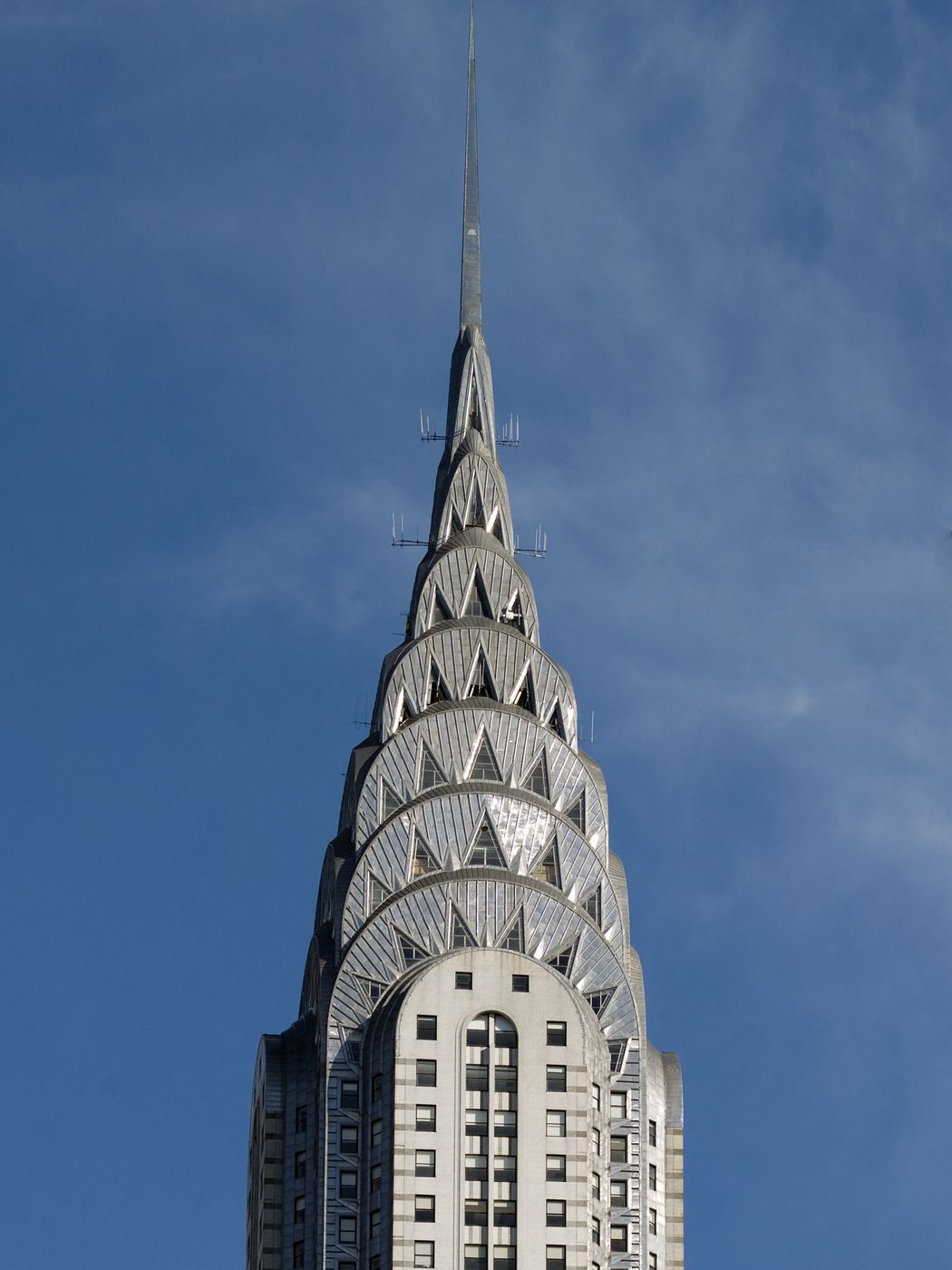
Its sources were many: the geometry of Cubism, the colour of the Ballets Russes, the treasures of Tutankhamun's tomb, discovered in 1922, and the speed of cars, aeroplanes and liners. In Paris it meant luxury: Jacques-Émile Ruhlmann's furniture in rare woods and ivory, Jean Dunand's lacquer, René Lalique's moulded glass. Tamara de Lempicka painted the rich in a hard, glossy manner learned from Cubism, Erté designed costumes and covers for Harper's Bazaar, and Sonia Delaunay showed her 'simultaneous' fabrics and clothes at the 1925 exhibition itself. In America it became the style of the skyscraper, the Chrysler Building of 1930 above all; in Britain, of cinemas, factories such as the Hoover Building in west London, and the ceramics of Clarice Cliff. In the 1930s it smoothed into Streamline Moderne, and the Second World War brought it to an end.
At a glance
- When
- 1920s and 1930s
- Where
- Paris, then worldwide
- Leading artists
- Tamara de Lempicka, Erté, Sonia Delaunay
Characteristics of Art Deco
- Geometry
- Zigzags, chevrons, sunbursts, stepped and fan shapes, and strict symmetry.
- Streamlining
- Smooth, aerodynamic curves and horizontal speed lines, taken from cars, trains and liners.
- Luxury and new materials
- Lacquer, ivory, shagreen and rare woods beside chrome, Bakelite and moulded glass.
- Stylised figures
- Elongated, elegant dancers, athletes and animals, often in bronze and ivory.
- Borrowed sources
- Cubism, ancient Egypt, Mesoamerican and African art, and the stage designs of the Ballets Russes.
Art Deco artists
Every artist below has a page on this site, with a short biography and what a valuation of their work turns on.
Painters and designers
- Tamara de LempickaPainted the 1920s in chrome, silk and hard light, and was rediscovered fifty years later.
- ErtéArt Deco made portable: costume designs, Harper's Bazaar covers, and bronzes issued by the hundred.
- Sonia DelaunayTook abstraction off the canvas and onto dresses, cars, book covers and dance floors.
Famous Art Deco works
- Victoire (Spirit of the Wind), car mascotRené Lalique, 1928
- Young Lady with GlovesTamara de Lempicka, 1930, Centre Pompidou, Paris
- Chrysler Building, New YorkWilliam Van Alen, 1928–30
- Radio City Music Hall interiors, New YorkDonald Deskey, 1932
- Hoover Building, Perivale, LondonWallis, Gilbert and Partners, 1932–33
What a valuation turns on
Art Deco is a market of objects as much as of pictures: bronze and ivory figures by Demétre Chiparus and Ferdinand Preiss, Lalique glass, furniture, lighting, posters, jewellery and silver, each with its own specialists. It is also full of reproductions. Many Lalique designs have been made in later versions, and cast figures in the style of Chiparus on marble bases are among the most reproduced objects there are, so the casting, the marks and the materials come first. Anything containing ivory has to be registered or certified under the Ivory Act before it can be sold in the UK, and some pieces cannot be sold here at all.
For the painters the questions are the usual ones. Tamara de Lempicka's paintings are relatively few and well documented, while prints and later copies of her images are common; Erté made many signed prints and bronzes late in his life, from the 1970s on, and with those it is the edition and the certificate that matter.
Common questions
What is Art Deco?
Art Deco was the leading style of design and decoration of the 1920s and 1930s, named after the 1925 Paris exhibition of decorative arts. It is recognisable by geometric forms, zigzags and sunbursts, streamlined curves and luxurious or modern materials, and it shaped everything from jewellery and posters to skyscrapers and cinemas.
When was Art Deco?
From the years after the First World War until the Second World War, at its height around the Paris exhibition of 1925 and in the skyscrapers of New York at the end of the 1920s.
Who are the most famous Art Deco artists?
Tamara de Lempicka and Jean Dupas in painting, Erté in illustration and costume, A. M. Cassandre in posters, Demétre Chiparus and Ferdinand Preiss in sculpture, Jacques-Émile Ruhlmann and Jean Dunand in furniture and lacquer, René Lalique in glass and Clarice Cliff in ceramics.
What is the difference between Art Deco and Art Nouveau?
Art Nouveau, from the 1890s to about 1910, is organic: curving lines, plants and flowing hair. Art Deco, from the 1920s and 1930s, is geometric and streamlined, and was in part a reaction against it.
How do I sell an Art Deco piece?
Send photographs of the front, the back and any signature, foundry mark or label, for a free, confidential valuation. Whether a piece is of the period, and what it is made of, are usually the first questions; we check them, compare a confidential private sale with auction, and keep the paperwork in your name until you are paid.