
Al Held valuation
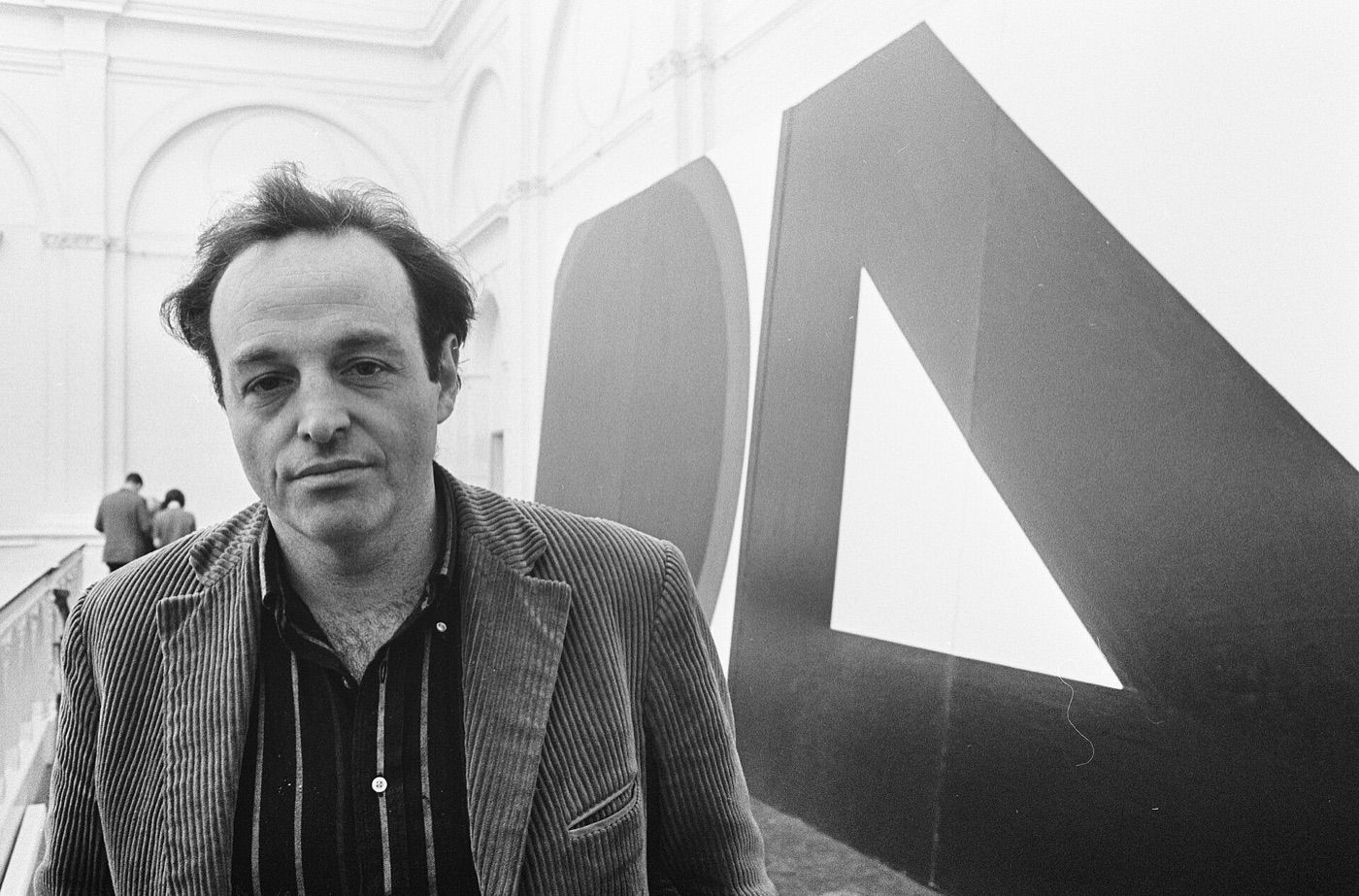
Went from thick abstract slabs to hard-edged architectural space you could fall into.
Al Held was born in Brooklyn in 1928, dropped out of school, joined the navy, and studied on the GI Bill at the Art Students League and then in Paris.
What a work by Al Held is worth
Send photographs and whatever paperwork came with it. The first question is what the work actually is — edition or unique, when, and in what condition — because everything else follows from the answer. A valuation is free, made online from the photographs you send, and it commits you to nothing. We act for sellers across the United Kingdom, Europe and the United States.
Write to info@whitebankfineart.co.uk, or start below.
Bio
Al Held was born in Brooklyn in 1928, dropped out of school, joined the navy, and studied on the GI Bill at the Art Students League and then in Paris. His first mature work in the late 1950s used very heavy impasto in blocky abstract shapes. From the mid-1960s he stripped the surface flat and moved to hard-edged black-and-white paintings of geometric solids — cubes, pyramids, arcs — arranged in a space with several mutually contradictory perspectives, so the eye cannot settle. Colour returned in the 1970s. He taught at Yale for two decades and died in Italy in 2005.
Scale is the defining factor: Held painted very large, and the major canvases are architectural in size and demand institutional wall space, which shapes who can buy them. The black-and-white works of 1967 to 1978 are a distinct and highly regarded group. Because the paintings depend on absolutely clean edges and flat acrylic fields, any surface damage, retouching or edge wear is unusually conspicuous. There is a body of works on paper in acrylic and watercolour, and a modest number of print editions.
At a glance
- Born
- 12 October 1928, Brooklyn
- Died
- 27 July 2005, Italy
- Movement
- Abstract Expressionism
Galerie Huit, the Alphabet paintings and Rome
Held enrolled at the Art Students League after leaving the navy in 1947, encouraged by his friend Nicholas Krushenick, and his first exhibition was at the Galerie Huit in Paris in 1952. Between about 1961 and 1966 he made the Alphabet paintings, single letters such as The Big N pushed to a scale at which they become abstract shapes.
In the 1980s he made watercolours in Rome, and the city's architecture fed the later acrylics. Solar Wind I, of 1973 to 1974, is in the Pérez Art Museum Miami. In 1969 he married the sculptor Sylvia Stone. He died at his villa near Camerata, in Umbria, in July 2005.
Paris, Concrete Expressionism and the Philadelphia murals
Held first meant to study in Mexico under the muralist David Alfaro Siqueiros, but his GI Bill entitlement was not accepted there, and in 1951 he went instead to the Académie de la Grande Chaumière in Paris, returning to New York in 1953. Around 1960 he moved from oil to water-based acrylic for the hard-edged paintings, and in 1965 the critic Irving Sandler included him, with Knox Martin, Ronald Bladen, George Sugarman and David Weinrib, in Concrete Expressionism at New York University. He received the Logan Medal of the Arts in 1964 and a Guggenheim Fellowship in 1966.
The black and white paintings include Giza Gate II and Flemish IV, and Rothko's Canvas, commissioned for the Empire State Plaza Art Collection in Albany. In 1976 he painted his two largest murals, Order/Disorder and Ascension/Descension, each about four metres high and twenty-seven metres long, for an office building in Philadelphia, and his mural for the Lexington Avenue and 51st Street subway station in New York was completed in 2005.
Whitebank Fine Art is an art advisory and gallery, not an auction house, and is not affiliated with any auction house or with the artist, their estate or their representatives. This page describes the range we advise on. Nothing here is investment advice.